

1. When driving on an expressway, drivers should not frequently change lanes.
A. Right
B. Wrong
Answer: A
2. In which of the following ways can motor vehicles avoid a tire burst?
A. Lowering tire pressure
B. Checking tires regularly
C. Removing foreign matters from the tire tread grooves timely
D. Replacing the tires that have cracks or deep cuts
Answer: BCD
3. Drivers may cross these lane-dividing lines to change lanes in the same direction.
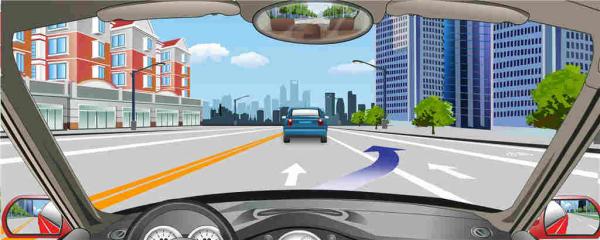
A. Right
B. Wrong
Answer: B
4. This sign warns to bypass from either side to avoid roadblock.

A. Right
B. Wrong
Answer: A
5. After entering the acceleration lane of an expressway, the driver should increase the speed to how many kilometers per hour?
A. More than 30 km/hour
B. More than 40 km/hour
C. More than 50 km/hour
D. More than 60 km/hour
Answer: D
6. The sign on the right warns of a guarded crossing 150 meters ahead.
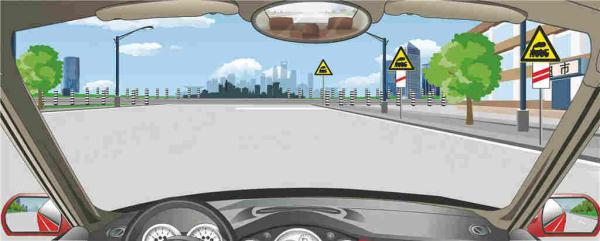
A. Right
B. Wrong
Answer: B
7. When approaching a sharp curve, motor vehicle drivers should reduce speed only after entering the curve.
A. Right
B. Wrong
Answer: B
8. When a motor vehicle catches fire, the driver should manage to park the vehicle in an open place far away from urban areas, buildings, trees, other motor vehicles and flammable materials.
A. Right
B. Wrong
Answer: A
9. When the engine suddenly stalls on the road and cannot be restarted, the driver should apply emergency braking to force the vehicle to stop as fast as possible.
A. Right
B. Wrong
Answer: B
10. The sign on the right warns of three or more winding roads ahead.
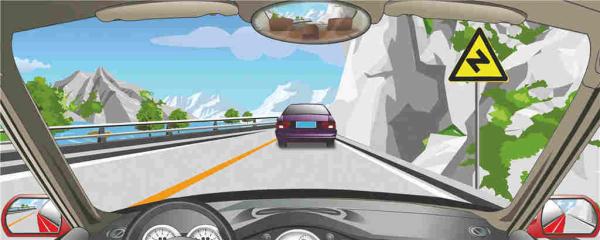
A. Right
B. Wrong
Answer: B
11. Under such circumstances, the motor vehicle is allowed to overtake.
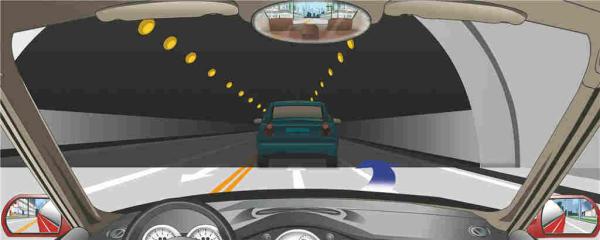
A. Right
B. Wrong
Answer: B
12. What should be done by drivers in order to drive safely on the road in this condition?
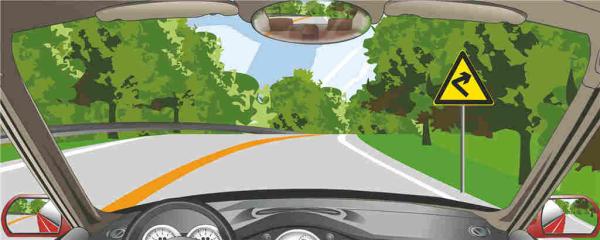
A. Make a large turn on the left side of the road
B. Make a turn on the central line of the curve
C. Make a small turn on the right side of the road
D. Make a turn by borrowing the opposite lane
Answer: C
13. When a bicycle borrows the motor vehicle lane, the motor vehicle may sound the horn hurriedly to warn the bicycle to yield.
A. Right
B. Wrong
Answer: B
14. What should the driver pay attention to when the motor vehicle passes a school?
A. Observe the traffic signs and markings
B. Slow down and pass slowly
C. Prohibited from sounding the horn
D. Pass rapidly
Answer: ABC
15. When driving in rain or snow, the driver should turn left to stabilize the vehicle if the motor vehicle slides to the right side.
A. Right
B. Wrong
Answer: B
16. When a motor vehicle passes over an inundated road what should the driver do?
A. Stop and look at the situation
B. Make sure it is safe and pass over at a low speed
C. Intermittently and gently depress the brake pedal then wading across the water
D. Continuously but gently depress the brake pedal then wading across the water
Answer: ABC
17. Which one of the following measures is correct when a motor vehicle encounters this situation at night?
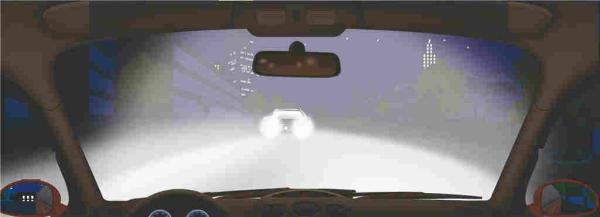
A. Keep driving at a normal speed
B. Drive at an increased speed to avoid light
C. Cut speed or stop to yield
D. Turn on high-beam to reject
Answer: C
18. The sign above the tunnel indicates a height limit of 3.5 meters on the road ahead.
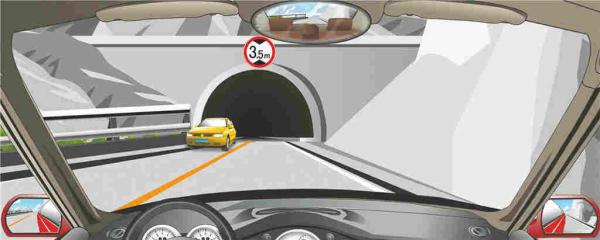
A. Right
B. Wrong
Answer: A
19. The sign on the right warns of an uneven road ahead.
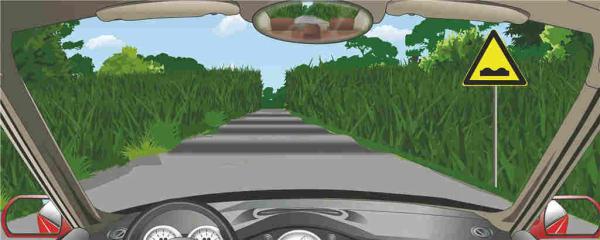
A. Right
B. Wrong
Answer: A
20. The sign on the right warns of a bumpy road ahead.
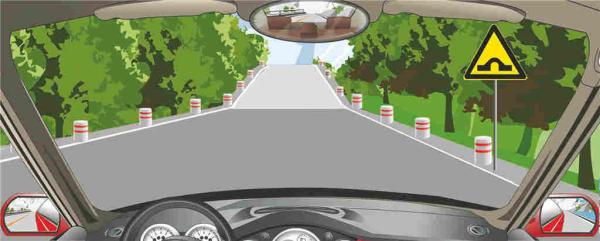
A. Right
B. Wrong
Answer: B