

1. How many kinds of law-breaking acts are displayed in flash 5?
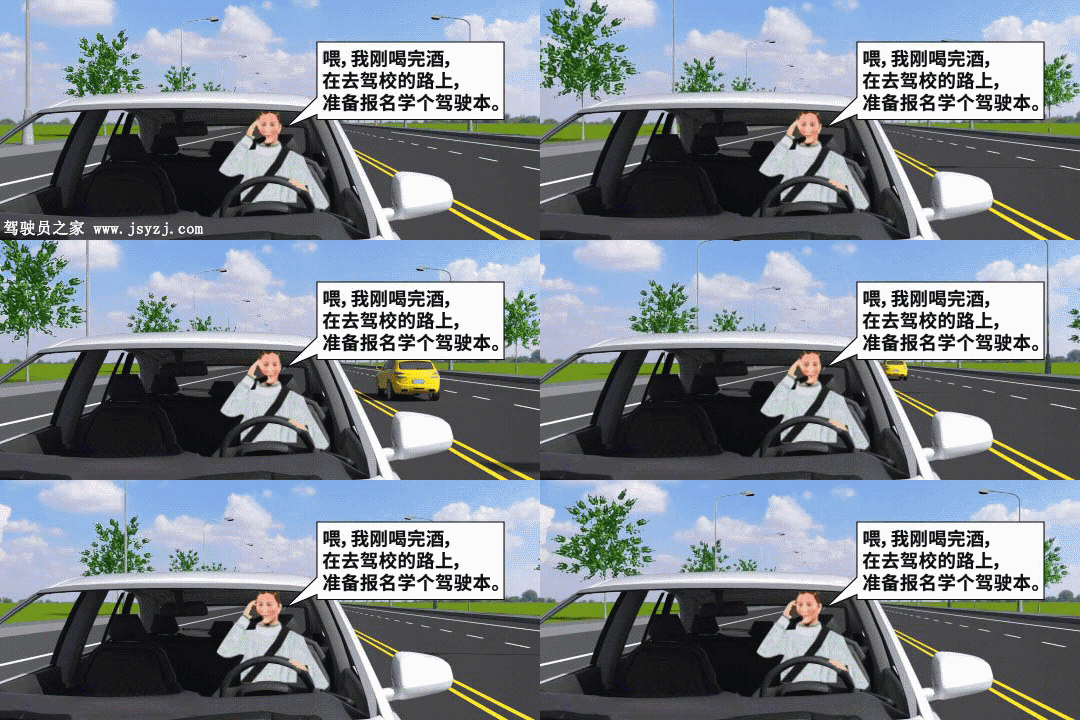
A. One
B. Two
C. Three
D. Four
Answer: C
2. The signs on each side warn of changes in road alignment ahead.
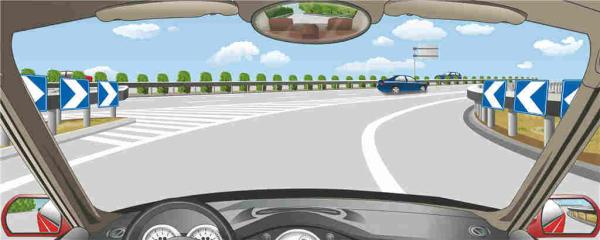
A. Right
B. Wrong
Answer: A
3. When a motor vehicle deviates from the normal direction due to steering failure, what should the driver do?
A. Immediately steer and adjust
B. Reduce speed and stop the vehicle as early as possible
C. Steer to the side where there is no obstacle to evade
D. Steer to the side where there is an obstacle to evade
Answer: B
4. When a motor vehicle passes over an inundated road the driver should change to a low gear and pass at a constant speed.
A. Right
B. Wrong
Answer: A
5. Which of the following materials should not be used to stop bleeding?
A. Bandage
B. Sling
C. Tourniquet
D. Hemp rope
Answer: D
6. How should lamps be used when a motor vehicle meets an oncoming bicycle on a narrow road or a narrow bridge at night?
A. Continuously change between low-beam and high-beam
B. Use clearance lamp
C. Use high-beam
D. Use low-beam
Answer: D
7. The sign in front indicates a temporary parking lot on the right side of the highway.
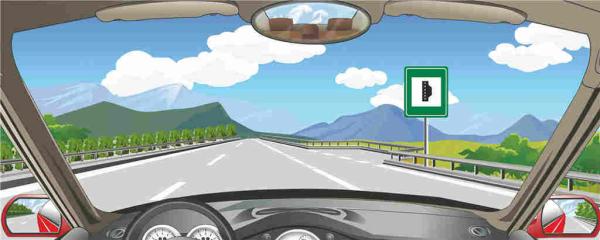
A. Right
B. Wrong
Answer: B
8. When driving a motor vehicle not equipped with the anti-lock braking system (ABS), what should the driver do if he brakes on a road covered by ice and snow?
A. Gently or intermittently depress the brake pedal
B. Depress the brake pedal as on other roads
C. Violently depress the brake pedal
D. Suddenly depress the pedal with force
Answer: A
9. Which one of the following vehicle types is not allowed to pass, as indicated by the right-hand sign?
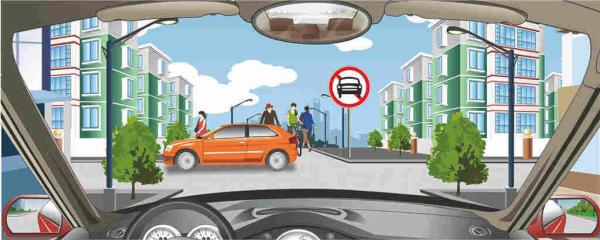
A. Large trucks
B. Large buses
C. Motor vehicles of all kinds
D. Small vans
Answer: C
10. The sign on the left warns of no passing on the right-hand road ahead.
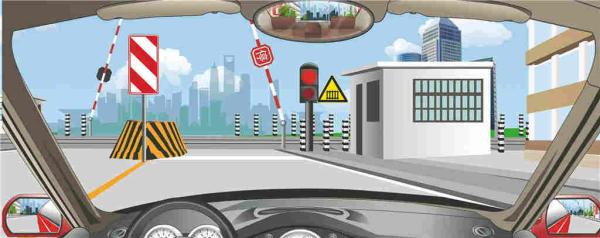
A. Right
B. Wrong
Answer: B
11. What should the driver do when a motor vehicle encounters this situation on a mountain road?
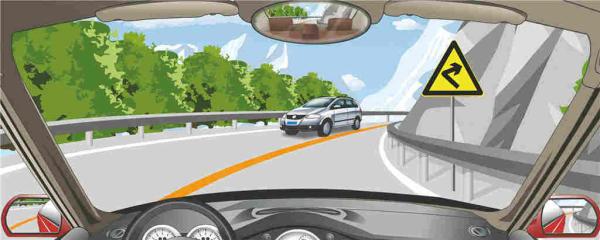
A. Stick to respective lanes and speed up to approach each other
B. Drive close to the central line of the road
C. Retain the normal speed
D. Slow down
Answer: D
12. In which ones of the following ways can motor vehicle drivers effectively prevent braking failure?
A. Maintaining the braking system periodically
B. Checking the free brake pedal travel before driving
C. Using the braking system correctly to avoid brake-fade
D. For vehicles with hydraulic braking system, checking if the brake fluid leaks before driving
Answer: ABCD
13. When parking for a long time on an upward slope due to breakdown on the road, drivers should use this method to stop up wheels.
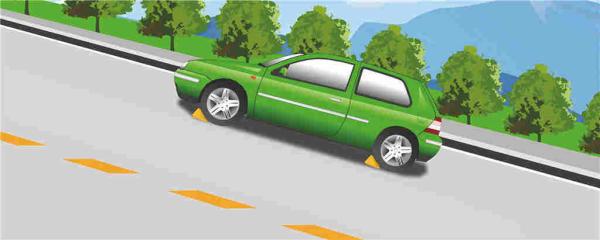
A. Right
B. Wrong
Answer: B
14. The leading cause of this accident is that the driver failed to make sure that it was safe to reverse before doing so.
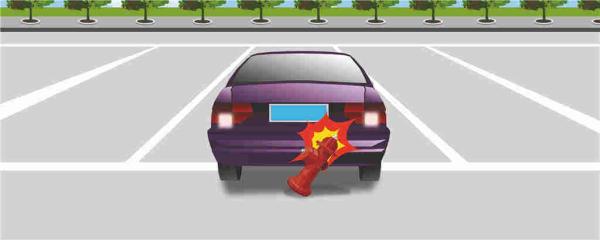
A. Right
B. Wrong
Answer: A
15. Under such circumstances, what should be done by the motor vehicle driver?
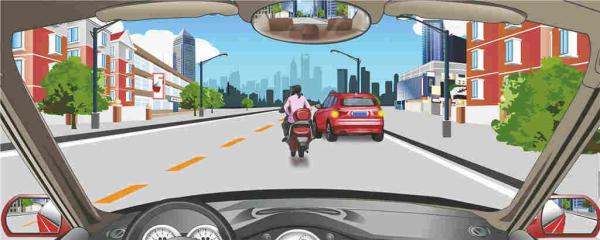
A. Reducing speed to give the right of way to the non-motor vehicle
B. Continuously sounding the horn to warn the vehicle in front to yield
C. Bypassing on the left of the non-motor vehicle
D. Accelerating to overtake by occupying the opposite lane
Answer: A
16. When driving in thick fog causing poor visibility on the expressway, the driver should apply emergency braking to stop at once.
A. Right
B. Wrong
Answer: B
17. When rescuing a person sustaining full-body burns the rescue personnel may spray cool water to his body to put out the fire.
A. Right
B. Wrong
Answer: A
18. When the motor vehicle stops on a downhill section how should the driver use the foot brake?
A. Earlier than on a level road
B. Later than on a level road
C. As timely as on a level road
D. Gently depress the foot brake pedal
Answer: A
19. Mr. Hao drove a heavy dump truck with 84.84 tons of cargo (truck allowing for 15.58 tons). When he drove on the No 262 provincial highway in Luanxian County, at the spot of 34 kilometers mark by 623 meters, his truck overturned onto the sideway after a rear-end collision with another truck in front carrying 45.85 tons of cargo(a truck allowing for 1.71 tons). As a result of this accident, 19 people were killed and 17 injured. What is the common illegal act of the two drivers?
A. Speeding
B. Overloaded
C. Fatigued driving
D. Driving after drinking
Answer: B
20. Drivers may turn right at the intersection when traffic police give these hand signals.
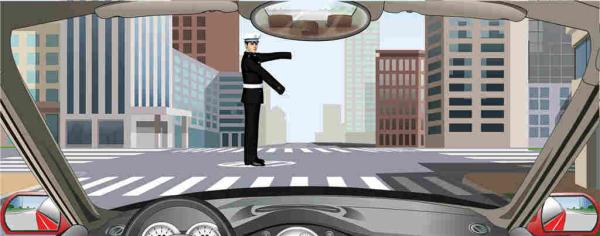
A. Right
B. Wrong
Answer: A