

1. The driver should turn on the left-turn indicator after entering the acceleration lane on an expressway.
A. Right
B. Wrong
Answer: B
2. What should a driver do when the engine stalls suddenly on the road?
A. Apply emergency braking to stop the vehicle
B. Slow down and stop the vehicle
C. Change to neutral gear and coast
D. Shut down the ignition switch
Answer: B
3. The slow-down-and-yield line at the intersection ahead indicates that vehicle drivers should stop and give the right of way to vehicles on the trunk road.

A. Right
B. Wrong
Answer: B
4. When finding a tire burst on the road, the driver should gently depress the brake pedal, reduce speed and stop the vehicle slowly.
A. Right
B. Wrong
Answer: A
5. When a motor vehicle deviates from the normal direction due to steering failure and an accident is unavoidable, what should the driver do?
A. Apply emergency brake
B. Immediately steer and adjust
C. Immediately steer to the side where there is no obstacle and evade
D. Immediately steer to the side where there is an obstacle and evade
Answer: A
6. The sign on the right warns of a winding road to the left ahead.
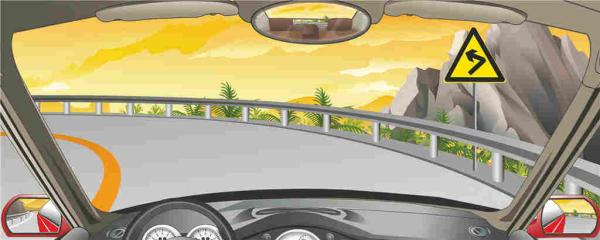
A. Right
B. Wrong
Answer: B
7. The sign on the right warns of a narrowed road on both sides ahead.
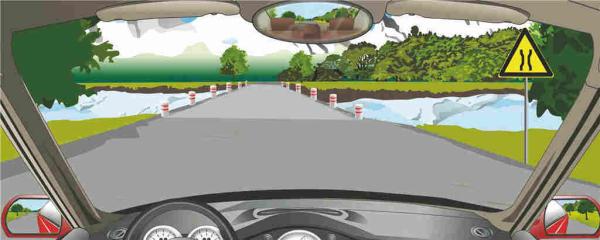
A. Right
B. Wrong
Answer: B
8. What should a motor vehicle driver do to ensure safety when experiencing a breakdown at night?
A. Park in a safe place
B. Turn on hazard lamp
C. Turn on clearance lamp and tail lamp
D. Set up a warning sign in accordance with regulation
Answer: ABCD
9. When there is bleeding at the bone fracture of a wounded person, the first thing to do is to keep it in position before stopping the bleeding and dress the wound.
A. Right
B. Wrong
Answer: B
10. The sign on the right warns of a continuous downhill section ahead.
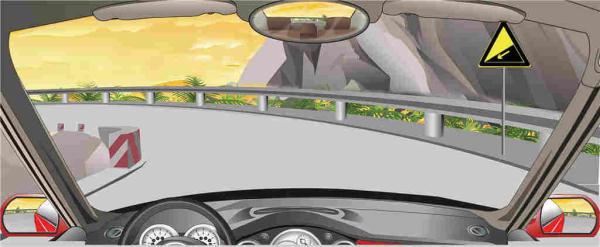
A. Right
B. Wrong
Answer: B
11. What should a driver do before entering a tunnel on an expressway
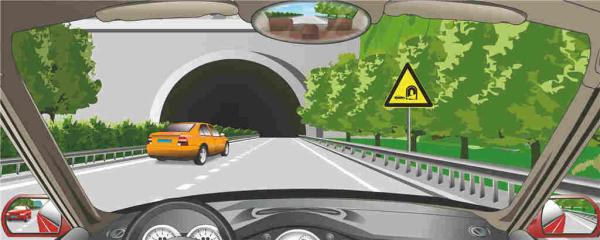
A. Turn on the high-beam
B. Turn on the width lamp and the tail lamp
C. Turn on the low-beam
D. Sound the horn before entering the tunnel
Answer: C
12. The sign on the right side warns of crosswind on the mountain pass ahead.
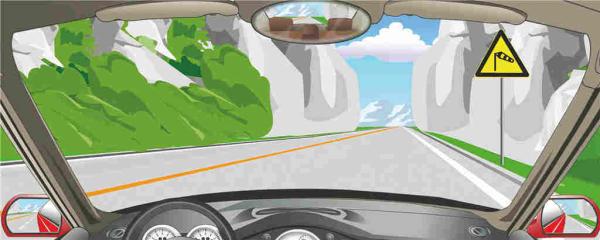
A. Right
B. Wrong
Answer: A
13. The sign on the right indicates a 200-meter distance from the gas station ahead.
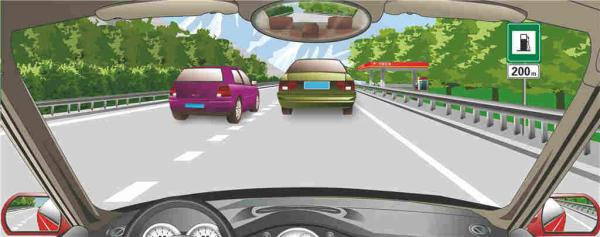
A. Right
B. Wrong
Answer: A
14. The sign in front indicates the allocation of roads ahead.
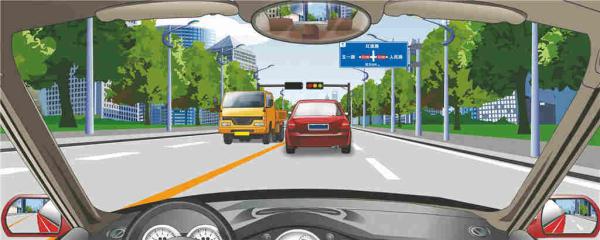
A. Right
B. Wrong
Answer: B
15. When encountering a school bus which stops at the right roadside and students are embarking or disembarking, and there are three motor vehicle lanes in each direction, motor vehicle drivers on the left lane behind the bus should stop and wait.
A. Right
B. Wrong
Answer: B
16. The sign in front indicates the distance to highway destination.
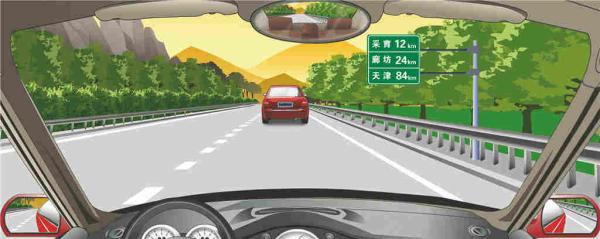
A. Right
B. Wrong
Answer: B
17. Under such circumstances at a congested intersection, what should motor vehicle drivers do?
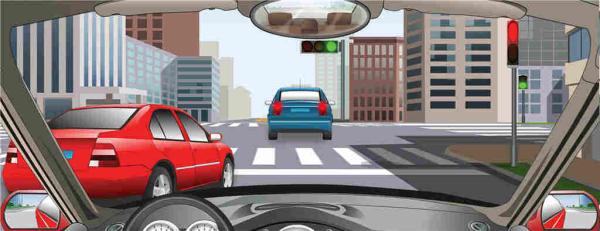
A. Force the vehicle to go back to its original lane
B. Closely follow the vehicle in front and refuse to yield
C. Politely yield and pass through
D. Sound the horn and turn on the head lamps
Answer: C
18. After entering the acceleration lane of an expressway, the driver should increase the speed to how many kilometers per hour?
A. More than 30 km/hour
B. More than 40 km/hour
C. More than 50 km/hour
D. More than 60 km/hour
Answer: D
19. The sign on the right warns of a guarded railway intersection ahead.
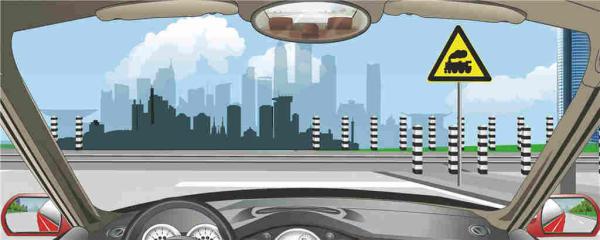
A. Right
B. Wrong
Answer: B
20. When driving into the traffic flow on a main road from a relief road, drivers should speed up.
A. Right
B. Wrong
Answer: B