

1. When a motor vehicle accidentally hits the guardrail of the highway, what should be done by the driver in order to keep safe?
A. Firmly holding and properly adjusting the steering wheel
B. Turning swiftly to the opposite direction
C. Immediately applying emergency braking
D. Immediately steering to the collision side
Answer: A
2. How to ensure safe driving at night?
A. Drive at speed limit
B. Cut speed and drive carefully
C. Maintain the current speed
D. Drive above the speed limit
Answer: B
3. The motor vehicle should slow down and pass slowly in this situation.
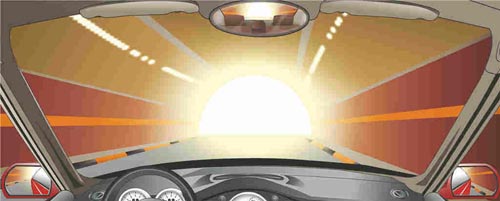
A. Right
B. Wrong
Answer: A
4. When driving on a foggy day, the driver should turn on the fog lamp.
A. Right
B. Wrong
Answer: A
5. The driver should pay attention to the left side when the motor vehicle passes this intersection.
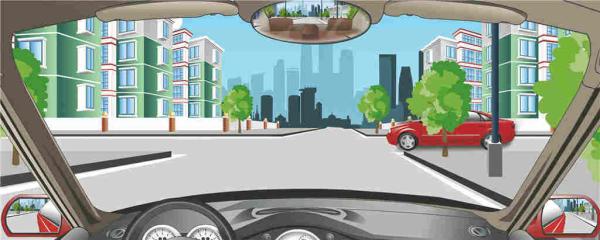
A. Right
B. Wrong
Answer: B
6. When a motor vehicle slides sideways, how should the driver adjust the direction?
A. If the front wheels skid sideways, turn the steering wheel in the direction of the skid
B. If the front wheels skid sideways, turn the steering wheel in the opposite direction of the skid
C. If the rear wheels skid sideways, turn the steering wheel in the direction of the skid
D. If the rear wheels skid sideways, turn the steering wheel in the opposite direction of the skid
Answer: BC
7. What should be taken note of by drivers in this situation?
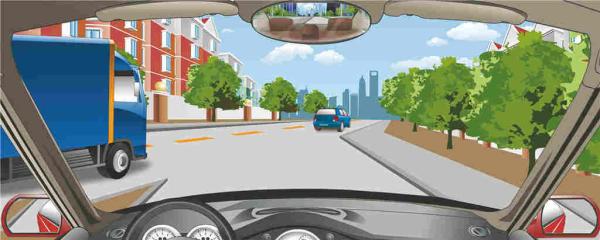
A. The motor vehicles on the left side
B. The motor vehicles on the right side
C. The motor vehicles behind
D. The motor vehicles in front
Answer: A
8. When there is a sudden braking failure on the road, what should be done by the driver?
A. Firmly holding the steering wheel and controlling the direction
B. Immediately changing to a low gear to reduce speed
C. Using the stopping brake to reduce speed
D. Turning on the hazard lamps
Answer: ABCD
9. How to ensure motor vehicles have sufficient power when driving uphill?
A. Downshift before reducing speed
B. Downshift after reducing speed
C. Downshift when the speed is excessively low
D. Downshift to the fullest extent
Answer: A
10. When parking for a long time on a downward slope due to breakdown on the road, drivers should use this method to stop up wheels.
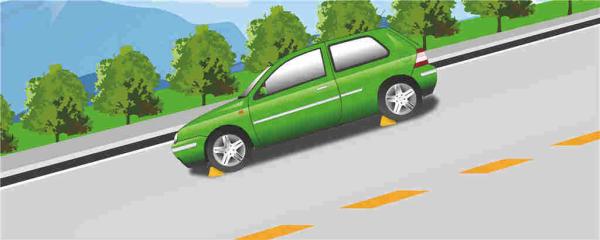
A. Right
B. Wrong
Answer: A
11. When evading an emergency, except for being calm, what principle should be held by drivers?
A. Evading people first and then objects
B. Evading objects first and then vehicles
C. Evading vehicles first and then people
D. Evading objects first and then people
Answer: A
12. When approaching motor vehicles ahead running at a normal speed on the highway, drivers behind may find a chance and weave through them swiftly.
A. Right
B. Wrong
Answer: B
13. Mr. Peng drove a heavy semi-trailer tractor with 37.7 tons of cargo (capacity 25 tons). When descending a slope on the Daguang Expressway, the tractor had a rear-end collision with Mr. Li?ˉs heavy dump truck (carrying 3.17 cubes of loess and 24 passengers in the container) occupying the emergency lane. As a result of this accident, 16 people were killed and 13 injured. What are the main illegal acts in this case?
A. Mr Peng exceeded the speed limit
B. Mr. Peng?ˉs tractor carried more cargo than limited
C. Mr Li illegally drove in the emergency lane
D. Mr. Li?ˉs truck illegally carried passengers in the container
Answer: BCD
14. Upon encountering this traffic signal, how should a driver react?
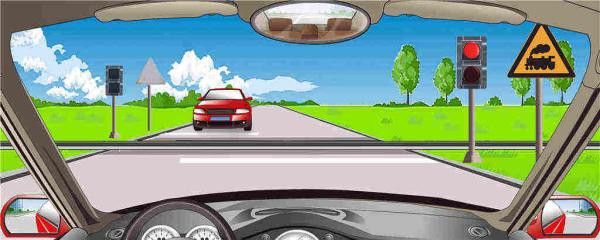
A. Observe the traffic situation and pass at a reduced speed
B. Pass at an increased speed without changing gears
C. Pass before the train comes
D. Crossing the stop line is prohibited
Answer: D
15. The sign on the right warns of traffic signals ahead.
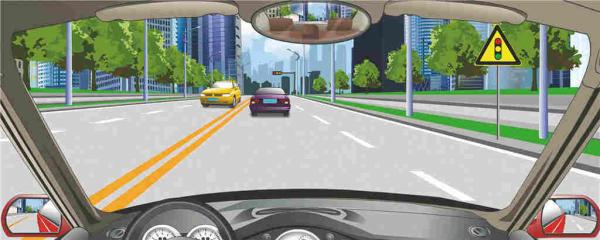
A. Right
B. Wrong
Answer: A
16. The sign on the left warns that there are vehicles converging into the intersection on the left.
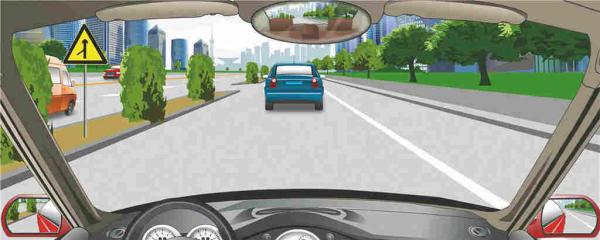
A. Right
B. Wrong
Answer: A
17. Motor vehicles can turn right when driving into an intersection with this traffic signal.
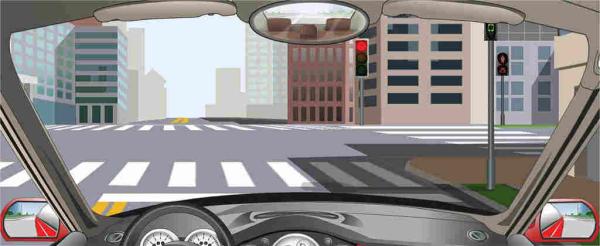
A. Right
B. Wrong
Answer: A
18. Driving and smoking has no negative effect on safe driving
A. Right
B. Wrong
Answer: B
19. The sign in front indicates a 2-kilometer distance from the destination of the highway ahead.
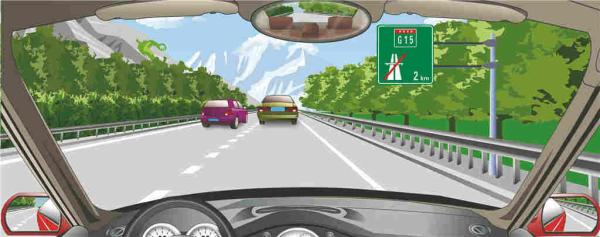
A. Right
B. Wrong
Answer: A
20. How many kinds of law-breaking acts are displayed in flash 6?
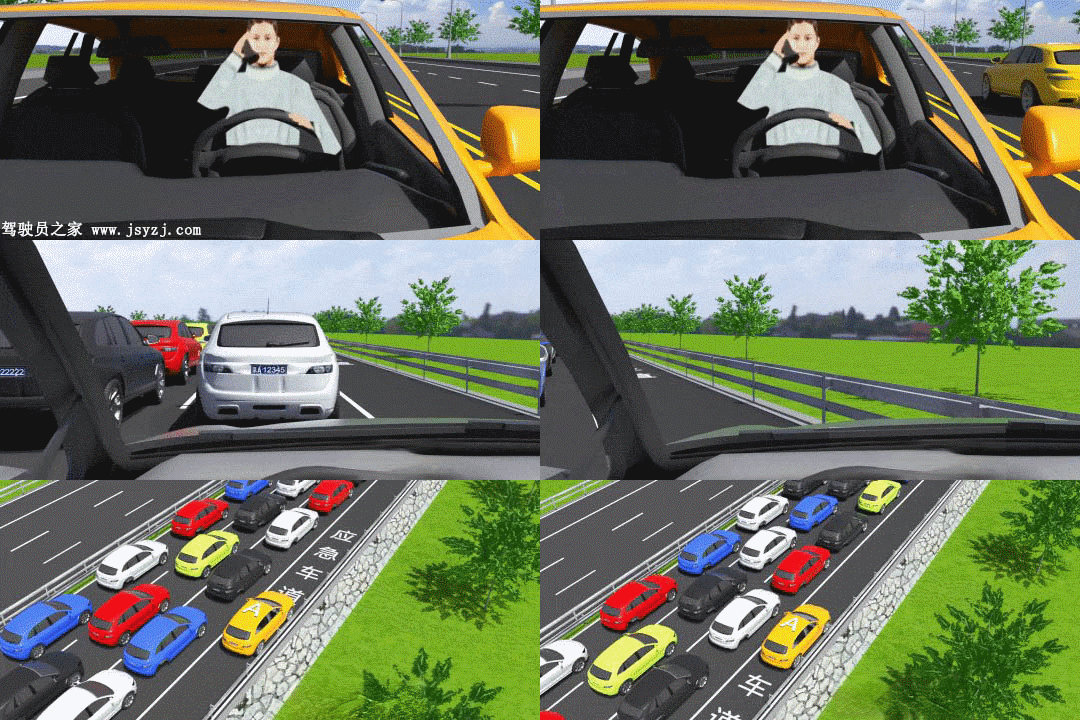
A. One
B. Two
C. Three
D. Four
Answer: C