

1. Use the high and low beam lights alternately when passing the crosswalk at night.
A. Right
B. Wrong
Answer: A
2. What is the max speed on muddy road?
A. 15km/hr
B. 20km/hr
C. 40km/hr
D. 30km/hr
Answer: D
3. What is the main impact of foggy weather on safe driving?
A. Easy to slide sideways
B. Low visibility
C. Increase the resistance
D. Widen the field of vision
Answer: B
4. When the driver is suspected of drinking or drunk in a traffic accident, preserve the scene and immediately report to the police.
A. Right
B. Wrong
Answer: A
5. What is the meaning of this sign?
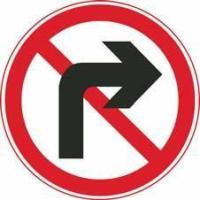
A. no entering the intersection
B. no right turn
C. no changing lane
D. no U turn
Answer: B
6. When a traffic accident causing human injuries, preserve the scene and immediately report to the police.
A. Right
B. Wrong
Answer: A
7. When a motor vehicle temporarily stops at night, which lamp should be turned on?
A. Front and rear fog lamp, clearance lamp and rear position lamp
B. Head lamp, clearance lamp and rear position lamp
C. Hazard lamp, clearance lamp and rear position lamp
D. Reverse lamp, clearance lamp and rear position lamp
Answer: C
8. Besides the administrative punishment, what kind of system implemented by the traffic control department of the public security organ to the driver who violated the traffic regulations?
A. violation registration system
B. mileage reward system
C. mandatory write-off system
D. accumulated penalty points system
Answer: D
9. What is the meaning of this sign?
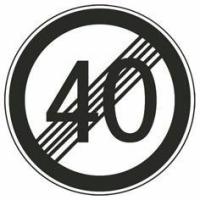
A. driving at reduced speed in the section of 40 meters
B. minimum speed is 40km/hr
C. maximum speed is 40km/hr
D. 40km/hr speed limit ban is lifted
Answer: D
10. Which is subject to a 12-point penalty?
A. driving a motorized vehicle when driving license is temporarily detained
B. applying for reissuing the driving license by concealment or deception
C. not yielding to the school bus according to regulations
D. running with the license plate deliberately stained
Answer: D
11. It is an illegal act for the driver to make calls while driving.
A. Right
B. Wrong
Answer: A
12. What is the meaning of this sign?
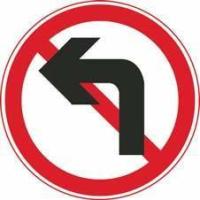
A. no U turn
B. no changing to left lane
C. no turning left
D. no entering the left lane
Answer: C
13. Causing a traffic accident due to violating the law and regulations on road traffic safety is the rule-breaking act.
A. Right
B. Wrong
Answer: B
14. If a motorized vehicle driver chases and races while driving on road, commits serious acts, the driver is subject to a prison term of less than 3 years.
A. Right
B. Wrong
Answer: B
15. After setting off from the roadside, motor vehicle drivers should speed up as soon as possible and make a sharp left-turn in order to drive into the normal lane.
A. Right
B. Wrong
Answer: B
16. When a motorcycle braking on a road covered by ice and snow, the driver should adopt point braking and prepare their feet for landing when braking.
A. Right
B. Wrong
Answer: A
17. What is the meaning of this sign?
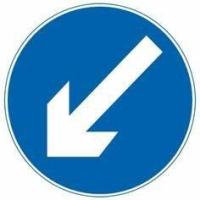
A. stop by the left side of the road
B. downhill section left
C. left turn only
D. run by the left side of the road
Answer: D
18. When a motorized vehicle runs in a foggy weather, the driver should turn on the fog light and the hazard lights.
A. Right
B. Wrong
Answer: A
19. When overtaking on a rainy day, drivers should turn on headlamps and sound a long horn.
A. Right
B. Wrong
Answer: B
20. When driving in rain and encountering pedestrians with umbrellas or wearing raincoats, what should be done by motor vehicle drivers in order to yield?
A. Drive at a normal speed
B. Sound the horn to alert when approaching the pedestrians
C. Speed up and bypass on the left
D. Reduce speed and sound the horn in advance
Answer: D