

1. Motor vehicles are not allowed to stop in this area for a long time.
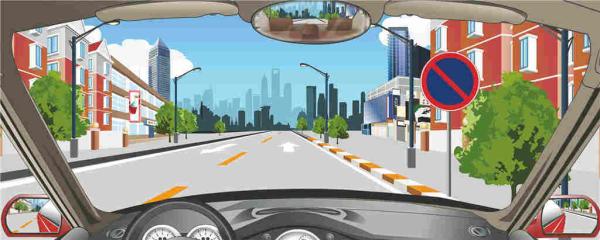
A. Right
B. Wrong
Answer: A
2. When a motor vehicle falls into water and the side door cannot be opened, which of the following methods is correct for self-rescue?
A. Smash the window glass
B. Close the windows
C. Make calls for help
D. Try to open the door with a tool
Answer: A
3. If the road condition behind is good, motor vehicle drivers should reverse rapidly.
A. Right
B. Wrong
Answer: B
4. The driver should pay attention to the left side when the motor vehicle passes this intersection.
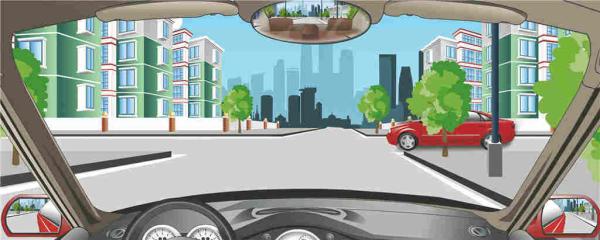
A. Right
B. Wrong
Answer: B
5. At 3: 40 a.m. one day, Mr. Sun drove a large bus with 54 passengers(capacity 55 people). At the spot of 229 kilometers mark by 300 meters on Suiyue Expressway, the bus had a rear-end collision with a heavy semi-trailer driven by Mr. Li when passengers were getting off from the bus. As a result of the accident, 26 people were killed and 29 injured. According to the investigation afterwards, Mr. Li had been driving the bus since he left the place of departure at 6 p.m. the day before without any rest. What are the main illegal acts of the two drivers?
A. Mr. Sun illegally parked
B. Mr. Sun carried more passengers than permitted
C. Mr. Li exceeded speed limit
D. Mr. Li kept driving when tired
Answer: AD
6. What should the driver do when the motor vehicle counters this situation?
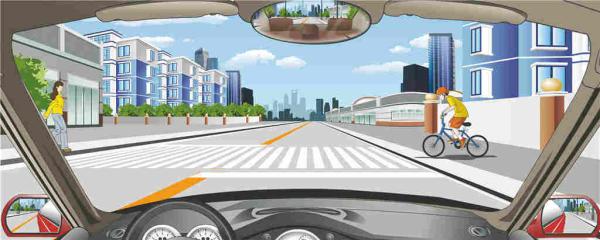
A. Sound the horn continuously to warn
B. Speed up and bypass from the front
C. Slow down when encountering any risks
D. Slow down voluntarily and yield
Answer: D
7. What influence does smoking have upon driving?
A. Harmful for safe driving
B. Increase concentration
C. Help relaxation
D. No effect on driving
Answer: A
8. At this moment, the driver may speed up and pass the intersection rapidly.

A. Right
B. Wrong
Answer: B
9. On which of the following roads may the wheels be most easily locked when braking?
A. Concrete road
B. Dirt road
C. Road covered by ice and snow
D. Sand road
Answer: C
10. When finding a tire burst on the road, the driver should gently depress the brake pedal, reduce speed and stop the vehicle slowly.
A. Right
B. Wrong
Answer: A
11. Which is the wrong measure to avoid tire burst?
A. Reduce tire pressure
B. Check tires regularly
C. Remove foreign matters from the tire tread grooves timely
D. Replace tires that have cracks or deep cuts
Answer: A
12. The sign on the left indicates U-turn is allowed here.
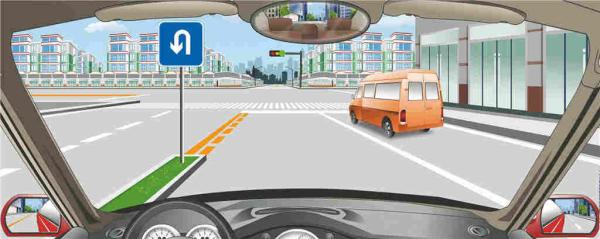
A. Right
B. Wrong
Answer: A
13. What should the driver do when the motor vehicle passes a flyover?
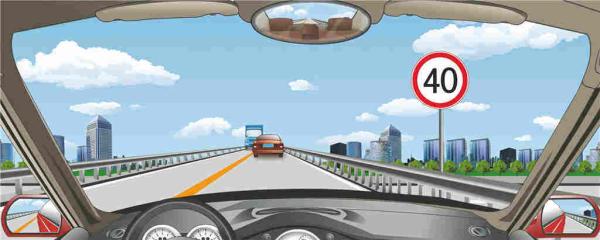
A. Speed up and pass rapidly
B. Keep the speed under 15 km/hour
C. Drive at the speed indicated by the traffic sign
D. Drive close to the central line of the flyover
Answer: C
14. Under such circumstances, what should motor vehicle drivers do?
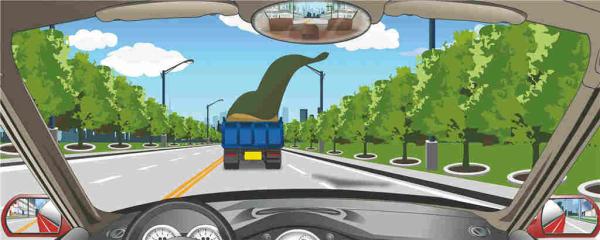
A. Follow the vehicle closely
B. Overtake the vehicle quickly on its left
C. Keep a long braking distance
D. Overtake the vehicle quickly on its right
Answer: C
15. Motor vehicles are prohibited from stopping on the ramp of an expressway.
A. Right
B. Wrong
Answer: A
16. The motor vehicle equipped with ABS may sideslip during an emergency brake.
A. Right
B. Wrong
Answer: A
17. Mr. Ran drove his car from 6am until 11 am without rest, falling down a steep 8.5-meter ridge at one side of a highway 1 km from Xunan Road in Xuahan County, killing 13 people and injuring 9. Which of the following law-breaking acts did Mr Ran commit?
A. Speeding
B. Driving not in accordance with the traffic markings
C. Exceeding carrying capacity
D. Fatigued driving
Answer: D
18. Having driven his vehicle at 110km/hour on an urban road, Mr. Lin is trying to leave the scene after a rear-end collision but is held back by bystanders. The alcohol concentration in his blood, tested in an alcohol test by the traffic police, is 135.8mg per hundred milliliters. Which of the following law-breaking acts did Mr. Lin commit?
A. Drunk driving
B. Speeding
C. Fatigued driving
D. Hit-and-run driving
Answer: ABD
19. When approaching each other at night in this situation, drivers should watch for the danger where the two motor vehicles headlamps meet (the sight dead zone).
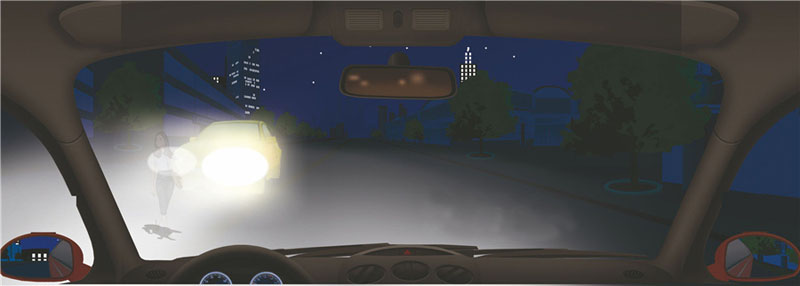
A. Right
B. Wrong
Answer: A
20. Before driving, it is necessary to check whether the cooling liquid, engine oil and fuel oil, are leaking.
A. Right
B. Wrong
Answer: A