

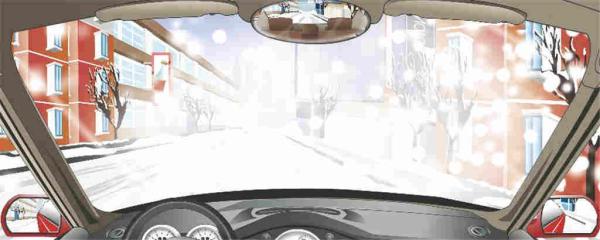
1. In the condition of low visibility, drivers should turn on the low-beam when setting off
A. Right
B. Wrong
Answer: A
2. When temporarily parking on a raining day, what kind of lamp should the driver turn on?
A. Front and back fog lamps
B. Hazard warning lamp
C. Headlamp
D. Reversing lamp
Answer: B
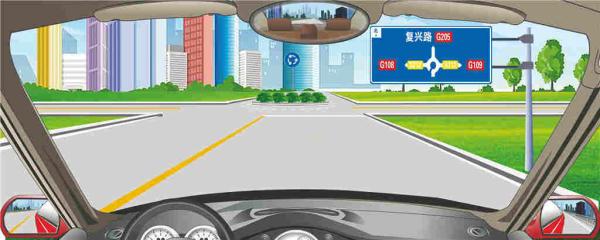
3. The sign in front gives information about the direction of road exits.
A. Right
B. Wrong
Answer: A
4. Mr. Ran drove his car from 6am until 11 am without rest, falling down a steep 8.5-meter ridge at one side of a highway 1 km from Xunan Road in Xuahan County, killing 13 people and injuring 9. Which of the following law-breaking acts did Mr Ran commit?
A. Speeding
B. Driving not in accordance with the traffic markings
C. Exceeding carrying capacity
D. Fatigued driving
Answer: D
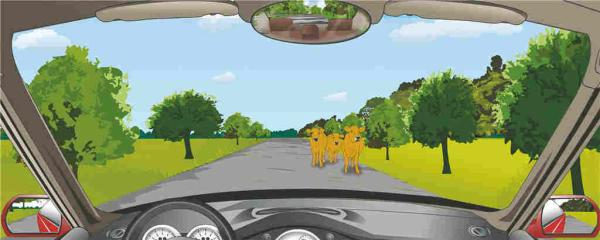
5. When driving on this section of the road, drivers should observe closely and prepare to yield to the animals crossing the road.
A. Right
B. Wrong
Answer: A
6. When a motor vehicle slides sideways on a road covered by ice and snow, the driver should violently turn the steering wheel to adjust the direction.
A. Right
B. Wrong
Answer: B
7. When the engine suddenly stalls on the road, what should the driver do?
A. Stop the vehicle and overhaul it immediately
B. Immediately turn on the hazard lamps
C. Move the vehicle to a place where it will not obstruct the traffic flow
D. Set up a breakdown warning sign
Answer: BCD
8. When extinguishing fire, the synthetic-made garments should not be taken off in order to protect the exposed skin from burning.
A. Right
B. Wrong
Answer: B
9. It is not a bad habit for a driver to frequently change lanes.
A. Right
B. Wrong
Answer: B
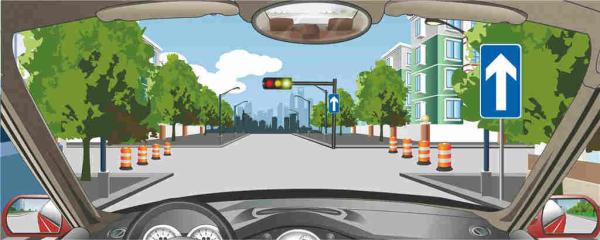
10. The sign on the right warns drivers to yield for oncoming motor vehicles.
A. Right
B. Wrong
Answer: B
11. When a motor vehicle equipped with ABS makes an emergency brake, the driver can tread the brake pedal heavily.
A. Right
B. Wrong
Answer: A
12. When a motor vehicle approaches the exit of a tunnel the driver should firmly hold the steering wheel to prevent any harmful effects of a strong side wind.
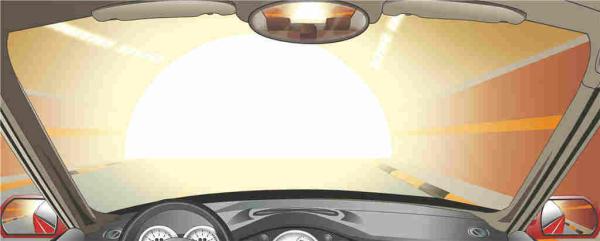
A. Right
B. Wrong
Answer: A
13. The sign on the right warns that the road will narrow over the next 5 kilometers.
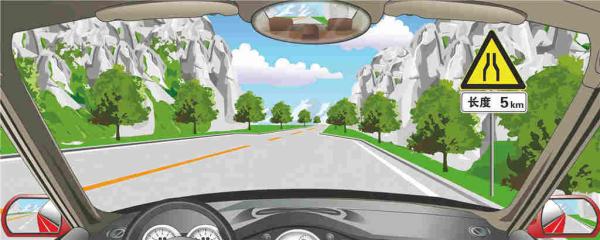
A. Right
B. Wrong
Answer: A
14. When there is a braking failure on a downhill road, what should not be done by the driver?
A. Steering the motor vehicle to the uphill direction
B. Stopping the vehicle by rubbing the vehicle body against the rocks or trees on roadside
C. Driving to the emergency lane and stop the vehicle there
D. Pulling up the stopping brake or change the gear to two positions lower
Answer: D
15. Motor vehicles are prohibited from stopping on the ramp of an expressway.
A. Right
B. Wrong
Answer: A
16. What should be done by motor vehicle drivers in order to yield politely to such pedestrians?
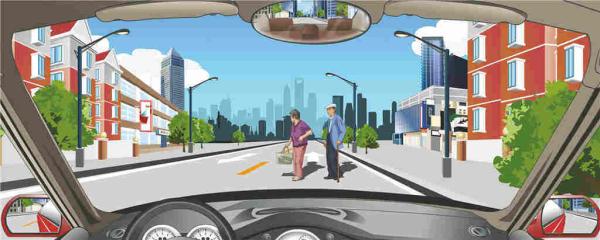
A. Speed up and bypass in front of the pedestrians
B. Speed up and bypass from behind the pedestrians
C. Reduce speed or stop to yield
D. Continuously sound the horn to alert the pedestrians
Answer: C
17. Mr. Ye drove a midsize van to Shangwen Road of Beitou Town. When passing a curve at the spot of 3 kilometers mark by 600 meters on the road, the van had a head-on collision at the speed of 40 kilometers per hour with Mr. Wang?ˉs three-wheeled freight motorcycle carrying 19 passengers, killing 10 people and injuring 9. What are the main illegal acts committed by the two drivers?
A. Mr. Ye drove an unpermitted vehicle type
B. Mr. Wang drove a freight motorcycle to carry passengers
C. Mr. Ye exceeded the speed limit
D. Mr. Wang failed to follow the guidance of the traffic signal lights
Answer: BC
18. When approaching each other at night in this situation, drivers should watch for the danger where the two motor vehicles headlamps meet (the sight dead zone).
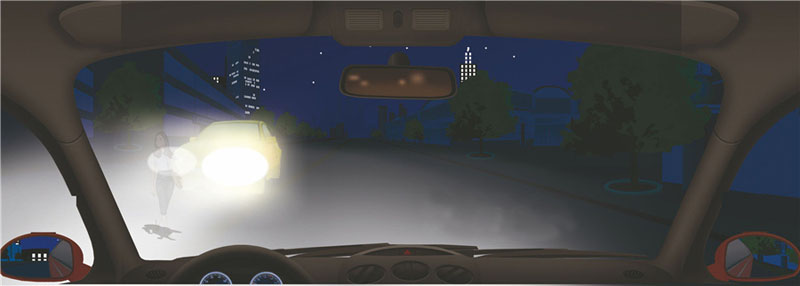
A. Right
B. Wrong
Answer: A
19. At this intersection, motor vehicle drivers may directly make a U-turn along the U-turn turning lane.
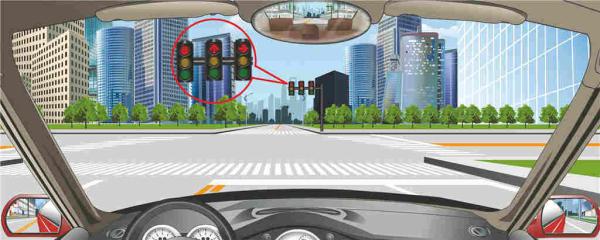
A. Right
B. Wrong
Answer: B
20. The guide arrow on the road surface of this lane indicates that U-turns and left turns are permitted at the intersection ahead.

A. Right
B. Wrong
Answer: A