

1. When a motor vehicle reaches a muddy or burst-and-muddy section of the road, the driver should stop, observe and select a level and solid section or a section with vehicle tracks.
A. Right
B. Wrong
Answer: A
2. It is illegal to change lanes without turning on indicators.
A. Right
B. Wrong
Answer: A
3. At this moment, the driver may speed up and pass the intersection rapidly.

A. Right
B. Wrong
Answer: B
4. Having driven a large passenger vehicle (carrying 44 passengers, permitted carrying capacity 44) equipped with sleepers at 44km/hour on a frozen road, at 58 km mark by 500m on 540 County Road in Yanhe County, Mr. Luo sideslipped and left the road, killing 15 people and injuring 27. Which of the following law-breaking acts did Mr. Luo commit?
A. Exceeding the carrying capacity of the passenger vehicle
B. Speeding
C. Fatigued driving
D. Improper driving
Answer: B
5. The sign on the right indicates an ETC lane at toll station ahead.
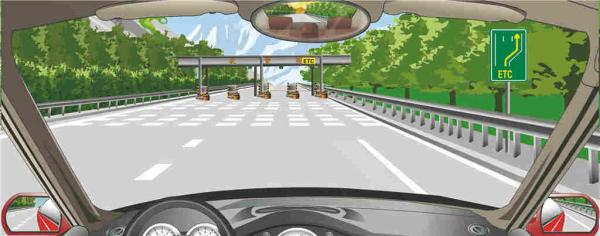
A. Right
B. Wrong
Answer: A
6. When driving on this dangerous mountainside road, motor vehicles should drive along the right side of the road.
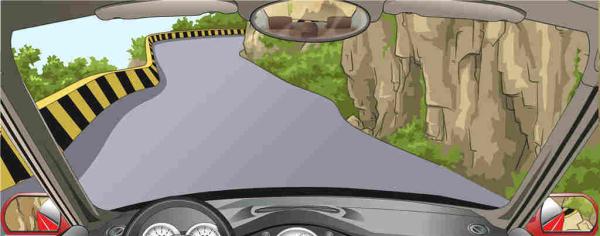
A. Right
B. Wrong
Answer: A
7. In rain, the most effective way to avoid the danger arising from water slide is to drive at high speed
A. Right
B. Wrong
Answer: B
8. Under this circumstance, motor vehicle drivers should not reduce speed.
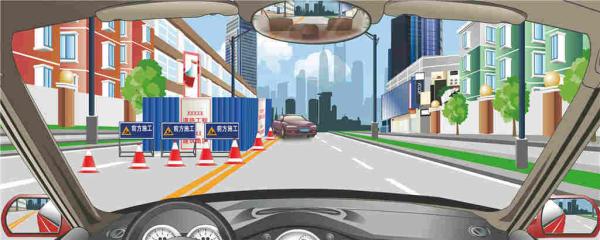
A. Right
B. Wrong
Answer: B
9. What is the best way to make turns on this kind of curving mountain road?
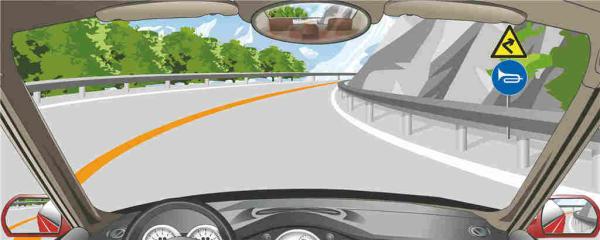
A. Drive along the outer side of the curve
B. Slow down, sound the horn and drive on the right
C. Borrow the opposite lane
D. Drive along the central line of the road
Answer: B
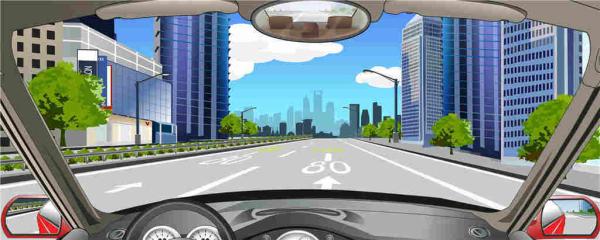
10. The marking on the road surface indicates that the speed limit of this road section is 80 km/hour.
A. Right
B. Wrong
Answer: B
11. When two vehicles approach each other on a foggy day, what is the best method of safe driving?
A. Turn on the high-beam
B. Slowdown and maintain a large safety distance
C. Turn on the low-beam
D. Turn on the fog lamp
Answer: B
12. A driver should speed up when passing through road sections with this traffic marking.

A. Right
B. Wrong
Answer: B
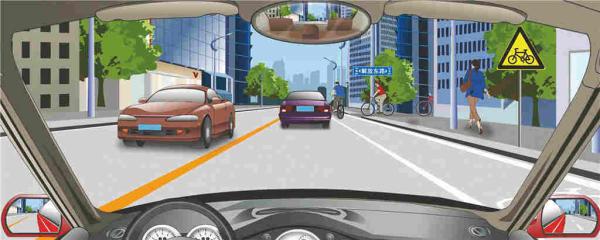
13. The sign on the right warns of a non-motor vehicle lane.
A. Right
B. Wrong
Answer: B
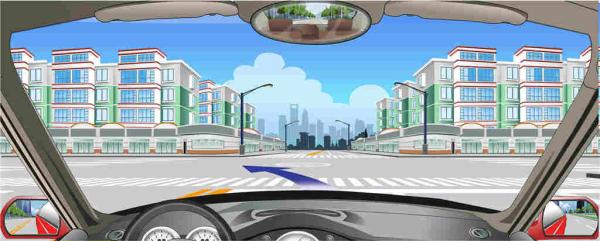
14. The circle in the center of the intersection indicates that drivers should drive along the inner side when making a small left turn.
A. Right
B. Wrong
Answer: A
15. When driving on a road covered with ice and snow drivers should not use the emergency brake but can apply a sharp turn.
A. Right
B. Wrong
Answer: B
16. When a vehicle encounters a strong side wind, the driver should firmly hold the steering wheel and press the brake urgently if he feels the vehicle deviates horizontally from the normal direction.
A. Right
B. Wrong
Answer: B
17. What caused this drivers death in an accident?

A. Failing to fasten seatbelt
B. Positioned too close to the steering wheel
C. Failing to hold the steering wheel
D. Failing to turn on SRS
Answer: A
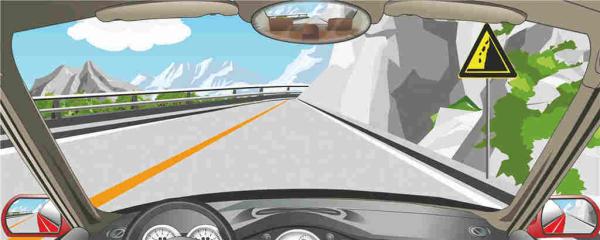
18. The sign on the right warns of a dangerous mountainside road on the left of the road ahead.
A. Right
B. Wrong
Answer: B
19. The driver should pay attention to the left side when the motor vehicle passes this intersection.
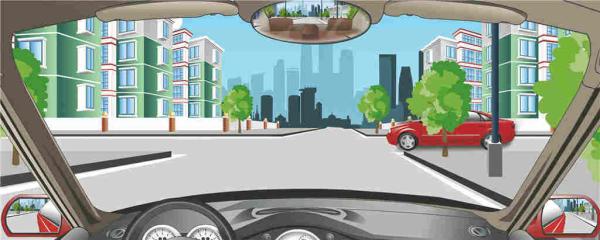
A. Right
B. Wrong
Answer: B
20. As shown in the flash, when overtaking a vehicle in front, the driver should make the horizontal distance as large as possible and may cross the solid line if necessary.

A. Right
B. Wrong
Answer: B