

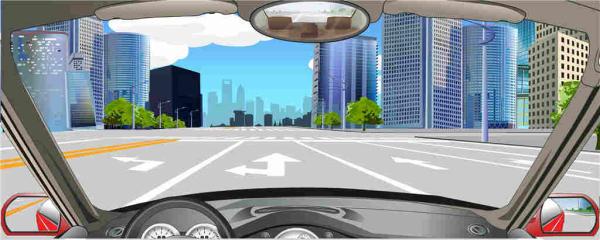
1. The guide arrow on the road surface of this lane indicates that drivers are only permitted to continue straight at the intersection ahead.
A. Right
B. Wrong
Answer: B
2. Under this circumstance, motor vehicle drivers should give the right of way to oncoming vehicle.

A. Right
B. Wrong
Answer: A
3. What should the driver do when seeing these hand signals.
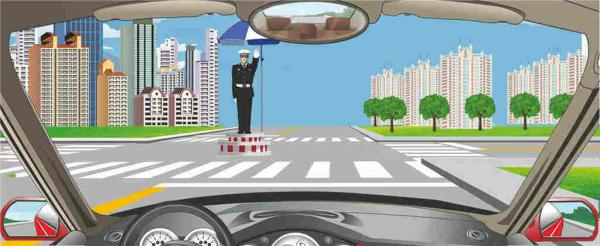
A. Stop and wait
B. Go straight and pass through the intersection
C. Turn right at the intersection
D. Turn left at the intersection
Answer: A
4. When there is a braking failure on a downhill road, if there is no favorable terrain or opportunity to stop the vehicle, the driver should drop gear by one position or two positions, and control the speed by taking advantage of the braking role of the engine.
A. Right
B. Wrong
Answer: A
5. When encountering a school bus which stops at the right roadside and students are embarking or disembarking, and there are three motor vehicle lanes in each direction, motor vehicle drivers on the left lane behind the bus should stop and wait.
A. Right
B. Wrong
Answer: B
6. Mr. Peng drove a heavy semi-trailer tractor with 37.7 tons of cargo (capacity 25 tons). When descending a slope on the Daguang Expressway, the tractor had a rear-end collision with Mr. Li?ˉs heavy dump truck (carrying 3.17 cubes of loess and 24 passengers in the container) occupying the emergency lane. As a result of this accident, 16 people were killed and 13 injured. What are the main illegal acts in this case?
A. Mr Peng exceeded the speed limit
B. Mr. Peng?ˉs tractor carried more cargo than limited
C. Mr Li illegally drove in the emergency lane
D. Mr. Li?ˉs truck illegally carried passengers in the container
Answer: BCD
7. When encountering a situation like changing to a left lane, motor vehicle drivers should yield.

A. Right
B. Wrong
Answer: A
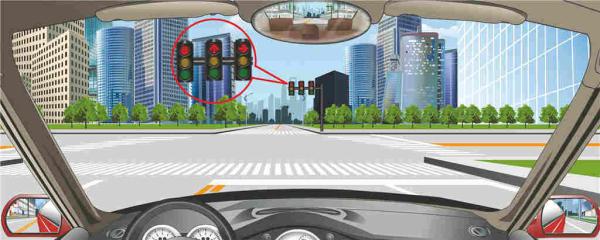
8. At this intersection, motor vehicle drivers may directly make a U-turn along the U-turn turning lane.
A. Right
B. Wrong
Answer: B
9. When a motor vehicle breaks down on an expressway and cannot be moved away from the driving lane, the driver may conduct emergency repairs on the driving lane.
A. Right
B. Wrong
Answer: B
10. On a mountain road, what should the driver do in this situation?
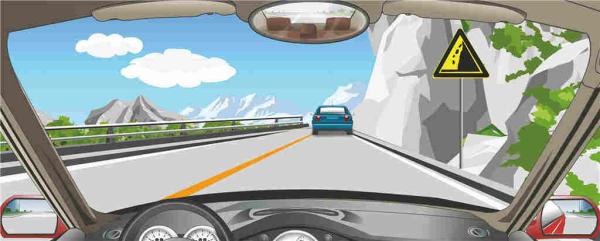
A. Drive on the left and speed up to bypass
B. Stop to observe and pass slowly
C. Observe closely and pass as soon as possible
D. Sound the horn several times and pass slowly
Answer: C
11. The sign on the right warns of a danger from rockfall on the left side.
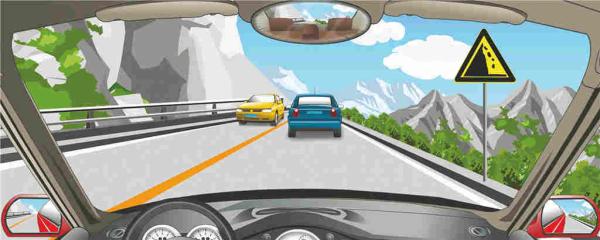
A. Right
B. Wrong
Answer: A
12. When entering an expressway ramp, which of the following statements is correct?
A. Drivers are allowed to overtake other vehicles
B. Drivers are prohibited from making U-turns
C. Drivers are allowed to stop
D. Drivers are allowed to reverse
Answer: B
13. The stop-and-yield line at the intersection ahead indicates that vehicle drivers should reduce speed and give the right of way to vehicles on the trunk road.
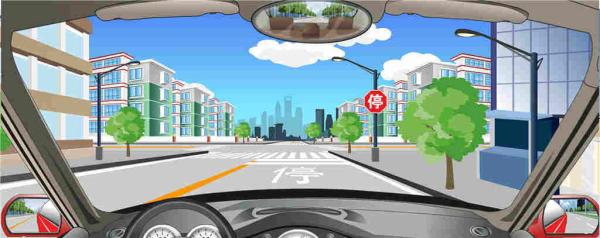
A. Right
B. Wrong
Answer: B
14. The guide arrow on the road surface of this lane indicates that there is an intersection on the right side of the road.
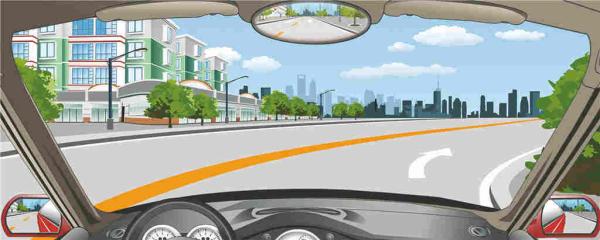
A. Right
B. Wrong
Answer: B
15. When encountering this situation in a residential area the driver should sound the horn continuously.
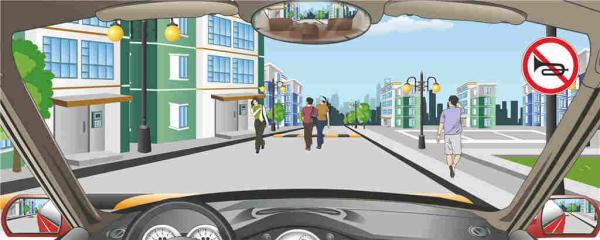
A. Right
B. Wrong
Answer: B
16. When the engine suddenly stalls on the road, what should the driver do?
A. Stop the vehicle and overhaul it immediately
B. Immediately turn on the hazard lamps
C. Move the vehicle to a place where it will not obstruct the traffic flow
D. Set up a breakdown warning sign
Answer: BCD
17. It is a bad habit for a driver to put his left arm on the window of the vehicle or hold the gear lever in his right hand for a long time.
A. Right
B. Wrong
Answer: A
18. When a motor vehicle encounters thick fog on an expressway and the visibility is poor, the driver should immediately brake and stop.
A. Right
B. Wrong
Answer: B
19. When making a turn on a mountainous road, drivers should cut speed, sound the horn and drive along the right side.
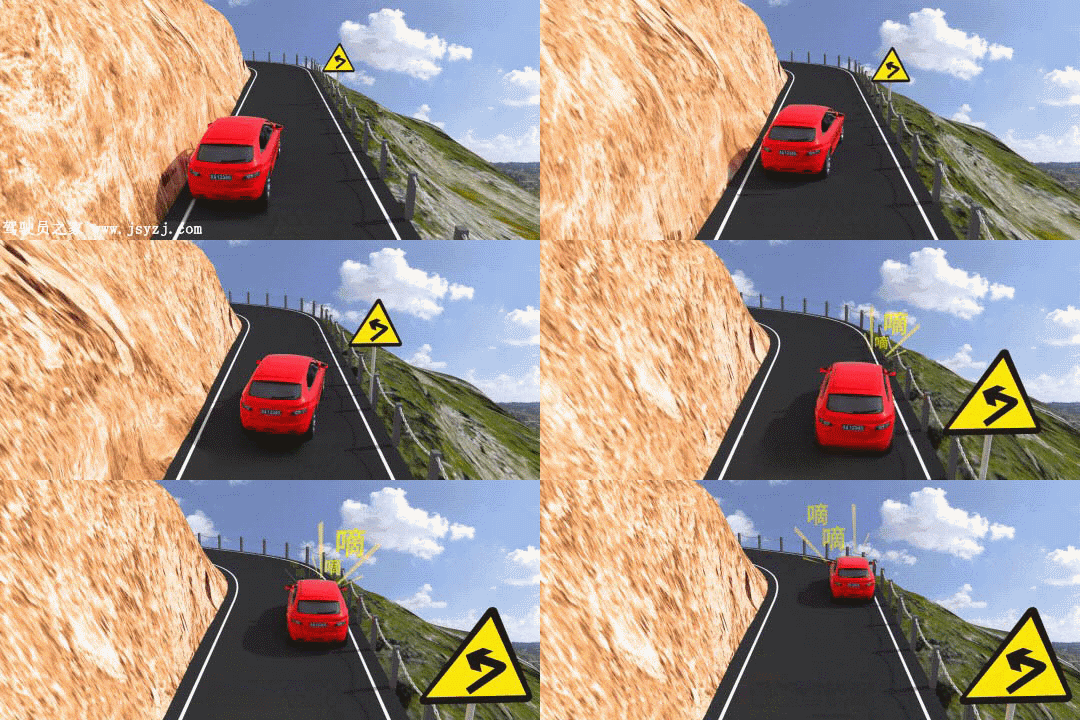
A. Right
B. Wrong
Answer: A
20. The sign on the right side warns of crosswind on the mountain pass ahead.
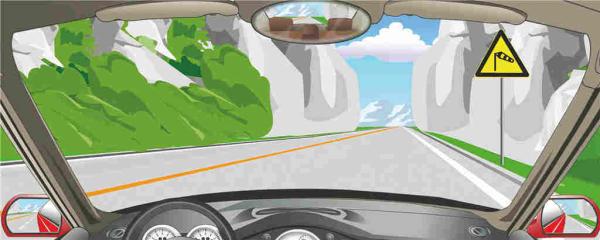
A. Right
B. Wrong
Answer: A