

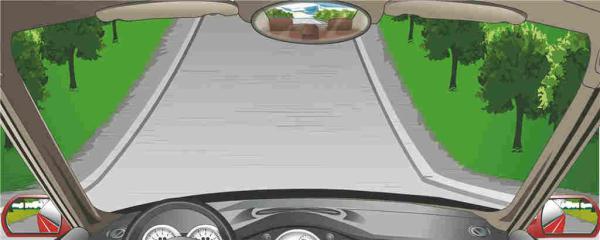
1. When encountering a road like this, motor vehicle drivers should downshift in advance to maintain the dynamic of the motor vehicle.
A. Right
B. Wrong
Answer: A
2. When temporarily parking on a raining day, what kind of lamp should the driver turn on?
A. Front and back fog lamps
B. Hazard warning lamp
C. Headlamp
D. Reversing lamp
Answer: B
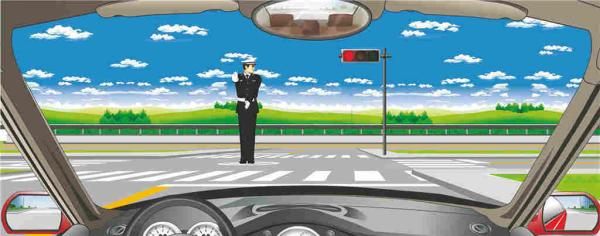
3. Drivers may turn left when traffic police give these hand signals.
A. Right
B. Wrong
Answer: B
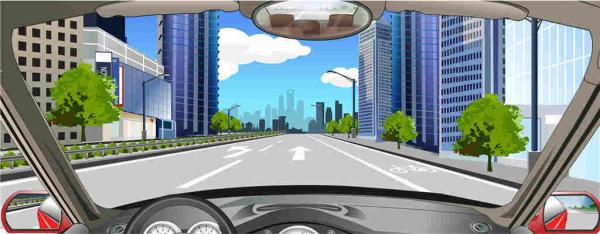
4. The guide arrow on the road surface of this lane indicates that drivers are only permitted to continue straight at the intersection ahead.
A. Right
B. Wrong
Answer: A
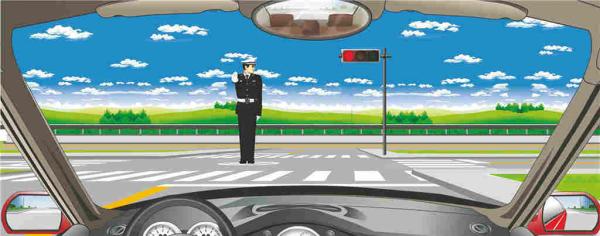
5. Drivers may go straight and pass through when trafficpolice give these hand signals
A. Right
B. Wrong
Answer: B
6. When driving on a damp and slippery road, drivers should avoid using the emergency brake to his best ability.
A. Right
B. Wrong
Answer: A
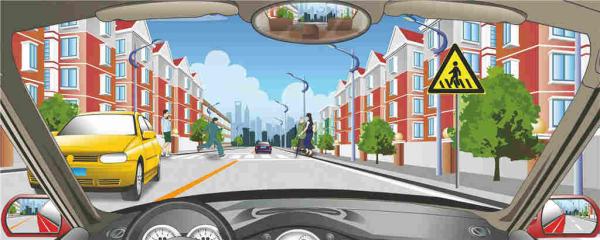
7. The sign on the right warns of children on the section ahead.
A. Right
B. Wrong
Answer: B
8. Under such circumstances at an intersection. what should motor vehicle drivers do?
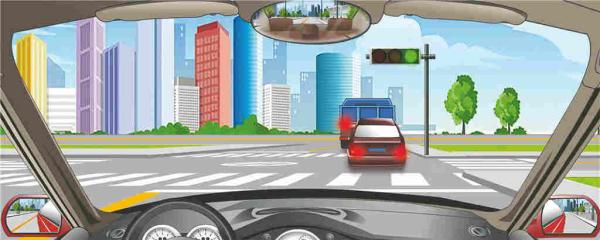
A. Drive into the intersection and wait
B. Wait in front of the intersection stop-line
C. Pass through in the right non-motor vehicle lane
D. Pass through the intersection by borrowing the opposite lane
Answer: B
9. Under such circumstances at a congested intersection, what should motor vehicle drivers do?
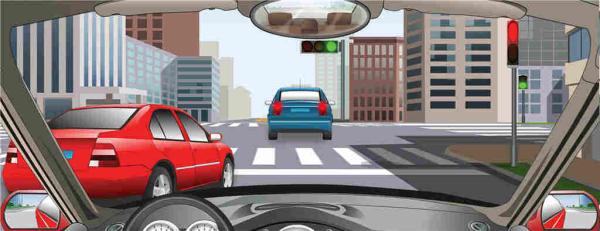
A. Force the vehicle to go back to its original lane
B. Closely follow the vehicle in front and refuse to yield
C. Politely yield and pass through
D. Sound the horn and turn on the head lamps
Answer: C
10. What should the driver do when a motor vehicle encounters this situation on a mountain road?
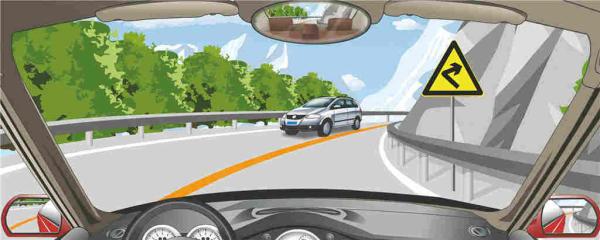
A. Stick to respective lanes and speed up to approach each other
B. Drive close to the central line of the road
C. Retain the normal speed
D. Slow down
Answer: D
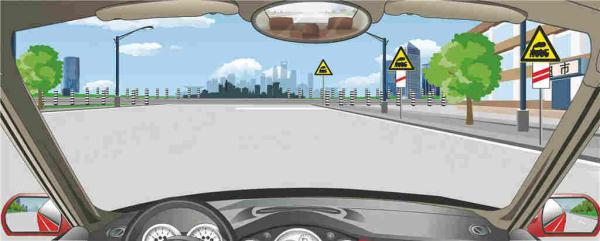
11. The sign on the right warns of a guarded crossing 150 meters ahead.
A. Right
B. Wrong
Answer: B
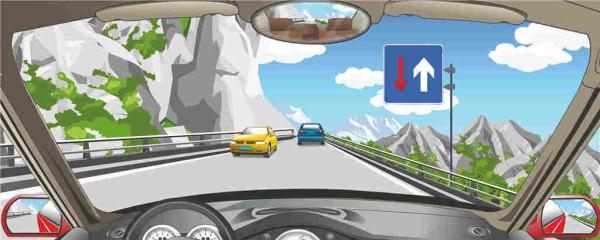
12. The sign on the right indicates that the vehicle should yield to the oncoming traffic as approaching each other.
A. Right
B. Wrong
Answer: B
13. When rescuing a wounded person suffering from bone fracture, which of the following should be kept in mind?
A. Immediately send him/her to the hospital on a stretcher
B. Properly change the original posture when the injured person wounded
C. Dress the fracture with a bandage
D. Do not move the fractured body-part
Answer: D
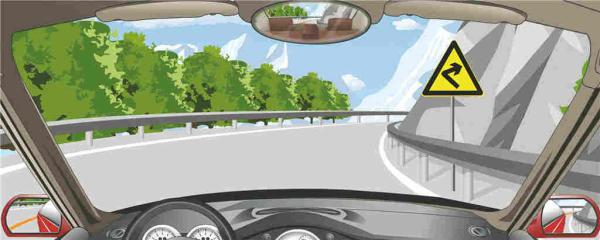
14. When driving on this dangerous mountainside road motor vehicle drivers should drive along the left side of the road.
A. Right
B. Wrong
Answer: B
15. Driving and smoking has no negative effect on safe driving
A. Right
B. Wrong
Answer: B
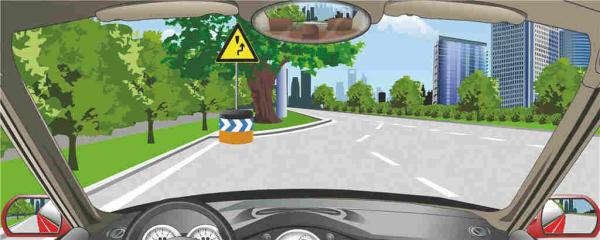
16. This sign warns to bypass from the left side to avoid the roadblock.
A. Right
B. Wrong
Answer: B
17. Mr. Shi drove a low-speed cargo vehicle (capacity 1.2 tons)with 4.05 tons of cargo. At the spot of 51 kilometers mark by 260 meters on the No. 314 County Road in Ningjin County, the cargo vehicle had a head-on collision with a normally running midsize bus( capacity 11 people and carrying12) from the opposite direction after passing the central line of the road and overtaking the front vehicle in the same direction. As a result of this accident, 10 people were killed and 2 injured. What are the illegal acts in this case?
A. The cargo vehicle carried more cargo than capacity
B. The cargo vehicle illegally overtook other vehicles
C. The bus carried more passengers than capacity
D. The driver of the bus kept driving when tired
Answer: ABC
18. When a motor vehicle moves through water, the driver should try to maintain a constant speed and sufficient power and pass through without stopping.
A. Right
B. Wrong
Answer: A
19. What should the driver do to follow other motor vehicles on a mountain road?
A. Closely follow the vehicle in front
B. Increase the safety distance
C. Reduce the vertical distance between vehicles
D. Try to overtake the vehicle in front as soon as possible
Answer: B
20. The sign on the right indicates right-hand turn only.
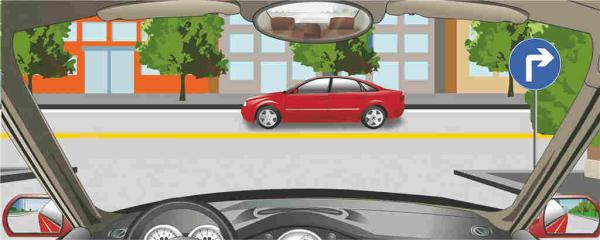
A. Right
B. Wrong
Answer: A