

1. What should motor vehicle drivers do under such circumstances at night?
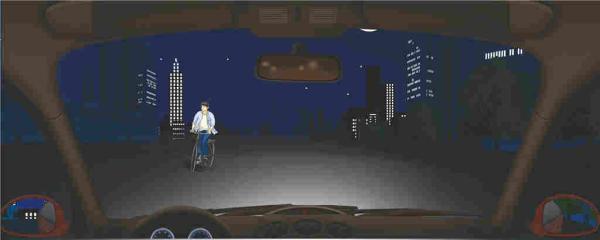
A. Turn off the headlamp when approaching
B. Use low-beam
C. Use high-beam
D. Turn off all lamps in advance
Answer: B
2. As shown in this picture, the intersection guide line is designed to help drivers make turns.
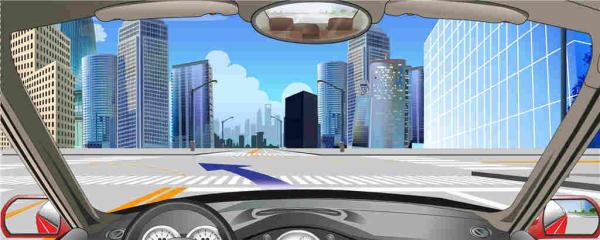
A. Right
B. Wrong
Answer: A
3. As shown in this picture, before driving to the intersection, vehicles are not allowed to change lanes by crossing the solid white line.
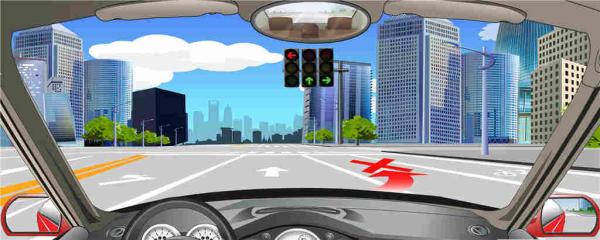
A. Right
B. Wrong
Answer: A
4. Which of the following acts are prohibited when passing through a tunnel?
A. Overtaking
B. Stopping
C. Making a U-turn
D. Reversing
Answer: ABCD
5. When a bus encounters an unexpected situation or an accident, the driver should do his best to minimize the loss and should never cause a secondary accident or even greater loss for the sake of avoiding danger.
A. Right
B. Wrong
Answer: A
6. At 3: 40 a.m. one day, Mr. Sun drove a large bus with 54 passengers(capacity 55 people). At the spot of 229 kilometers mark by 300 meters on Suiyue Expressway, the bus had a rear-end collision with a heavy semi-trailer driven by Mr. Li when passengers were getting off from the bus. As a result of the accident, 26 people were killed and 29 injured. According to the investigation afterwards, Mr. Li had been driving the bus since he left the place of departure at 6 p.m. the day before without any rest. What are the main illegal acts of the two drivers?
A. Mr. Sun illegally parked
B. Mr. Sun carried more passengers than permitted
C. Mr. Li exceeded speed limit
D. Mr. Li kept driving when tired
Answer: AD
7. The sign on the right warns of children on the section ahead.
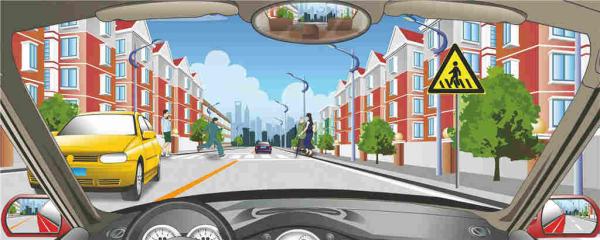
A. Right
B. Wrong
Answer: B
8. The guide arrow on the road surface of this lane indicates that only left and right turns are permitted on the lanes ahead.
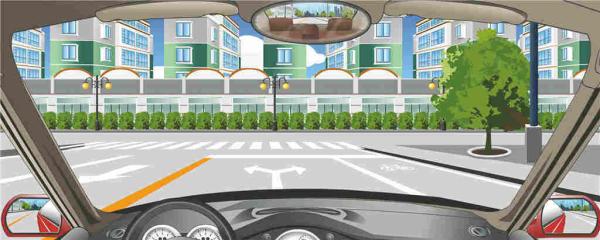
A. Right
B. Wrong
Answer: A
9. When the speed indicated by the speed limit sign on the highway contradicts the speed indicated for the specific lanes the speed indicated for the specific lanes should prevail.
A. Right
B. Wrong
Answer: B
10. The sign on the right side warns of crosswind on the mountain pass ahead.
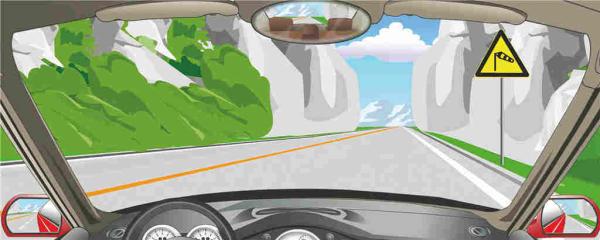
A. Right
B. Wrong
Answer: A
11. The sign in front is an advance announcement of famous places and distances en route.
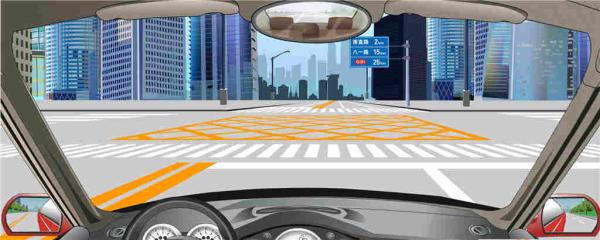
A. Right
B. Wrong
Answer: A
12. Mr. Shi drove a low-speed cargo vehicle (capacity 1.2 tons)with 4.05 tons of cargo. At the spot of 51 kilometers mark by 260 meters on the No. 314 County Road in Ningjin County, the cargo vehicle had a head-on collision with a normally running midsize bus( capacity 11 people and carrying12) from the opposite direction after passing the central line of the road and overtaking the front vehicle in the same direction. As a result of this accident, 10 people were killed and 2 injured. What are the illegal acts in this case?
A. The cargo vehicle carried more cargo than capacity
B. The cargo vehicle illegally overtook other vehicles
C. The bus carried more passengers than capacity
D. The driver of the bus kept driving when tired
Answer: ABC
13. What should the driver do when the motor vehicle passes the level crossing?
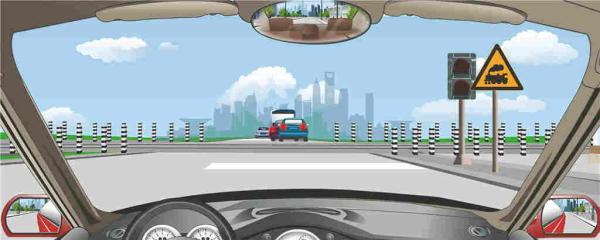
A. Change to neutral gear and slide over
B. Stop, look and pass
C. Speed up, look and pass rapidly
D. Slow down, look and pass slowly
Answer: B
14. If a motor vehicle is unable to drive in heavy fog on an expressway due to an accident, what should the driver do?
A. The driver and all passengers should promptly get off the motor vehicle from the left side door
B. Set up a warning sign 100 meters behind the vehicle in the oncoming direction
C. Turn on the hazard lamp and the high-beam
D. Stand in a safe place outside the guardrail
Answer: D
15. When rescuing a wounded person suffering from spinal fracture, which of the following measures should be taken?
A. Prevent heat loss
B. Rescue the wounded person with a soft stretcher
C. Keep the wounded part in position with a sling
D. Help the wounded person when walking
Answer: C
16. When driving on the highway in foggy, rainy, or snowy weather with a range of visibility between 100 meters and 200 meters, what should motor vehicle drivers do?
A. Turn on the fog lamp, low-beam, clearance lamp and front and rear position lamp
B. Drive at a speed of no more than 60 km/hour
C. Keep a breaking distance of more than 100 meters from the vehicle in front in the same lane
D. Leave the highway from the nearest exit as soon as possible
Answer: ABC
17. What is the emergency measure to deal with a sudden tire burst on the road?
A. Swiftly braking to slow down
B. Firmly hold the steering wheel and steadily stop the vehicle as early as possible
C. Swiftly turn the steering wheel to adjust the direction
D. Go ahead at a low speed and find a place for tire change
Answer: B
18. The sign on the right warns of a wet road surface ahead.
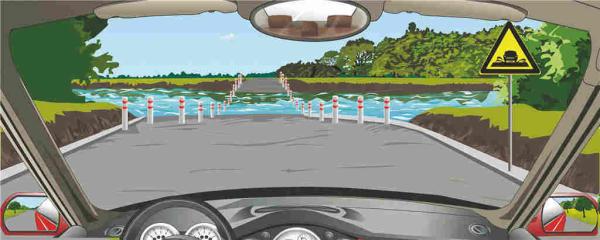
A. Right
B. Wrong
Answer: A
19. The crosswalk of the intersection warns that pedestrians have priority.

A. Right
B. Wrong
Answer: A
20. When driving on an expressway, where should the driver park?
A. The service area
B. The acceleration lane
C. The deceleration lane
D. On the ramp
Answer: A