

1. Drivers are allowed to cross the broken and solid white line on the road when changing lanes or pulling over.
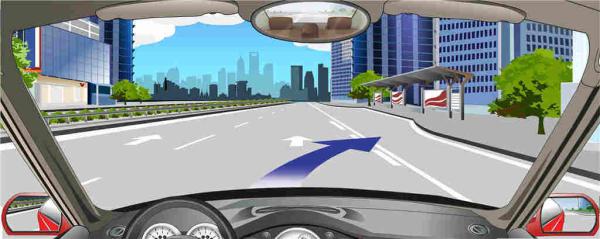
A. Right
B. Wrong
Answer: A
2. The sign on the right indicates to stop and yield for oncoming vehicles approaching on the road ahead.
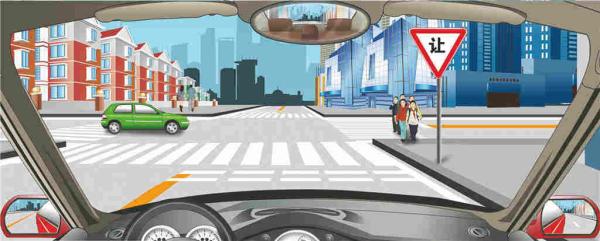
A. Right
B. Wrong
Answer: B
3. The sign on the right warns that there are vehicles converging into the intersection on the right.
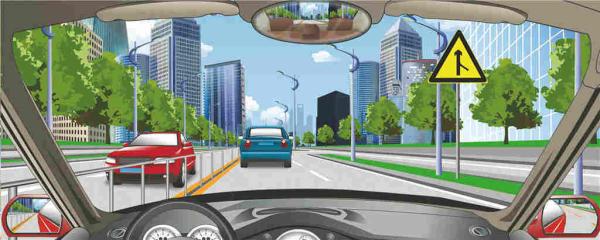
A. Right
B. Wrong
Answer: A
4. When a motor vehicle needs to stop for inspection after having an accident on an expressway, where should the driver park?
A. On the far outer lane
B. On the inner lane
C. On the emergency lane
D. In the triangle area on the ramp
Answer: C
5. If a motor vehicle has an accident on a foggy day and stops on an expressway, which of the following acts is dangerous?
A. Leaving the motor vehicle as soon as possible
B. Standing outside the guardrail as much as possible
C. Turning on the hazard lamp and fog lamp
D. Placing a warning sign behind the vehicle in the oncoming direction
Answer: D
6. Motor vehicles are permitted to follow the guidance of the arrow in this picture and enter the lane of an expressway.
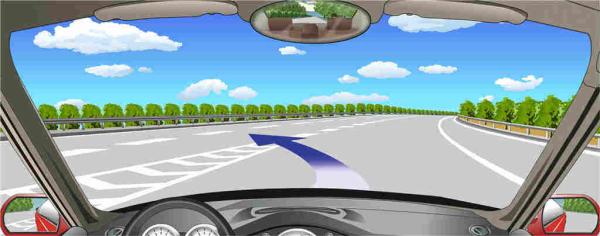
A. Right
B. Wrong
Answer: B
7. Motor vehicles are permitted to move to the right lane at this intersection.
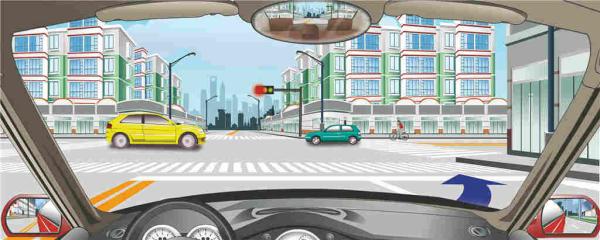
A. Right
B. Wrong
Answer: B
8. When driving a vehicle equipped with power steering what should the driver do upon finding that steering is difficult?
A. Stop and identify the cause
B. Control the steering and drive slowly
C. Drive at a lower speed
D. Keep the vehicle going straight
Answer: A
9. The sign on the right indicates an ETC lane at toll station ahead.
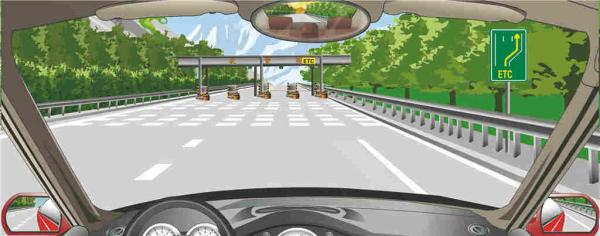
A. Right
B. Wrong
Answer: A
10. If a motor vehicle deviates from the straight direction due to steering failure, what should be done by the driver in order to reduce speed and stop the vehicle as soon as possible?
A. Gently depressing the brake pedal
B. Pulling up the handbrake
C. Immediately changing to a low gear to reduce speed
D. Decisively and continuously depressing and releasing the brake pedal
Answer: D
11. The crosswalk of the intersection warns that pedestrians have priority.

A. Right
B. Wrong
Answer: A
12. What should be done by motor vehicle drivers in order to yield politely to such pedestrians?
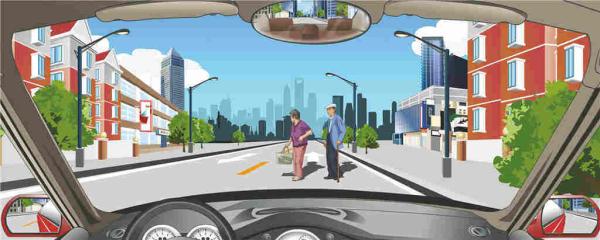
A. Speed up and bypass in front of the pedestrians
B. Speed up and bypass from behind the pedestrians
C. Reduce speed or stop to yield
D. Continuously sound the horn to alert the pedestrians
Answer: C
13. Under such circumstances, what should motor vehicle drivers do?
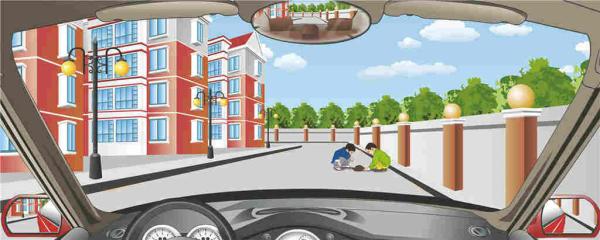
A. Continuously sound the horn
B. Pass quickly
C. Pass at a lower speed
D. Bypass from either side
Answer: C
14. If a motor vehicle misses an exit on the expressway, the driver may reverse along the road shoulder.
A. Right
B. Wrong
Answer: B
15. Mr. Zhou drove a light van (with 22 passengers) on the Bingcha Highway. At the spot of 79 kilometers mark by 150 meters of the highway, the van fell into the valley on one side, killing 12 people and injuring 10. What is the main illegal act committed by Mr. Zhou?
A. Driving a motor vehicle having failed to accept inspection in time
B. Carrying passengers on a freight motor vehicle
C. Speeding
D. Fatigued driving
Answer: B
16. When driving on an expressway, where should the driver park?
A. The service area
B. The acceleration lane
C. The deceleration lane
D. On the ramp
Answer: A
17. When the motor vehicle encounters a crosswalk in this situation, the driver may speed up and pass rapidly.
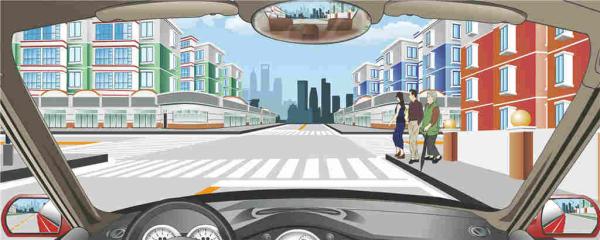
A. Right
B. Wrong
Answer: B
18. Motor vehicles should stop and wait when encountering two red lights flashing alternately at level crossings.
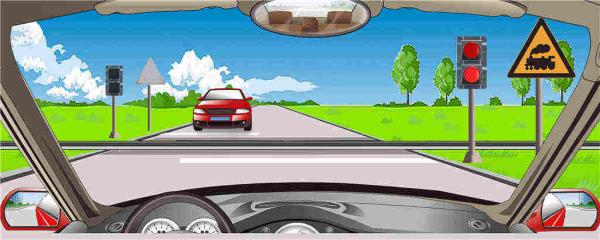
A. Right
B. Wrong
Answer: A
19. The slanted filled-in yellow marking in the middle of the road warns that there is a stationary obstacle ahead.
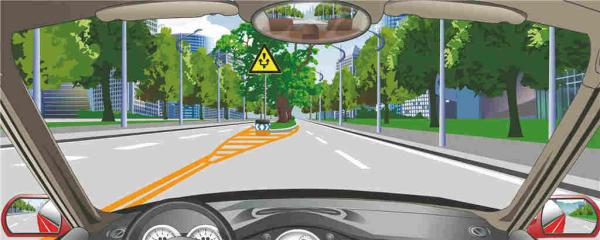
A. Right
B. Wrong
Answer: A
20. The driver should turn on the left-turn indicator after entering the acceleration lane on an expressway.
A. Right
B. Wrong
Answer: B