

1. When there is a braking failure on a downhill road the driver should change the gear to one position or two positions lower, and control the speed by taking advantage of the braking role of the engine.
A. Right
B. Wrong
Answer: A
2. Motor vehicles should stop and yield rapidly when encountering this situation at a bus station.
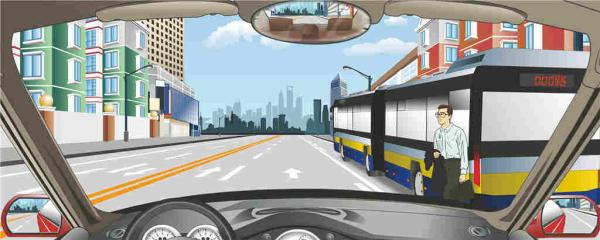
A. Right
B. Wrong
Answer: A
3. What should the driver do when the motor vehicle passes a flyover?
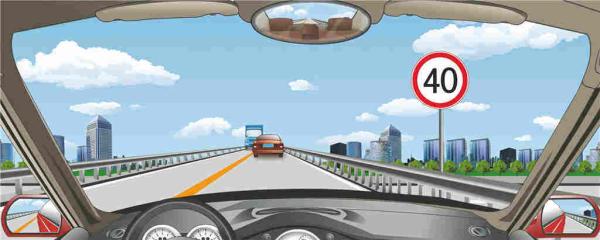
A. Speed up and pass rapidly
B. Keep the speed under 15 km/hour
C. Drive at the speed indicated by the traffic sign
D. Drive close to the central line of the flyover
Answer: C
4. How to ensure safe driving at night?
A. Drive at speed limit
B. Cut speed and drive carefully
C. Maintain the current speed
D. Drive above the speed limit
Answer: B
5. Which of the following measures should be taken first when rescuing a wounded person suffering blood loss?
A. Observe
B. Dress the wounds
C. Stop bleeding
D. Inquire
Answer: C
6. When passing a sharp curve, motor vehicle drivers may overtake if there are few other vehicles on the road.
A. Right
B. Wrong
Answer: B
7. When a bicycle occupies the motor vehicle lane and obstructs the traffic, the driver should sound the horn continuously and speed up to bypass on the left of the bicycle.
A. Right
B. Wrong
Answer: B
8. The sign on the right side warns of crosswind on the mountain pass ahead.
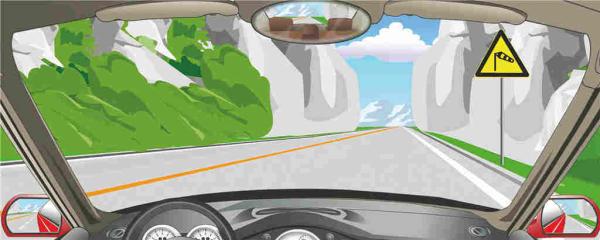
A. Right
B. Wrong
Answer: A
9. The motor vehicle should slow down and pass slowly in this situation.
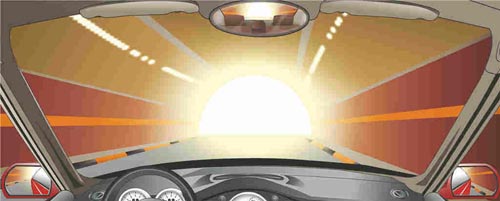
A. Right
B. Wrong
Answer: A
10. The sign on the right warns of a sharp winding road ahead.
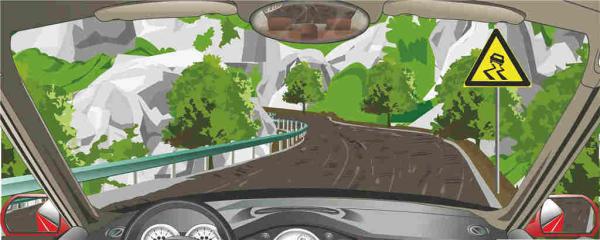
A. Right
B. Wrong
Answer: B
11. When driving on an expressway, where should the driver park?
A. The service area
B. The acceleration lane
C. The deceleration lane
D. On the ramp
Answer: A
12. When following other vehicles on the uphill section of a mountain road, what should the driver do if the vehicle in front stops?
A. Overtake from either side of the front vehicle
B. Stop close to the vehicle in front
C. Stop with a larger space from the vehicle in front
D. Sound the horn continuously to warn the other driver
Answer: C
13. The motor vehicle may promptly overtake the vehicle in front from the left side in this situation.
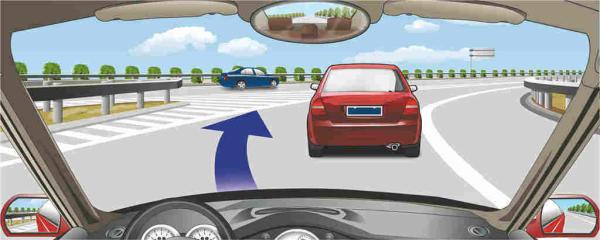
A. Right
B. Wrong
Answer: B
14. How to pass the intersection when running straight
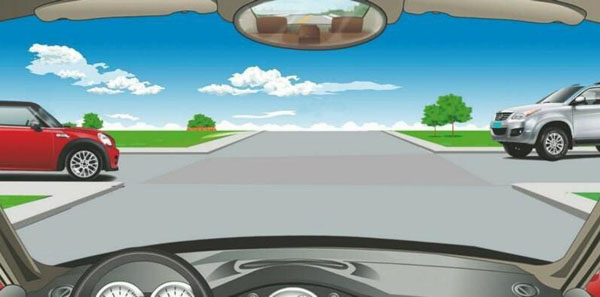
A. turn on the hazard lights and pass
B. directly speed up and pass straight
C. yield to the vehicle from the right road
D. yield to the vehicle from the left road
Answer: C
15. Motor vehicle drivers are allowed to overtake on this road section.
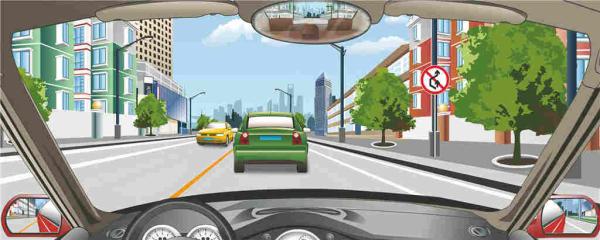
A. Right
B. Wrong
Answer: B
16. Under such circumstances, the motor vehicle is allowed to overtake.
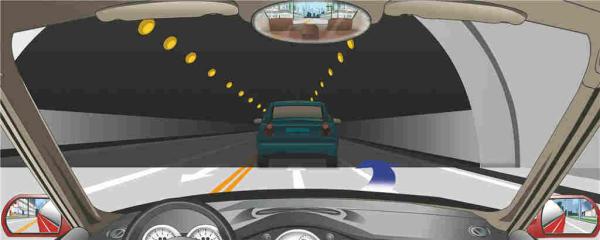
A. Right
B. Wrong
Answer: B
17. Drivers are not allowed to drive on or across these filled-in slanted yellow lines.
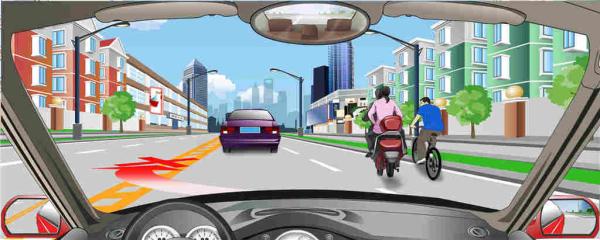
A. Right
B. Wrong
Answer: A
18. The sign on the right warns of a widened left-hand road ahead.
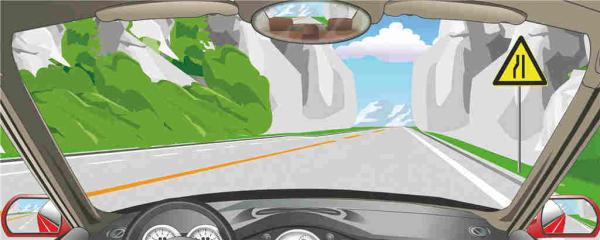
A. Right
B. Wrong
Answer: B
19. The diamond-shaped broken line warns that drivers should drive at a lower speed on the road sections ahead.
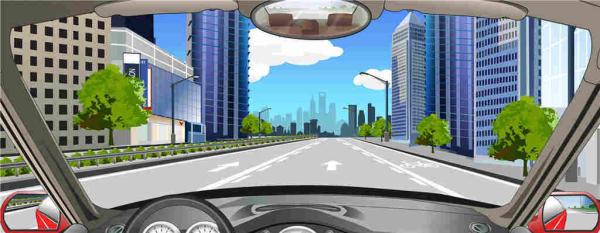
A. Right
B. Wrong
Answer: A
20. When removing a wounded person suffering spinal fracture, the rescuer should never help the wounded person to walk. He may be carried away with a soft stretcher.
A. Right
B. Wrong
Answer: B