

1. When a motor vehicle slides sideways on a road covered by ice and snow, the driver should violently turn the steering wheel to adjust the direction.
A. Right
B. Wrong
Answer: B
2. When the vehicle behind gives a notice of overtaking at night, the vehicle in front should not yield blindly.
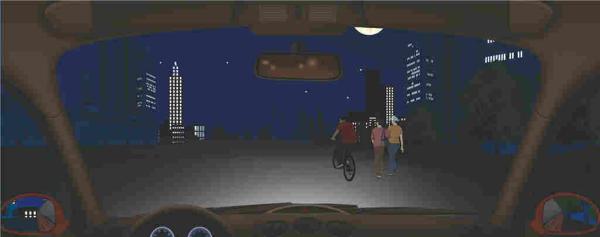
A. Right
B. Wrong
Answer: A
3. Which of the following measures should be taken first when rescuing a wounded person suffering blood loss?
A. Observe
B. Dress the wounds
C. Stop bleeding
D. Inquire
Answer: C
4. The sign in front gives information about the direction of road exits.
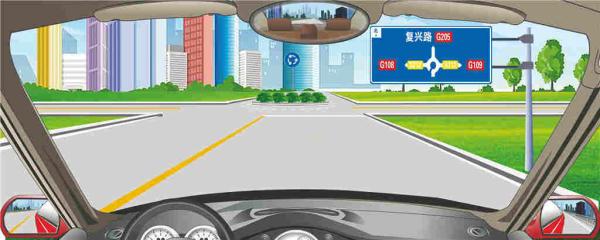
A. Right
B. Wrong
Answer: A
5. When the speed indicated by the speed limit sign on the highway contradicts the speed indicated for the specific lanes the speed indicated for the specific lanes should prevail.
A. Right
B. Wrong
Answer: B
6. The road marker indicates that vehicles are not allowed to make a U-turn at the intersection ahead.
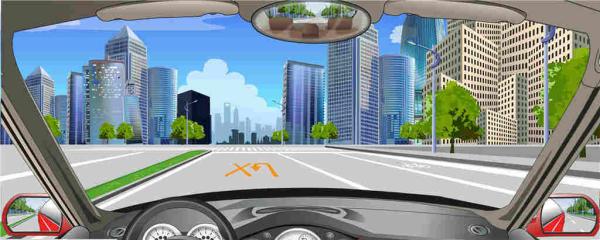
A. Right
B. Wrong
Answer: A
7. When a motor vehicle encounters an accident on an expressway, the driver and all passengers should not get off the vehicle and walk around at will.
A. Right
B. Wrong
Answer: B
8. When driving on a long downhill road, which is the best way to control driving speed?
A. Coast in neutral gear
B. Depress the clutch and coast
C. Use the engine to brake
D. Depress the brake pedal continuously
Answer: C
9. The driver should drive on the left in this kind of tunnel.
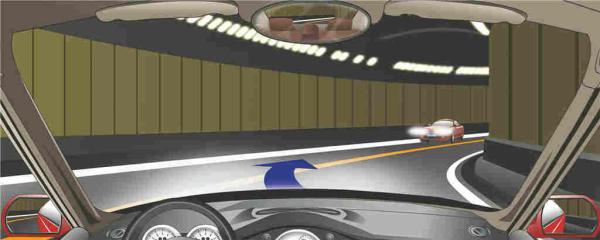
A. Right
B. Wrong
Answer: B
10. In rain, the most effective way to avoid the danger arising from water slide is to drive at high speed
A. Right
B. Wrong
Answer: B
11. What should the driver pay attention to when the motor vehicle passes a school?
A. Observe the traffic signs and markings
B. Slow down and pass slowly
C. Prohibited from sounding the horn
D. Pass rapidly
Answer: ABC
12. A correct measure to avoid tire burst of motor vehicles is to lower the tire pressure.
A. Right
B. Wrong
Answer: B
13. Which one of the following is a safe way for motor vehicles to converge into an intersection marked with this sign?

A. Speeding up and driving into the traffic flow directly
B. Driving into the traffic flow behind the gray car on the main road
C. Driving into the traffic flow from the front of the red car on the main road
D. Turning on the indicator and driving into the flow directly
Answer: B
14. Those traffic police signals mean turning right.
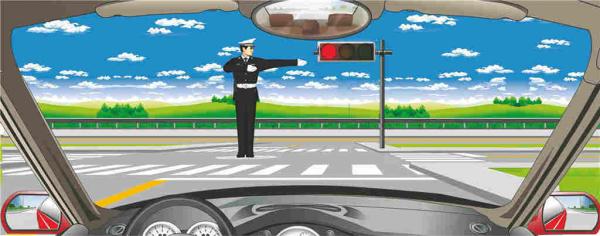
A. Right
B. Wrong
Answer: B
15. Motor vehicles drivers may overtake by borrowing the opposite lane on this kind of road.
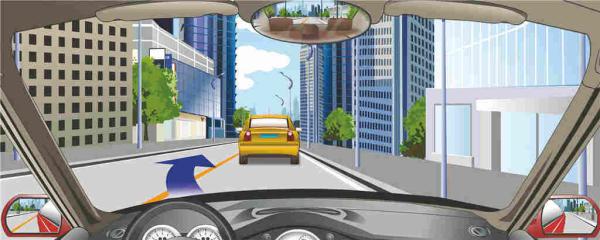
A. Right
B. Wrong
Answer: B
16. The motor vehicle equipped with ABS may sideslip during an emergency brake.
A. Right
B. Wrong
Answer: A
17. Motor vehicles can turn right when driving into an intersection with this traffic signal.
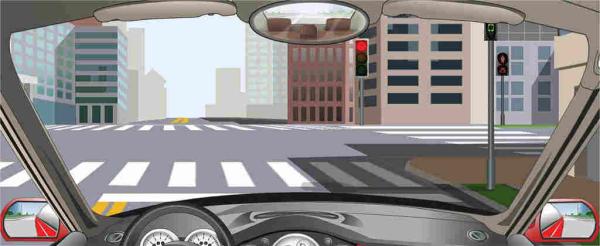
A. Right
B. Wrong
Answer: A
18. Before a motor vehicle enters a tunnel, the driver should adjust the speed in accordance with the indication of the traffic sign at the entrance of the tunnel.

A. Right
B. Wrong
Answer: A
19. How to run when encountering this situation at the intersection?
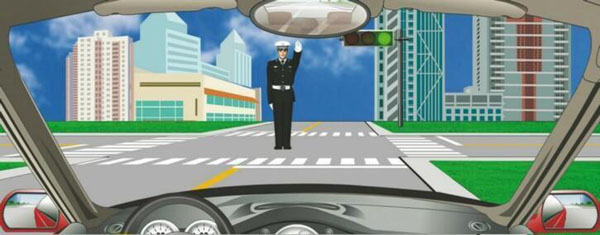
A. stop and wait
B. obey the traffic lights
C. run straight on the right side
D. may turn right
Answer: A
20. The braking distance will be shortened greatly when the motor vehicle is equipped with ABS brakes.
A. Right
B. Wrong
Answer: B