

1. Driving a motorized vehicle on the road in violation of road traffic regulations shall be subject to relevant punishment.
A. Right
B. Wrong
Answer: A
2. What should be done by the driver who intends to overtake but finds that the vehicle in front is also overtaking?
A. Following the vehicle in front closely and finding a chance to overtake it
B. Accelerating to overtake forcefully
C. Continuously sounding the horn to urge the vehicle in front to yield
D. Refraining from overtaking and letting the vehicle in front overtake first
Answer: D
3. The motorized vehicle driver who lives outside the jurisdiction of the issuing vehicle management station may apply to the vehicle management station at the place where he is living, for license change.
A. Right
B. Wrong
Answer: A
4. If a motorized vehicle driver has caused a major accident in violation of the traffic regulations which has caused heavy loss to public or private property, the driver is subject to________.
A. a prison term of more than 3 years
B. a prison term of less than 3 years or a criminal detention
C. a prison term of 3 ~ 7 years
D. a prison term of more than 5 years
Answer: B
5. Which is correct when riding a motorcycle
A. Both hands can temporarily leave the steering handle bar
B. Voluntarily operate the steering handle bar
C. It is prohibited to simultaneously move two hands from the steering handle bar
D. It is able to statically turn the steering handle bar
Answer: C
6. A motorized vehicle driver who escapes after causing a traffic accident but his conduct does not constitute a crime, is subject to a ________.
A. 3-point penalty
B. 2-point penalty
C. 12-point penalty
D. 6-point penalty
Answer: C
7. Which shoud be taken along while driving?
A. vocational qualification certificate
B. ID card
C. driving license
D. work permits
Answer: C
8. Which is subject to a 6-point penalty?
A. use other vehicle’s vehicle license
B. run 50% faster than the prescribed speed limit
C. illegally occupy emergency lane
D. drive after drinking
Answer: C
9. What should the driver do to follow other motor vehicles on a mountain road?
A. Closely follow the vehicle in front
B. Increase the safety distance
C. Reduce the vertical distance between vehicles
D. Try to overtake the vehicle in front as soon as possible
Answer: B
10. What should motor vehicle drivers do when parking temporarily on a rainy day?
A. Turn on hazard lamp
B. Turn on front and back fog lamp
C. Turn on low-beam
D. Set up warning sign at the back of the vehicle
Answer: A
11. What is the meaning of this sign?

A. more vehicles section
B. passing slowly
C. jammed section
D. construction section
Answer: B
12. Which of the following vehicle in front in the same lane is not allowed to be overtaken?
A. the vehicle is making a stop
B. the vehicle is reducing speed to yield
C. the vehicle is taking a U turn
D. the vehicle is running normally
Answer: C
13. What is the meaning of this sign?
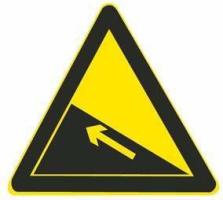
A. steep downhill road
B. continuous up slopes
C. steep uphill road
D. embankment road
Answer: C
14. In which situation that a driver cannot drive?
A. after drinking coffee
B. after drinking milk
C. after drinking
D. after drinking tea
Answer: C
15. How to use lights when overtaking at night?
A. turn off the high beam light
B. turn on high beam lights
C. use fog lights
D. using the high and low beam lights alternately
Answer: D
16. What is the meaning of this sign?
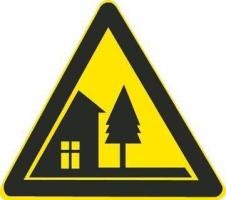
A. watch for pedestrians
B. crosswalk
C. village or town
D. primary school
Answer: C
17. When passing an intersection, vehicle motor drivers are not allowed to overtake.
A. Right
B. Wrong
Answer: A
18. How to use lights when pulling over on road?
A. turn on the hazard lights
B. turn on the right-turn signal in advance
C. use the high and low beam lights alternately
D. not need to use any light to indicate
Answer: B
19. When driving on a road covered with ice and snow, drivers tend to encounter glare caused by reflection of light rays from the road surface.
A. Right
B. Wrong
Answer: A
20. In which situation that a driver will not allowed to drive?
A. penalty points reach 10 points
B. penalty points reach 6 points
C. driving license lost or destroyed
D. driving license is nearly expired
Answer: C