

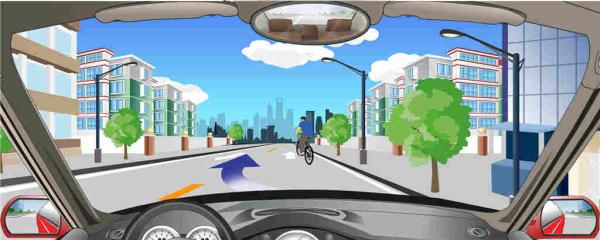
1. The broken yellow line in the center of the road indicates that overtaking by crossing the line is permitted in safe situations.
A. Right
B. Wrong
Answer: A
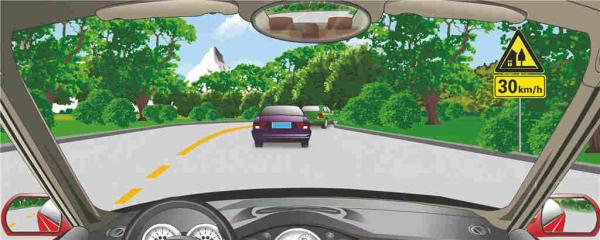
2. The sign on the right warns of a village or town ahead suggesting a 30km/hour speed.
A. Right
B. Wrong
Answer: A
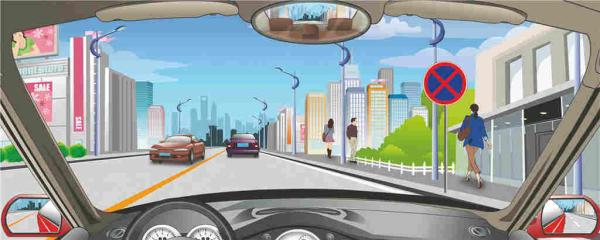
3. The sign on the right indicates that no restriction for temporary parking.
A. Right
B. Wrong
Answer: B
4. When finding a tire burst on the road, the driver should gently depress the brake pedal, reduce speed and stop the vehicle slowly.
A. Right
B. Wrong
Answer: A
5. As shown in the flash, what should the motor vehicle driver do when encountering this situation?
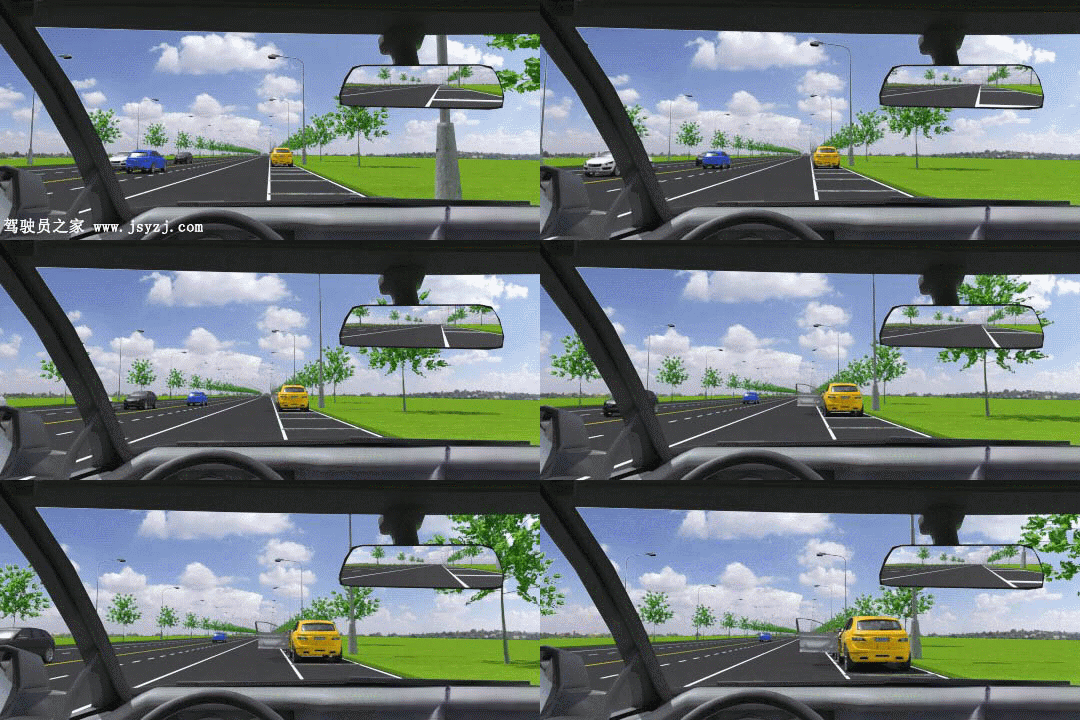
A. Reserve a safe crosswise distance and cut speed
B. Keep a normal speed
C. Use the emergency brake when approaching
D. Speed up and pass rapidly
Answer: A
6. If a motor vehicle has an accident on a foggy day and stops on an expressway, which of the following acts is dangerous?
A. Leaving the motor vehicle as soon as possible
B. Standing outside the guardrail as much as possible
C. Turning on the hazard lamp and fog lamp
D. Placing a warning sign behind the vehicle in the oncoming direction
Answer: D
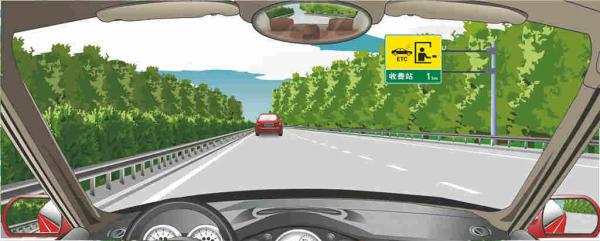
7. The sign on the right indicates a one-kilometer distance from the ETC toll station.
A. Right
B. Wrong
Answer: A
8. Which of the following is a bad driving habit?
A. Using lights in accordance with relevant rules
B. Carrying both vehicle and driving license
C. Discarding rubbish from the side window
D. Follow the guidance of the traffic signals
Answer: C
9. When there is a braking failure, the driver should first control the direction and then try to control the speed.
A. Right
B. Wrong
Answer: A
10. If a motor vehicle enters a driving lane under this situation, what should the driver do?
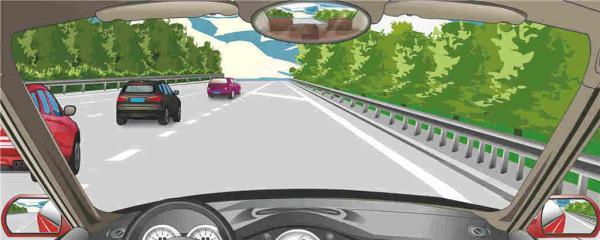
A. Control the driving speed and follow the last vehicle
B. Speed up and cut in front of the second vehicle
C. Speed up and cut in front of the first vehicle
D. Cut in between two vehicles at will
Answer: A
11. When an erosive material catches fire, it should not be put out with water cannon.
A. Right
B. Wrong
Answer: A
12. When a motor vehicle turns at an excessively high speed, it can easily slide sideways.
A. Right
B. Wrong
Answer: A
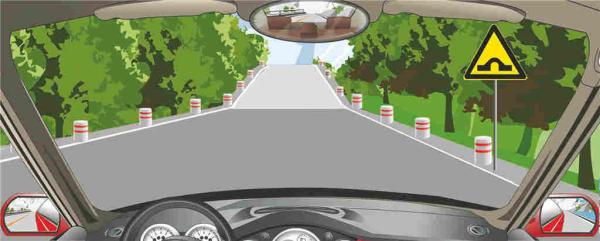
13. The sign on the right warns of a bumpy road ahead.
A. Right
B. Wrong
Answer: B
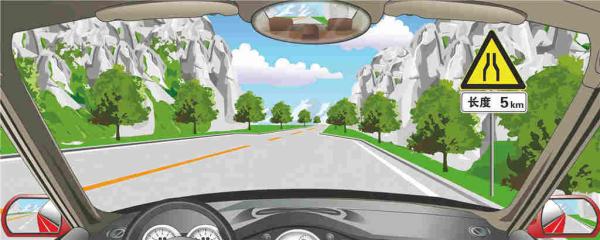
14. The sign on the right warns that the road will narrow over the next 5 kilometers.
A. Right
B. Wrong
Answer: A
15. What is the function of ABS during emergency braking?
A. Shortening the braking distance
B. Keeping steering capacity of the motor vehicle
C. Relief the braking inertia
D. Controlling directions automatically
Answer: B
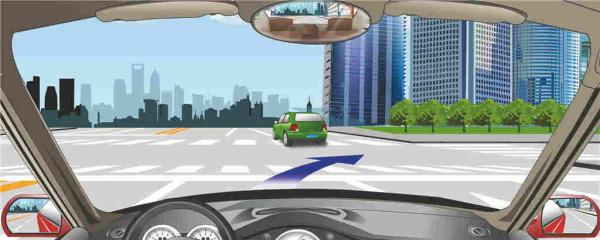
16. The driver may not change lanes when the motor vehicle turns right at this intersection.
A. Right
B. Wrong
Answer: B
17. When braking, the steering will become impossible if the front wheels are blocked
A. Right
B. Wrong
Answer: A
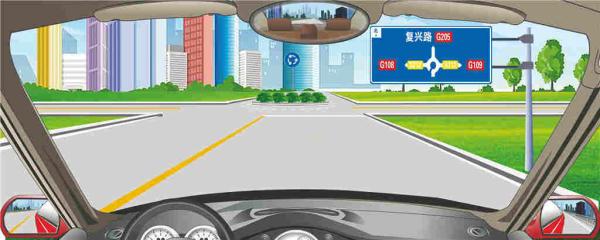
18. The sign in front gives information about the direction of road exits.
A. Right
B. Wrong
Answer: A
19. Mr. Qian drove a large sleeper coach with 45 passengers (capacity 40 people) at a speed of more than 40 kilometers per hour. On a long slope with sharp curves in Basu County, the coach fell into a 100-meter-deep valley, killing 17 people and injuring 20. What is the main illegal act committed by Mr. Qian?
A. Making a cellphone call while driving
B. Speeding
C. Carrying more people than permitted
D. Fatigued driving
Answer: BC
20. When extinguishing fire, the synthetic-made garments should not be taken off in order to protect the exposed skin from burning.
A. Right
B. Wrong
Answer: B