

1. When a motor vehicle deviates from the normal direction due to steering failure and an accident is unavoidable, what should the driver do?
A. Apply emergency brake
B. Immediately steer and adjust
C. Immediately steer to the side where there is no obstacle and evade
D. Immediately steer to the side where there is an obstacle and evade
Answer: A
2. Mr. Qian drove a large sleeper coach with 45 passengers (capacity 40 people) at a speed of more than 40 kilometers per hour. On a long slope with sharp curves in Basu County, the coach fell into a 100-meter-deep valley, killing 17 people and injuring 20. What is the main illegal act committed by Mr. Qian?
A. Making a cellphone call while driving
B. Speeding
C. Carrying more people than permitted
D. Fatigued driving
Answer: BC
3. When there is a sudden braking failure on a downhill road, in which ones of the following ways can drivers reduce speed?
A. Driving onto the emergency lane and reduce speed and stop there
B. Rubbing the vehicle body against the rocks or trees on roadside
C. Pulling up the handbrake first
D. Immediately changing to a low gear
Answer: ABD
4. The sign on the right indicates that turning right is not permitted at the intersection ahead.

A. Right
B. Wrong
Answer: A
5. Drivers may turn left when traffic police give these hand signals.
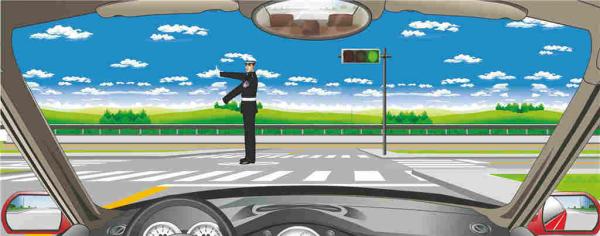
A. Right
B. Wrong
Answer: A
6. When a motor vehicle breaks down on an expressway and cannot be moved away from the driving lane, the driver may conduct emergency repairs on the driving lane.
A. Right
B. Wrong
Answer: B
7. The sign on the left indicates vehicles are allowed to drive on the section ahead.
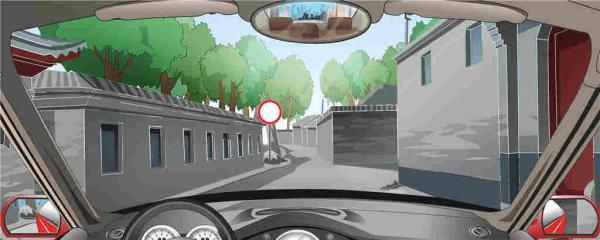
A. Right
B. Wrong
Answer: B
8. What should the driver pay attention to when the motor vehicle on the main road approaches a junction with a feeder road?
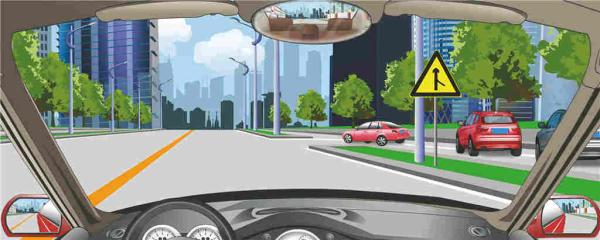
A. Slow down in advance and pay attention to other motor vehicles
B. Maintain the normal speed
C. Sound the horn and pass rapidly
D. Speed up and pass rapidly
Answer: A
9. Mr. Ye drove a midsize van to Shangwen Road of Beitou Town. When passing a curve at the spot of 3 kilometers mark by 600 meters on the road, the van had a head-on collision at the speed of 40 kilometers per hour with Mr. Wang?ˉs three-wheeled freight motorcycle carrying 19 passengers, killing 10 people and injuring 9. What are the main illegal acts committed by the two drivers?
A. Mr. Ye drove an unpermitted vehicle type
B. Mr. Wang drove a freight motorcycle to carry passengers
C. Mr. Ye exceeded the speed limit
D. Mr. Wang failed to follow the guidance of the traffic signal lights
Answer: BC
10. The sign on the right warns of an embankment road 200 meters ahead.
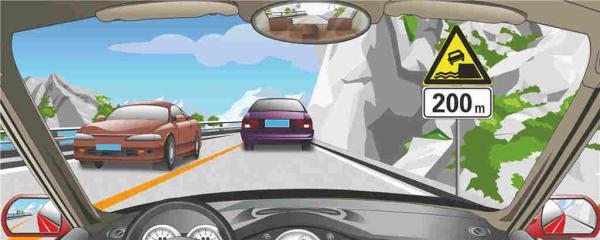
A. Right
B. Wrong
Answer: A
11. If a motor vehicle experiences a water sliding phenomenon when running on an expressway in rain, what should the driver do?
A. Slow down by suddenly depressing the brake pedal
B. Slow down by slowly releasing the accelerator pedal
C. Turn the steering wheel immediately to adjust the direction
D. Speed up to increase the displacement of the wheels
Answer: B
12. It is illegal to change lanes without turning on indicators.
A. Right
B. Wrong
Answer: A
13. How to reduce speed or stop when driving on a road covered with snow and ice?
A. Take full advantage of driving brake
B. Take full advantage of the control power from engine
C. Take full advantage of parking brake
D. Take full advantage of speed retarder
Answer: B
14. When a motor vehicle stops temporarily in a rainy day,which lamp should be turned on?
A. Front and rear fog lamps
B. Hazard lamps
C. Headlamps
D. Reverse lamps
Answer: B
15. When driving, besides paying attention to keeping a safe distance from the vehicle in front, drivers should also be prudent when braking so as to avoid a rear-end collision caused by a vehicle behind.
A. Right
B. Wrong
Answer: A
16. Motor vehicles should accelerate when driving into an intersection with this traffic signal.
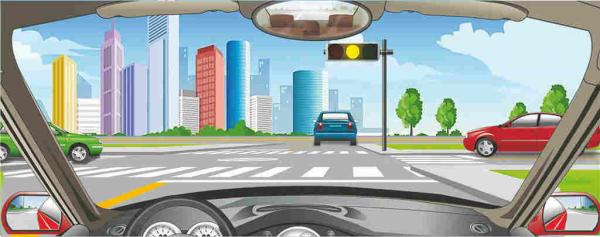
A. Right
B. Wrong
Answer: B
17. The sign on the right warns of an unguarded railway intersection ahead.

A. Right
B. Wrong
Answer: B
18. In which ones of the following ways can motor vehicle drivers effectively prevent braking failure?
A. Maintaining the braking system periodically
B. Checking the free brake pedal travel before driving
C. Using the braking system correctly to avoid brake-fade
D. For vehicles with hydraulic braking system, checking if the brake fluid leaks before driving
Answer: ABCD
19. In the condition of low visibility, drivers should turn on the low-beam when setting off
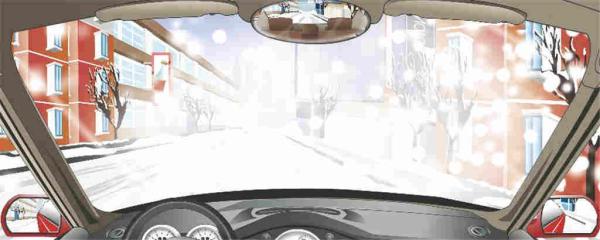
A. Right
B. Wrong
Answer: A
20. When a motor vehicle encounters this situation at a crosswalk, the driver must slow down and pass slowly.
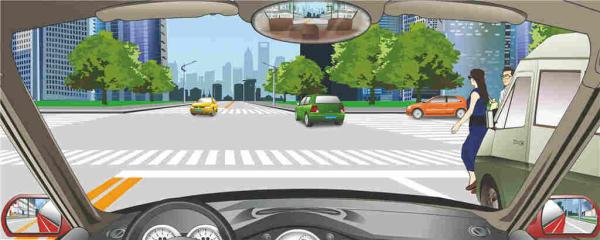
A. Right
B. Wrong
Answer: B