

1. What marking is the road mark?

A. crosswalk ahead
B. intersection ahead
C. reduce speed and yield ahead
D. stop to yield ahead
Answer: A
2. Whats the meaning of the marking in the red circle?
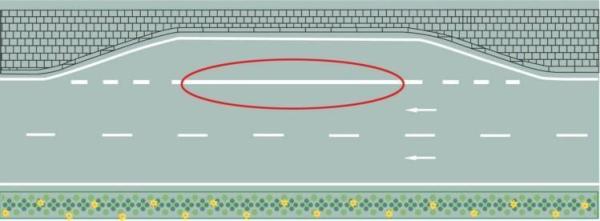
A. temporary stopping
B. bay-stopping
C. emergency stopping
D. public bus station
Answer: B
3. You may not use the turn signal when you change to the right lane.
A. Right
B. Wrong
Answer: B
4. Which is correct if a vehicle breaks down and is difficult to move?
A. turn on the hazard lights
B. turn on all the lights of the vehicle
C. forbid the passengers to get off
D. place a warning sign in front of the vehicle
Answer: A
5. Pass the crossing as fast as possible if there is a red light at the intersection of a road or a level crossing.
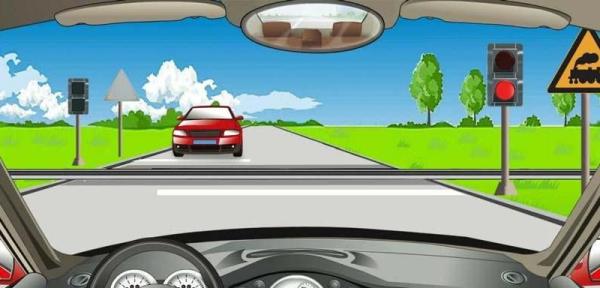
A. Right
B. Wrong
Answer: B
6. This sign reminds the road in front changes to inseparate two ways section.

A. Right
B. Wrong
Answer: A
7. Whats the meaning of this sign?
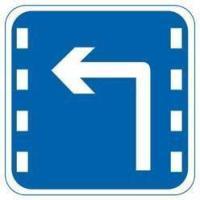
A. right-turn lane
B. U turn lane
C. left-turn lane
D. lanes for going in different directions
Answer: C
8. Whats the meaning of this sign?
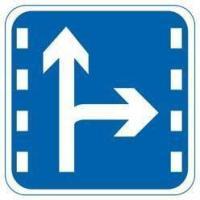
A. straight-going and left-turn lane
B. straight-going and side road exit lane
C. lane for both going straight and right turn
D. lanes for going in different directions
Answer: C
9. The main impact of foggy weather on safe driving is _________.
A. The engine can easily stop
B. The vehicle can easily slide sideways
C. The resistance the vehicle increases
D. The visibility is low and the vision is poor
Answer: D
10. Whats the meaning of this sign?
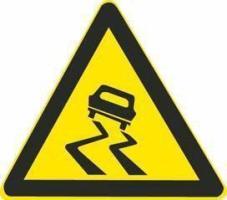
A. slippery section
B. sharp curve
C. test driving section
D. curve section
Answer: A
11. When passing an unmanned level crossing, the driver should ________.
A. Speed up and pass
B. Reduce speed and pass
C. Maintain the speed and pass
D. Stop, look and pass
Answer: D
12. A driver should stop on the expressway at once to have a rest when he feel tired.
A. Right
B. Wrong
Answer: B
13. Driving a motorized vehicle on the road in violation of road traffic regulations shall be subject to relevant punishment.
A. Right
B. Wrong
Answer: A
14. What is this instrument?
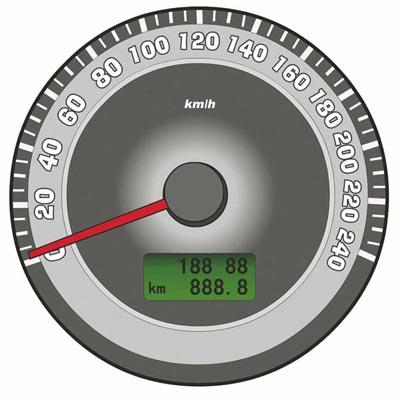
A. speed and mileage meter
B. engine tachometer
C. top speed meter
D. fuel consumption / 100 km
Answer: A
15. When a motorized vehicle runs in a foggy weather, the driver should turn on the fog light and the hazard lights.
A. Right
B. Wrong
Answer: A
16. When causing a road accident involving property damage, the parties to the accident may leave the scene if they have no dispute over the fact and cause.
A. Right
B. Wrong
Answer: A
17. It displays the current engine speed is 6000 rev / min.
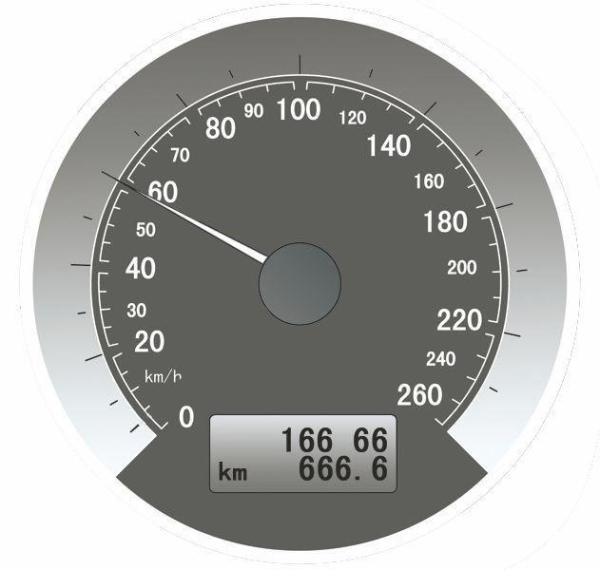
A. Right
B. Wrong
Answer: B
18. When a vehicle approaches an intersection without crosswalk, the driver should _______ if he finds people are crossing the street.
A. Reduce speed or stop to yield
B. Honk to indicate them to yield
C. Immediately change lane and bypass the pedestrians
D. Pass before the pedestrians
Answer: A
19. Whats the meaning of this guide arrow?

A. left curve or need to merge with the left flow ahead
B. right curve or need to merge with the right flow ahead
C. merge with the left flow due to right side obstacle ahead
D. left curve or need to bypass from left side ahead
Answer: A
20. Whats the meaning of this sign?
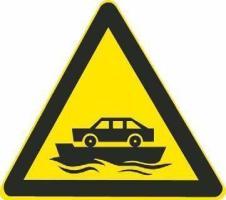
A. overflowing bridge
B. ferry
C. pier
D. overflowing road
Answer: B