

1. When steering failure happens to a fast moving motor vehicle, what should the driver do?
A. Apply emergency braking
B. Immediately change to a low gear
C. Reasonably use the driving brake and the stopping brake and refrain from applying emergency braking
D. Turn on the hazard lamps
Answer: BCD
2. When a wounded person is beneath the wheel or cargo, we should help him out immediately by pulling the limbs of the wounded.
A. Right
B. Wrong
Answer: B
3. What should the driver pay attention to in this situation?
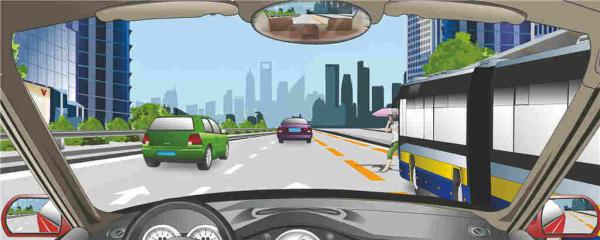
A. Pedestrians passing behind the vehicle
B. Pedestrians passing in front of the vehicle
C. Public buses suddenly reversing
D. Public buses suddenly setting off
Answer: B
4. The sign on the right indicates that no long-sounding horn.
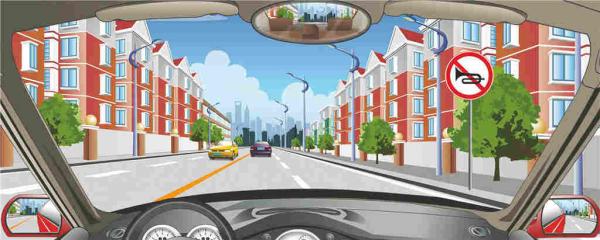
A. Right
B. Wrong
Answer: B
5. The sign in front is an advance announcement of the directions led by this intersection.
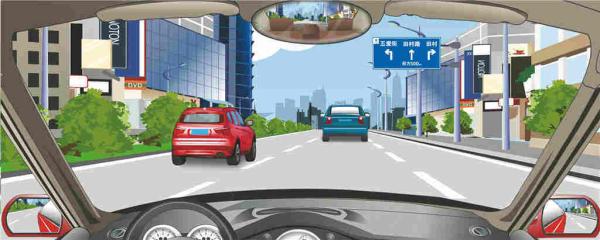
A. Right
B. Wrong
Answer: A
6. The sign on the right warns of a narrowed road on both sides ahead.
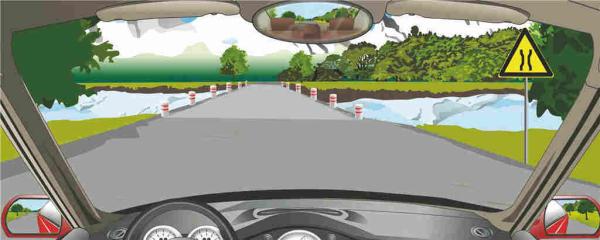
A. Right
B. Wrong
Answer: B
7. The sign on the left indicates vehicles are allowed to drive on the section ahead.
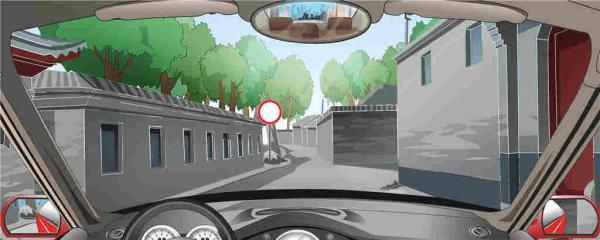
A. Right
B. Wrong
Answer: B
8. The sign on the right warns of a road section ahead under construction.
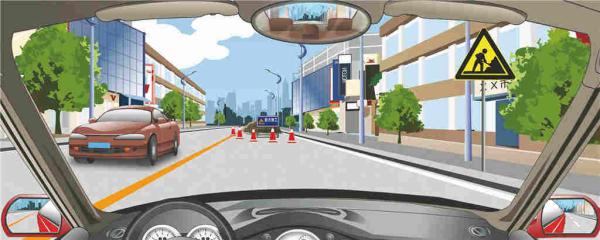
A. Right
B. Wrong
Answer: A
9. The road marking on the right lane indicates that drivers may temporarily borrow the special lane for buses.
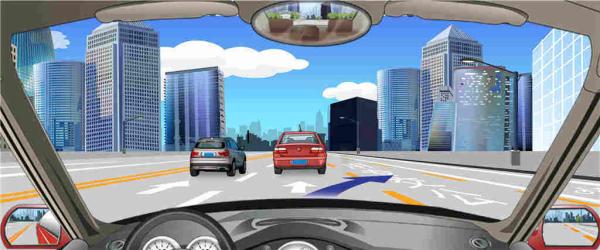
A. Right
B. Wrong
Answer: B
10. Drivers are not allowed to cross these lane-dividing lines when overtaking in the same direction.
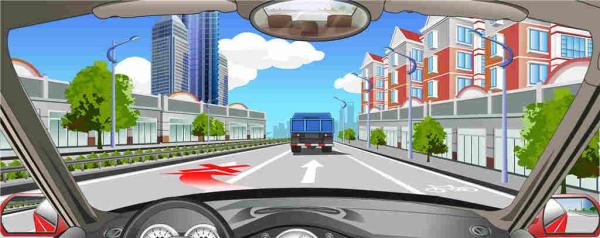
A. Right
B. Wrong
Answer: A
11. When encountering such pedestrians, what should motor vehicle drivers do?
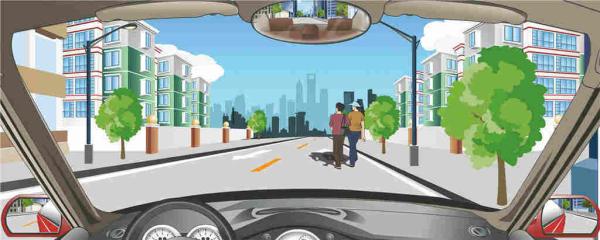
A. Go ahead along the middle line of the road
B. Continuously sound the horn
C. Speed up and overtake
D. Pay attention to the actions of such pedestrians
Answer: D
12. When encountering such pedestrians, what should motor vehicle drivers do?
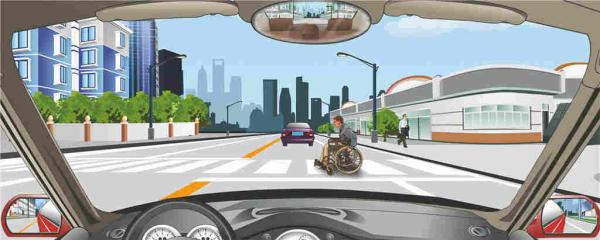
A. Bypass in front of the pedestrians
B. Bypass from behind the pedestrians
C. Sound the horn to alert the pedestrians
D. Voluntarily stop and yield
Answer: D
13. When passing a sharp curve, motor vehicle drivers may overtake if there are few other vehicles on the road.
A. Right
B. Wrong
Answer: B
14. The distance-ascertaining section of an expressway is used for the drivers to ascertain the safety distance when the speed is 100 kilometers per hour.
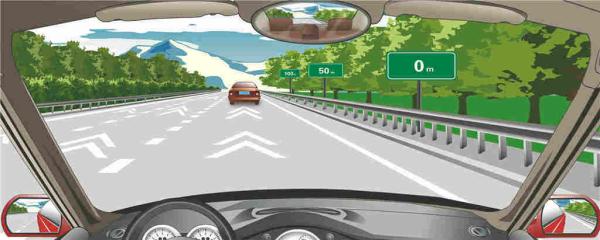
A. Right
B. Wrong
Answer: A
15. The sign on the right warns of low-lying road ahead.

A. Right
B. Wrong
Answer: A
16. What should a driver do before entering a tunnel on an expressway
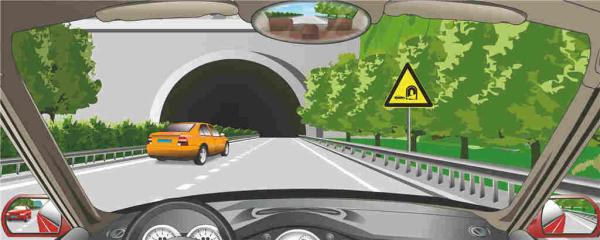
A. Turn on the high-beam
B. Turn on the width lamp and the tail lamp
C. Turn on the low-beam
D. Sound the horn before entering the tunnel
Answer: C
17. How many kinds of law-breaking acts are displayed in flash 7?
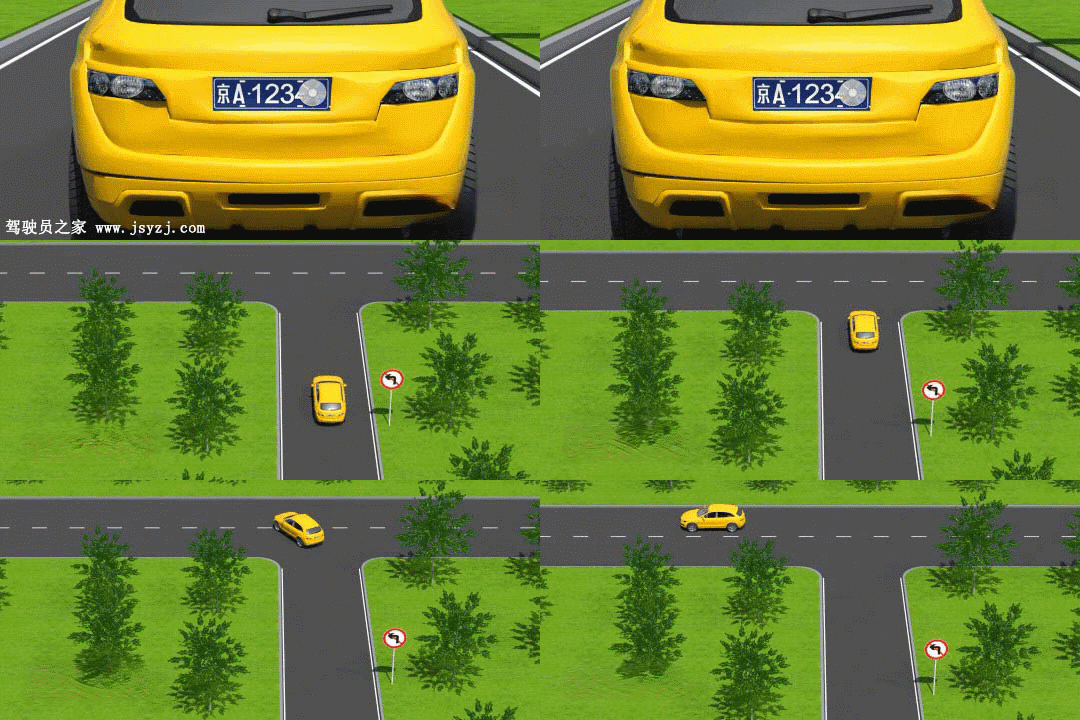
A. One
B. Two
C. Three
D. Four
Answer: B
18. When a motor vehicle passes over an inundated road drivers should change to a high gear and pass rapidly.
A. Right
B. Wrong
Answer: B
19. After a tire bursts and before the driver can control the speed of the vehicle, he should not risk using the foot brake to stop the vehicle. Otherwise, a horizontal swing of the vehicle can cause greater danger.
A. Right
B. Wrong
Answer: A
20. The sign on the right indicates to stop and yield at the intersection ahead.
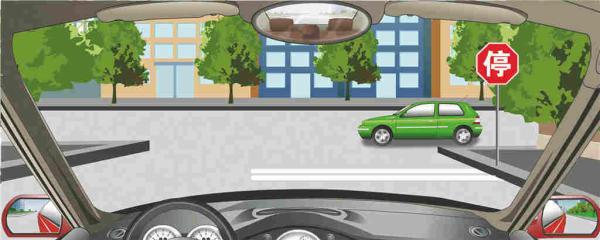
A. Right
B. Wrong
Answer: A