

1. This sign warns that the section ahead is under traffic monitoring.
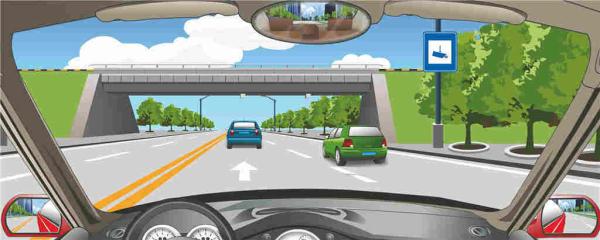
A. Right
B. Wrong
Answer: A
2. The sign in front indicates a one-way lane after turning right.
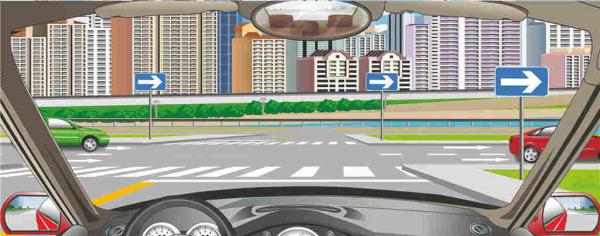
A. Right
B. Wrong
Answer: A
3. The sign on the right indicates a one-kilometer distance from the ETC toll station.
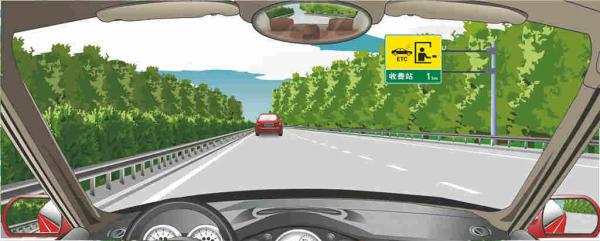
A. Right
B. Wrong
Answer: A
4. The driver should take emergency evasion measures when the motor vehicle suddenly self-ignites. Which ones of the following methods are correct?
A. Spray clean water to extinguish the fire
B. Report to the police
C. Use the spare fire extinguisher in the vehicle to put out the fire
D. Set up a warning sign in the oncoming direction
Answer: BCD
5. In the condition of low visibility, drivers should turn on the low-beam when setting off
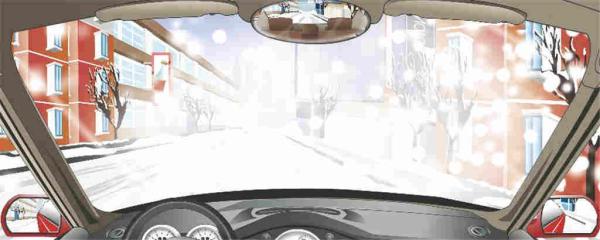
A. Right
B. Wrong
Answer: A
6. The sign on the right warns of a village or town ahead suggesting a 30km/hour speed.
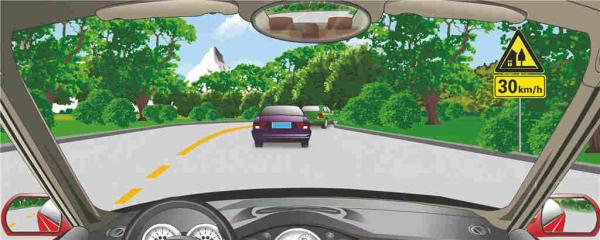
A. Right
B. Wrong
Answer: A
7. The road marking on the right lane indicates that drivers may temporarily borrow the special lane for buses.
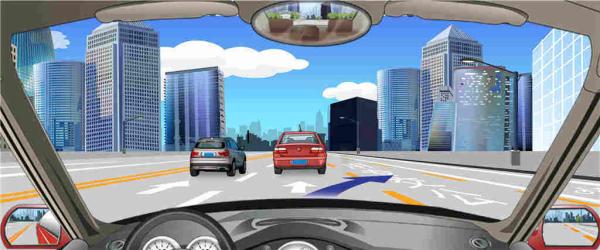
A. Right
B. Wrong
Answer: B
8. What is the intersection ahead indicated by the right sign?
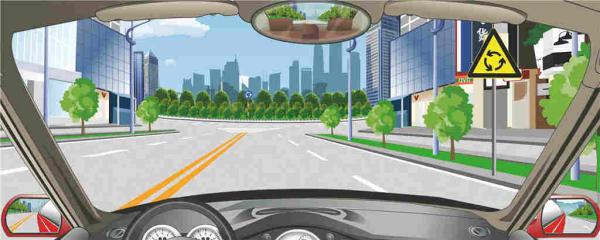
A. T-shaped intersection
B. Y-shaped intersection
C. Cross-shaped intersection
D. Roundabout
Answer: D
9. Drivers may turn left when traffic police give these hand signals.
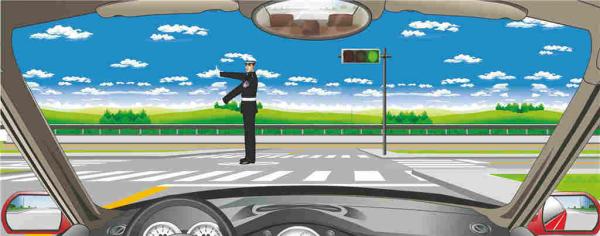
A. Right
B. Wrong
Answer: A
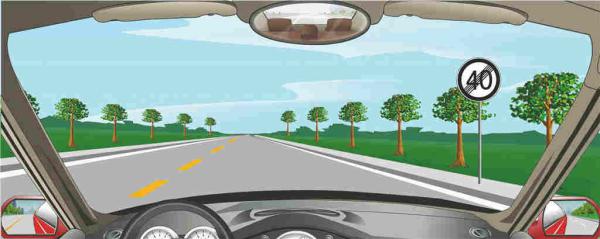
10. The sign on the right indicates that the speed limit of 40km/hour is lifted on the road ahead.
A. Right
B. Wrong
Answer: A
11. When driving on a road covered with ice and snow, drivers tend to encounter glare caused by reflection of light rays from the road surface.
A. Right
B. Wrong
Answer: A
12. Mr. Tong drove a large bus (capacity 55 people and carrying 54) to Taiyuan City. When he drove on a muddy road at the speed of 45 kilometers per hour, the bus skidded into a deep ditch, killing 14 people dead and badly injuring 40 What is the main illegal act committed by Mr. Tong?
A. Overloaded
B. Speeding
C. Driving after drinking
D. Fatigued driving
Answer: B
13. When a wounded person is unable to get off the vehicle by himself, he should be removed from the vehicle so as to avoid a secondary injury.
A. Right
B. Wrong
Answer: A
14. When removing a wounded person suffering spinal fracture, the rescuer should never help the wounded person to walk. He may be carried away with a soft stretcher.
A. Right
B. Wrong
Answer: B
15. When a motor vehicle turns at an excessively high speed, it can easily slide sideways.
A. Right
B. Wrong
Answer: A
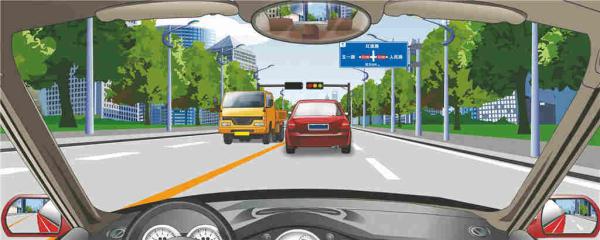
16. The sign in front indicates the allocation of roads ahead.
A. Right
B. Wrong
Answer: B
17. When driving in a heavy rain, drivers should contro their speed to prevent their vehicles from sliding.
A. Right
B. Wrong
Answer: A
18. The guide arrow on the road surface of this lane indicates that U-turns and left turns are permitted at the intersection ahead.

A. Right
B. Wrong
Answer: A
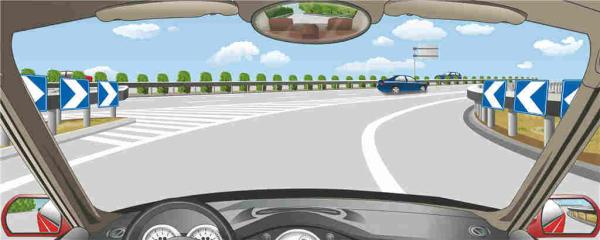
19. The signs on each side warn of changes in road alignment ahead.
A. Right
B. Wrong
Answer: A
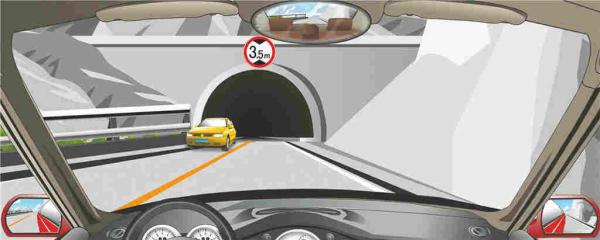
20. The sign above the tunnel indicates a height limit of 3.5 meters on the road ahead.
A. Right
B. Wrong
Answer: A