

1. The method and direction of changing lanes by the red car is correct.
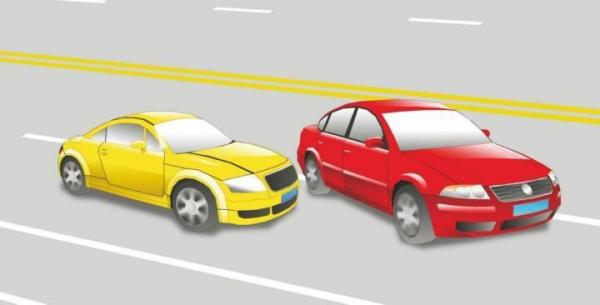
A. Right
B. Wrong
Answer: B
2. How to do while entering this intersection?

A. shift the high and low beam lights alternately to remind the cars already in the intersection to yield
B. quickly cut in the cars already in the intersection
C. let the cars already in the intersection go first
D. honk and enter directly
Answer: C
3. Whats the meaning of this sign?

A. bypass from right side
B. one-way passing
C. watch for danger
D. bypass from left side
Answer: A
4. You may not use the turn signal when you change to the right lane.
A. Right
B. Wrong
Answer: B
5. Which is correct to use lights on rainy day when following a vehicle?
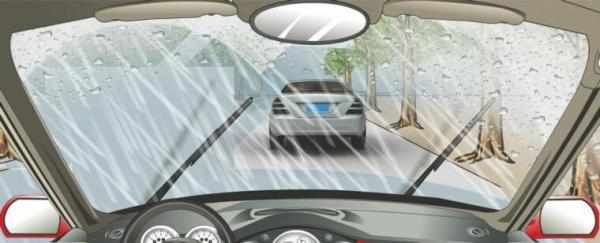
A. use high beam lights
B. cannot use the low beam lights
C. cannot use the high beam light
D. use fog lights
Answer: C
6. The applicant should apply for the cancelation of the reservation one day in advance if he is unable to take the exam by appointment, the applicant will be judged as failed in the exam if he does not take the exam on the reserved examination time.
A. Right
B. Wrong
Answer: A
7. Whats the meaning of this sign?
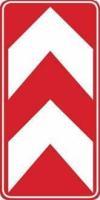
A. Passing on both sides
B. Passing is prohibited
C. Passing by the left side
D. Passing by the right side
Answer: A
8. Whats the meaning of this guide arrow?
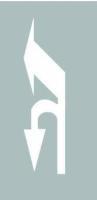
A. going straight and U turn are allowed ahead
B. left turn and U turn are allowed ahead
C. going straight and changing to left lane are allowed ahead
D. going straight and left turn are allowed ahead
Answer: B
9. It lights to indicate that ______
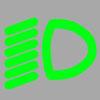
A. the tail fog light is turned on
B. the low beam light is turned on
C. the high beam light is turned on
D. the head fog light is turned on
Answer: B
10. Whats the meaning of this sign?
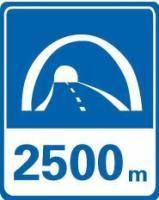
A. the distance from the tunnel exit
B. the distance from the tunnel entry
C. the distance of following the vehicle in front in the tunnel
D. the whole length of the tunnel
Answer: A
11. When a vehicle is being overtaken by another vehicle, and there is a vehicle following behind, the driver should _____.
A. continue to speed up and run
B. turn slightly to the right side, keep a safe horizontal distance
C. run by road center
D. speed up to the right side to yield
Answer: B
12. Whats the meaning of this sign?

A. No passing
B. driving at reduced speed
C. time limit for entering
D. no entering
Answer: A
13. For a driver who drives a commercial motor vehicle after drinking, besides revoking his/her driving license, how long will he/she be banned from re-obtaining a motor vehicle driving license?
A. 1 year
B. 2 year
C. 5 year
D. 10 year
Answer: C
14. According to rules on the road traffic safety, the maximum speed on the expressway is less than 120km/hr, thus, it will not be in violation of the traffic regulations as long as the speed does not exceed 120km/hr on the expressway.
A. Right
B. Wrong
Answer: B
15. If the drivers household register has moved out of the original vehicle management station, the driver should apply to the vehicle management station _______ .
A. At the former place of his household register
B. At the residential place
C. At the new place of his household register
D. At the location of his household register
Answer: C
16. Opening the doors of a motorized vehicle should not obstruct the flow of other vehicles and pedestrians.
A. Right
B. Wrong
Answer: A
17. What kind of lane that the red car running in?
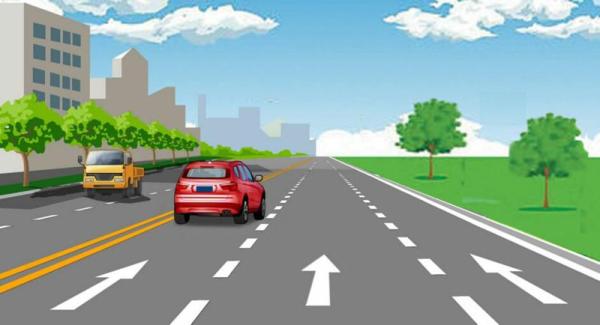
A. fast lane
B. slow lane
C. emergency lane
D. special lane
Answer: A
18. When encountering school children crossing the road in a queue, the driver should ______.
A. Speed up in advance and pass forcefully
B. Stop to yield
C. Reduce speed and go slowly
D. Continuously honk to urge them
Answer: B
19. A motorized vehicle driver who violates of traffic lights is subject to a 6-point penalty.
A. Right
B. Wrong
Answer: A
20. If a motorized vehicle causes a traffic accident on the road, the driver should immediately move the vehicle to the roadside.
A. Right
B. Wrong
Answer: B