

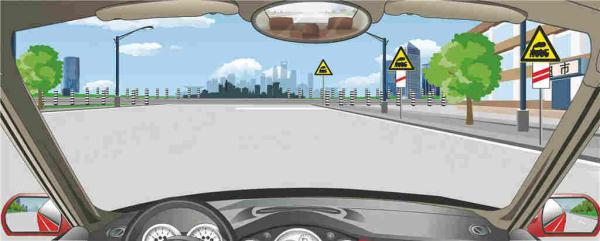
1. The sign on the right warns of a guarded crossing 150 meters ahead.
A. Right
B. Wrong
Answer: B
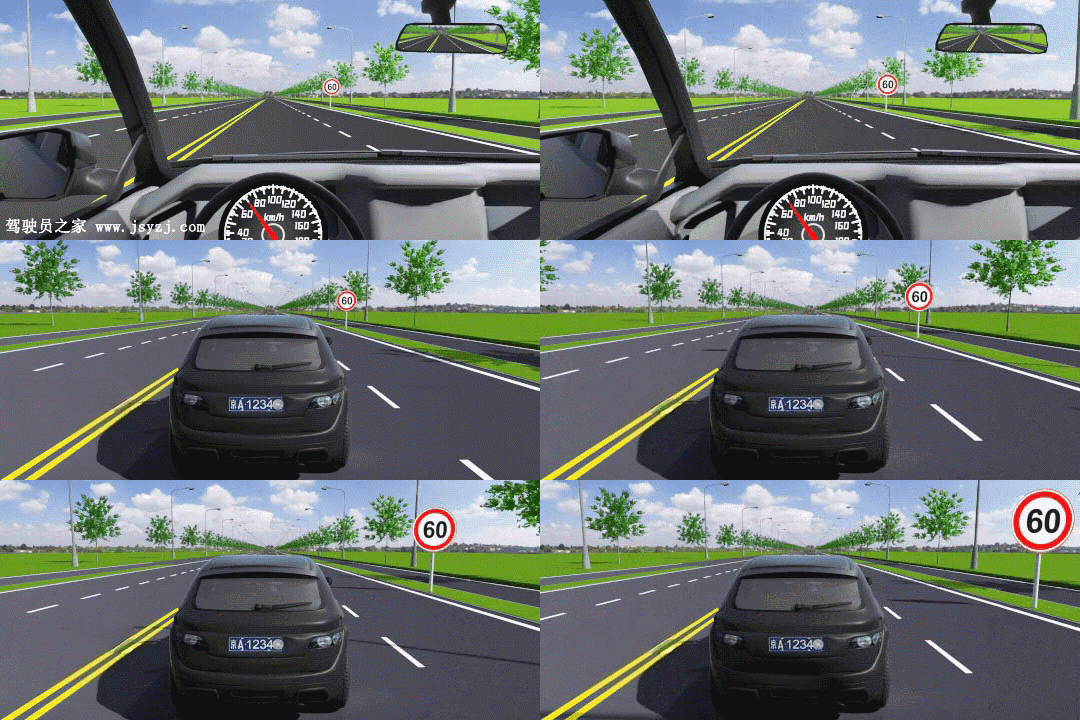
2. How many kinds of law-breaking acts are displayed in flash 3?
A. One
B. Two
C. Three
D. Four
Answer: B
3. Sounding the horn on a foggy day can arouse the attention of the opposite side. After hearing the horn from the opposite side, the driver should also sound their own horn to respond.
A. Right
B. Wrong
Answer: A
4. When driving in a heavy rain, drivers should contro their speed to prevent their vehicles from sliding.
A. Right
B. Wrong
Answer: A
5. Rescue personnel should check the breath of the unconscious person before applying any other emergency treatment.
A. Right
B. Wrong
Answer: A
6. Having driven his vehicle at 110km/hour on an urban road, Mr. Lin is trying to leave the scene after a rear-end collision but is held back by bystanders. The alcohol concentration in his blood, tested in an alcohol test by the traffic police, is 135.8mg per hundred milliliters. Which of the following law-breaking acts did Mr. Lin commit?
A. Drunk driving
B. Speeding
C. Fatigued driving
D. Hit-and-run driving
Answer: ABD
7. How should lamps be used when motor vehicle drivers pass through a two-way tunnel?
A. Turn on the hazard lamps
B. Turn on the high-beam
C. Turn on the fog lamp
D. Turn on the low-beam
Answer: D
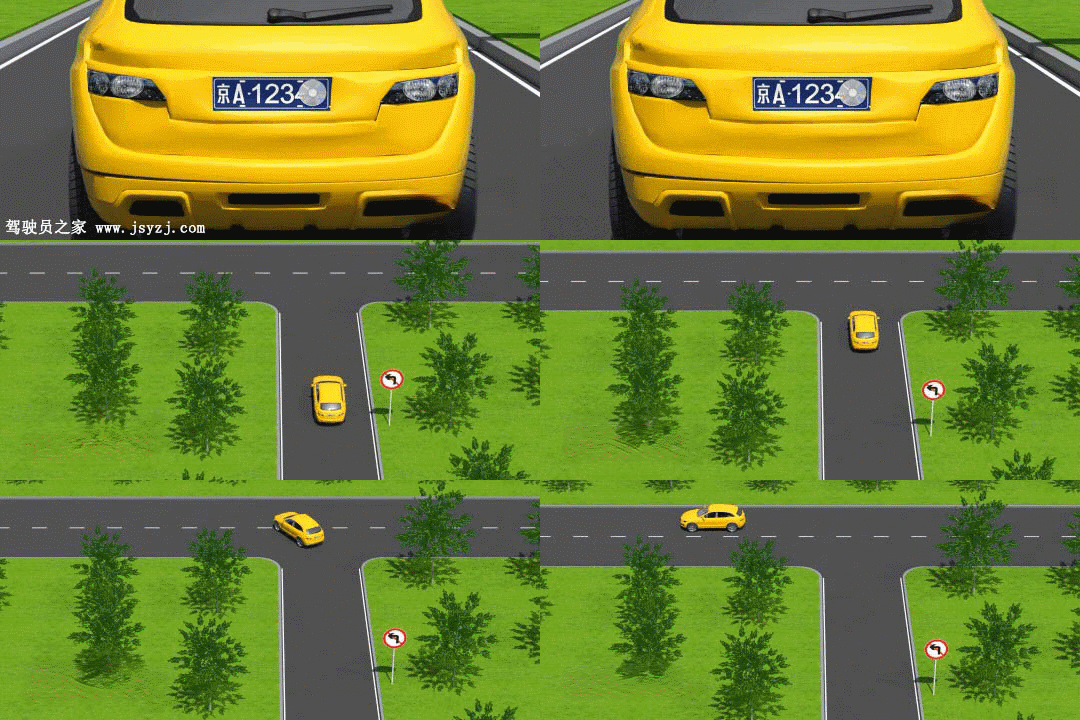
8. How many kinds of law-breaking acts are displayed in flash 7?
A. One
B. Two
C. Three
D. Four
Answer: B
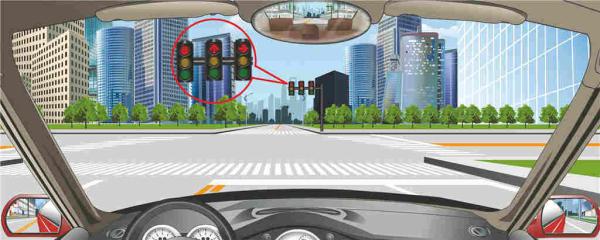
9. At this intersection, motor vehicle drivers may directly make a U-turn along the U-turn turning lane.
A. Right
B. Wrong
Answer: B
10. If the road condition behind is good, motor vehicle drivers should reverse rapidly.
A. Right
B. Wrong
Answer: B
11. The sign on the right warns of traffic signals ahead.
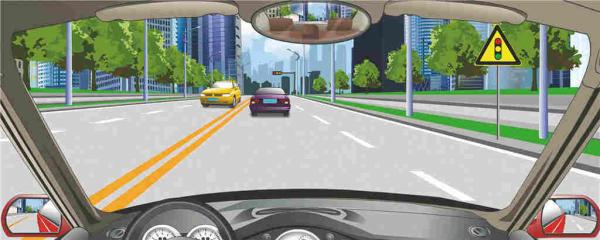
A. Right
B. Wrong
Answer: A
12. Motor vehicle drivers may reverse at an intersection.
A. Right
B. Wrong
Answer: B
13. When disembarking, what should be done by drivers in order to keep safe?
A. Opening the door and disembarking immediately after stopping
B. Observing the traffic situation ahead
C. Opening the door first and then observing the situation beside and behind the vehicle
D. Observing the situation beside and behind the vehicle before opening the door slowly
Answer: D
14. Under such circumstances, what should be done by the motor vehicle driver who has been overtaken?
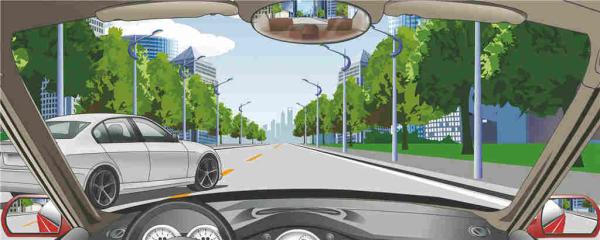
A. Sounding the horn to warn the vehicle that overtook
B. Reducing speed or pulling over by the right side
C. Protesting by turning on the high-beam
D. Catching up with and overtaking the vehicle that overtook, and offering admonitions
Answer: B
15. The leading cause of this accident is that the driver failed to make sure that it was safe to reverse before doing so.
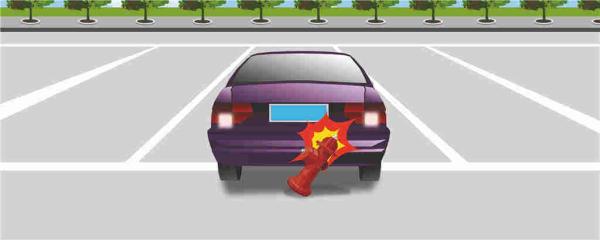
A. Right
B. Wrong
Answer: A
16. The sign on the right warns of a winding road to the left ahead.
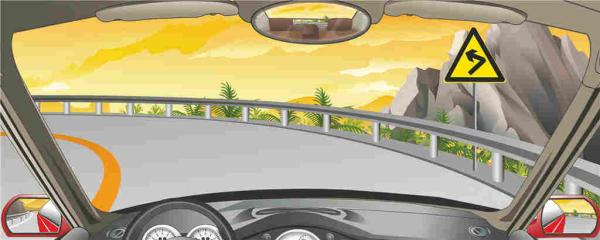
A. Right
B. Wrong
Answer: B
17. The motor vehicle should stop on the right and wait in this situation.
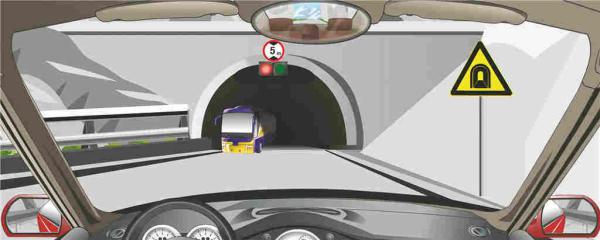
A. Right
B. Wrong
Answer: A
18. The slow-down-and-yield line at the intersection ahead indicates that vehicle drivers should stop and give the right of way to vehicles on the trunk road.

A. Right
B. Wrong
Answer: B
19. When the vehicle engine catches fire, what should the driver do first?
A. Turn off the engine as soon as possible
B. Extinguish the fire with water
C. Open the hood to extinguish the fire
D. Extinguish the fire from the leeward direction
Answer: A
20. If a motor vehicle enters a driving lane under this situation, what should the driver do?
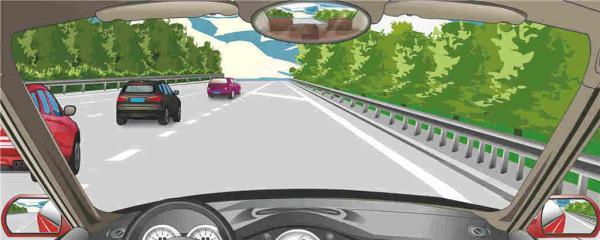
A. Control the driving speed and follow the last vehicle
B. Speed up and cut in front of the second vehicle
C. Speed up and cut in front of the first vehicle
D. Cut in between two vehicles at will
Answer: A