

1. When extinguishing a fire, the driver should refrain from breathing through mouth or crying loudly Otherwise, the fire and smoke will scorch the upper respiratory tract.
A. Right
B. Wrong
Answer: A
2. One day, Mr. Yang drove a large bus with 57 passengers (bus capacity 55 people) from 7 pm to 1 am the following morning. At the spot of 3008 kilometers mark by 110 meters on the No. 050 National Road in Jin Chengjiang District, the bus had a malignant traffic accident caused by front left tire burst, killing 12 people and injuring 22. What is the main illegal act committed by Mr. Yang?
A. Fatigued driving
B. Carrying more passengers than permitted
C. Speeding
D. Misoperation
Answer: AB
3. Drivers may turn left when traffic police give these hand signals.
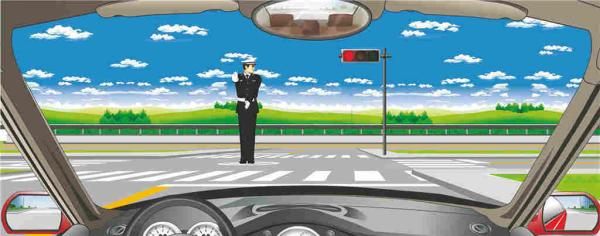
A. Right
B. Wrong
Answer: B
4. As shown in this picture, the intersection guide line is designed to help drivers make turns.

A. Right
B. Wrong
Answer: A
5. How should lamps be used when a motor vehicle meets an oncoming bicycle on a narrow road or a narrow bridge at night?
A. Continuously change between low-beam and high-beam
B. Use clearance lamp
C. Use high-beam
D. Use low-beam
Answer: D
6. When driving on a road covered with ice and snow, drivers tend to encounter glare caused by reflection of light rays from the road surface.
A. Right
B. Wrong
Answer: A
7. When encountering such pedestrians, what should motor vehicle drivers do?
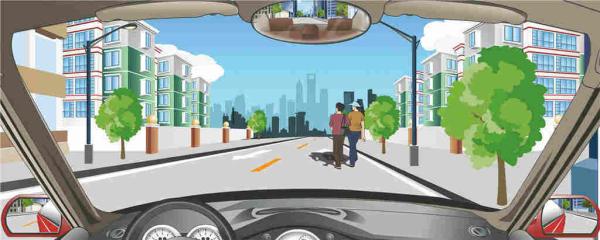
A. Go ahead along the middle line of the road
B. Continuously sound the horn
C. Speed up and overtake
D. Pay attention to the actions of such pedestrians
Answer: D
8. As shown in the flash, what should the motor vehicle driver do when encountering this situation?
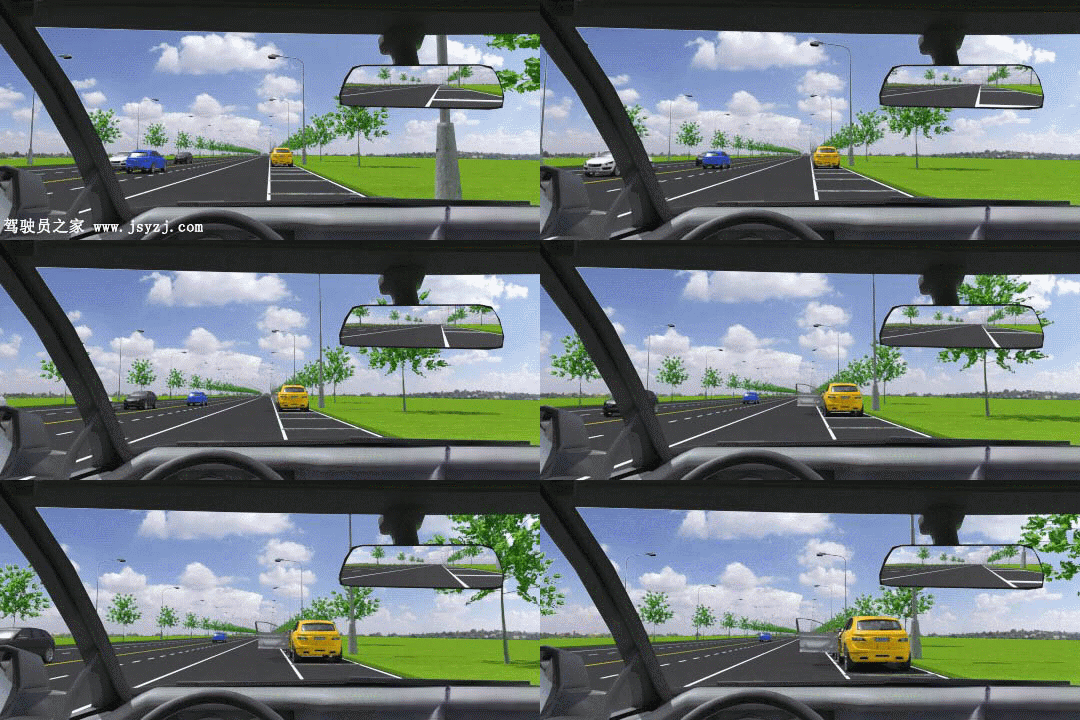
A. Reserve a safe crosswise distance and cut speed
B. Keep a normal speed
C. Use the emergency brake when approaching
D. Speed up and pass rapidly
Answer: A
9. The sign on the right side warns of an emergency lane 500 meters ahead.
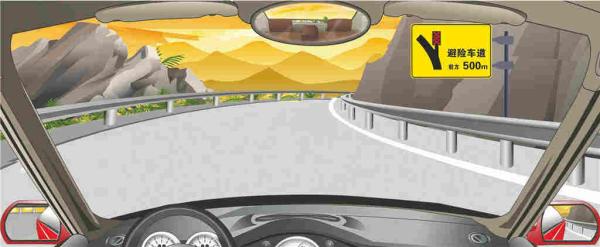
A. Right
B. Wrong
Answer: A
10. Drivers may cross these lane-dividing lines to change lanes in the same direction.
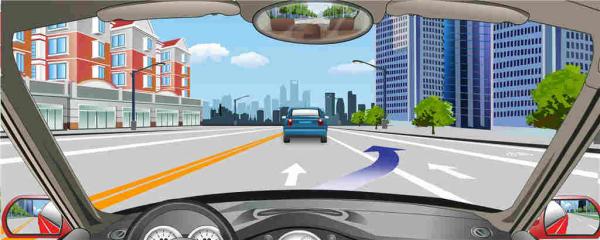
A. Right
B. Wrong
Answer: B
11. When driving on an expressway, what should the driver do if he has missed an exit but the next exit is far away?
A. Reverse along the road shoulder
B. Continue on
C. Stop immediately
D. Make a U-turn at the current location
Answer: B
12. Under such circumstances, motor vehicle drivers should reduce speed by the right side swiftly and yield.
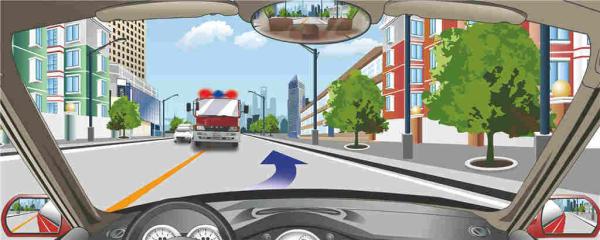
A. Right
B. Wrong
Answer: A
13. When passing an intersection, vehicle motor drivers are not allowed to overtake.
A. Right
B. Wrong
Answer: A
14. The marking on the road surface indicates that the speed limit of this road section is 80 km/hour.
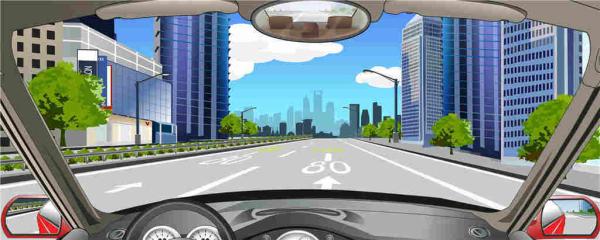
A. Right
B. Wrong
Answer: B
15. The sign in front indicates the distance to highway destination.

A. Right
B. Wrong
Answer: B
16. Motor vehicle drivers should use the windscreen wiper when setting off on a rainy day
A. Right
B. Wrong
Answer: A
17. When driving in rain and encountering pedestrians with umbrellas or wearing raincoats, what should be done by motor vehicle drivers in order to yield?
A. Drive at a normal speed
B. Sound the horn to alert when approaching the pedestrians
C. Speed up and bypass on the left
D. Reduce speed and sound the horn in advance
Answer: D
18. Upon encountering this traffic signal, how should a driver react?
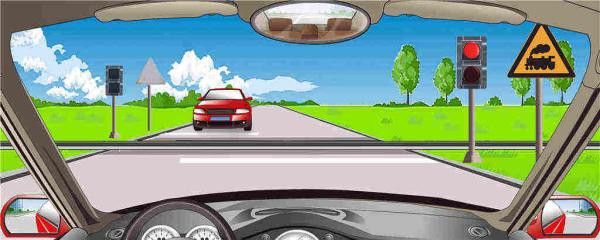
A. Observe the traffic situation and pass at a reduced speed
B. Pass at an increased speed without changing gears
C. Pass before the train comes
D. Crossing the stop line is prohibited
Answer: D
19. What is the intersection ahead indicated by the right sign?
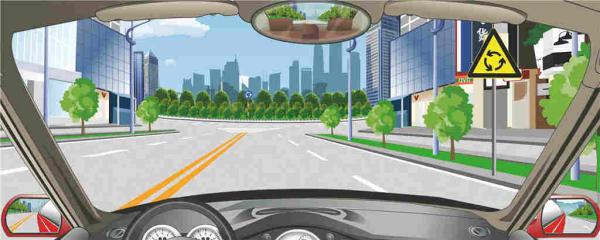
A. T-shaped intersection
B. Y-shaped intersection
C. Cross-shaped intersection
D. Roundabout
Answer: D
20. When a motor vehicle catches fire on the expressway the driver should drive the motor vehicle to the service area or the parking lot to extinguish the fire.
A. Right
B. Wrong
Answer: B