

1. The motorcycles should be inspected once every year when it exceeds ____ as from the date of registration.
A. 1 year
B. 2 years
C. 3 years
D. 4 years
Answer: D
2. What is the meaning of this sign?

A. no stopping temporarily
B. no long stopping
C. no stopping
D. long stopping is allowed
Answer: B
3. Traffic Police can detain the vehicle according to law if the driver does not carry the ID card.
A. Right
B. Wrong
Answer: B
4. When a driver drives a motorized vehicle during the period of probation, the driver should paste or hang a uniform probation mark on the rear part of the vehicle.
A. Right
B. Wrong
Answer: A
5. When passing a turn or a curve section, the driver should slow down and disengage the clutch.
A. Right
B. Wrong
Answer: B
6. When the driver is suspected of drinking or drunk in a traffic accident, preserve the scene and immediately report to the police.
A. Right
B. Wrong
Answer: A
7. When a motor vehicle stops temporarily in a rainy day,which lamp should be turned on?
A. Front and rear fog lamps
B. Hazard lamps
C. Headlamps
D. Reverse lamps
Answer: B
8. When following other vehicles on the uphill section of a mountain road, what should the driver do if the vehicle in front stops?
A. Overtake from either side of the front vehicle
B. Stop close to the vehicle in front
C. Stop with a larger space from the vehicle in front
D. Sound the horn continuously to warn the other driver
Answer: C
9. A driver may drive on the road a motorized vehicle overhauled which has reached the saraped standard.
A. Right
B. Wrong
Answer: B
10. When running on the road having maximum speed limit signs, the motorized vehicle is not allowed to exceed the marked maximum speed.
A. Right
B. Wrong
Answer: A
11. If a motorized vehicle driver has caused a major accident in violation of the traffic regulations which has caused human serious injury or death, the driver is subject to________.
A. a prison term of less than 3 years or a criminal detention
B. a prison term of more than 5 years
C. a prison term of 3 ~ 7 years
D. a prison term of more than 7 years
Answer: A
12. Traffic Police can detain the vehicle according to law if it is without the mandatory traffic accident insurance in accordance with state regulations.
A. Right
B. Wrong
Answer: A
13. How to choose parking spot when needing to stop by the roadside?
A. stop in the opposite direction by the left roadside
B. stop in the parking area
C. stop anywhere as will by the roadside
D. stop in the sidewalk
Answer: B
14. What is the meaning of this sign?
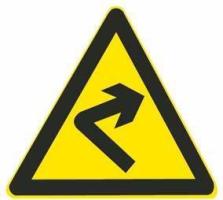
A. sharp right curve
B. bypass from right side
C. continuous curves
D. sharp left curve
Answer: A
15. When driving on a road covered with ice and snow drivers should not use the emergency brake but can apply a sharp turn.
A. Right
B. Wrong
Answer: B
16. The motorcycles should be inspected once every four years within __________.
A. 1 years
B. 2 years
C. 3 years
D. 4 years
Answer: B
17. It is unsafe to ride a motorcycle by high-heel shoes.
A. Right
B. Wrong
Answer: A
18. When a motorcycle turns at an excessively high speed, it can easily dash out of a curve or skid sideways.
A. Right
B. Wrong
Answer: A
19. When a motorcycle goes downhill, it may fully use the neutral gear and slide.
A. Right
B. Wrong
Answer: B
20. How to do if there is a traffic jam in intersection?
A. borrow the opposite lane to pass
B. stop and wait outside the intersection
C. cut in the front vehicles to pass
D. enter the intersection and wait
Answer: B