

1. Which is the wrong measure to avoid tire burst?
A. Reduce tire pressure
B. Check tires regularly
C. Remove foreign matters from the tire tread grooves timely
D. Replace tires that have cracks or deep cuts
Answer: A
2. When the engine suddenly stalls on the road, what should the driver do?
A. Stop the vehicle and overhaul it immediately
B. Immediately turn on the hazard lamps
C. Move the vehicle to a place where it will not obstruct the traffic flow
D. Set up a breakdown warning sign
Answer: BCD
3. When a motor vehicle encounters this situation at a crosswalk, the driver must slow down and pass slowly.
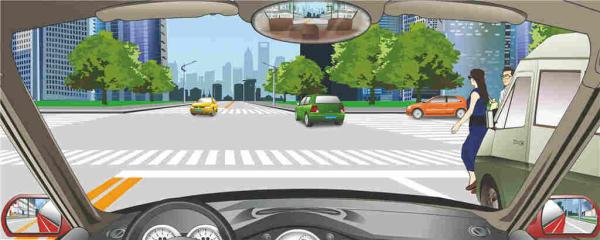
A. Right
B. Wrong
Answer: B
4. When driving a motor vehicle not equipped with the anti-lock braking system (ABS), what should the driver do if he brakes on a road covered by ice and snow?
A. Gently or intermittently depress the brake pedal
B. Depress the brake pedal as on other roads
C. Violently depress the brake pedal
D. Suddenly depress the pedal with force
Answer: A
5. The sign on the right warns of traffic signals ahead.
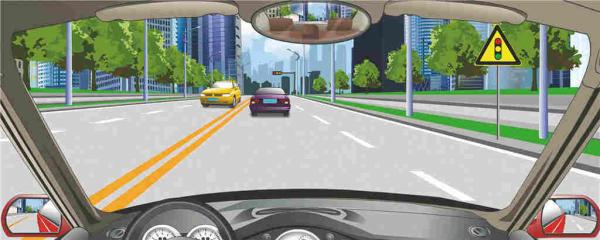
A. Right
B. Wrong
Answer: A
6. When driving in rain and encountering pedestrians with umbrellas or wearing raincoats, what should be done by motor vehicle drivers in order to yield?
A. Drive at a normal speed
B. Sound the horn to alert when approaching the pedestrians
C. Speed up and bypass on the left
D. Reduce speed and sound the horn in advance
Answer: D
7. If a motor vehicle has an accident on a foggy day and stops on an expressway, which of the following acts is dangerous?
A. Leaving the motor vehicle as soon as possible
B. Standing outside the guardrail as much as possible
C. Turning on the hazard lamp and fog lamp
D. Placing a warning sign behind the vehicle in the oncoming direction
Answer: D
8. When encountering this situation around a school, the driver should speed up and pass as quickly as possible.

A. Right
B. Wrong
Answer: B
9. When there is a sudden braking failure on a downhill road, what should be done by the driver?
A. Driving to an emergency lane and reducing speed to stop
B. Dropping the gear by two positions
C. Changing to the reverse gear to force the vehicle to stop
D. Reducing speed by pulling up the handbrake
Answer: A
10. When driving on this dangerous mountainside road motor vehicle drivers should drive along the left side of the road.
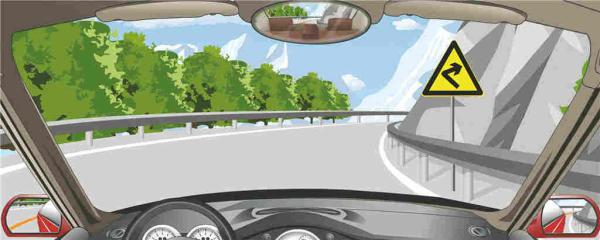
A. Right
B. Wrong
Answer: B
11. The sign on the right warns to keep a safe distance on the road ahead.
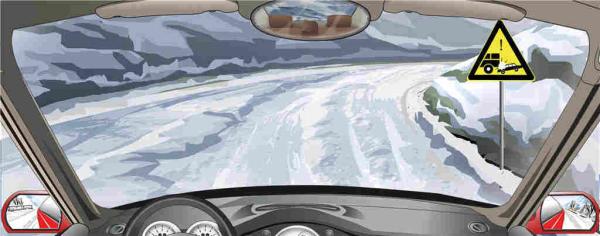
A. Right
B. Wrong
Answer: B
12. When driving, besides paying attention to keeping a safe distance from the vehicle in front, drivers should also be prudent when braking so as to avoid a rear-end collision caused by a vehicle behind.
A. Right
B. Wrong
Answer: A
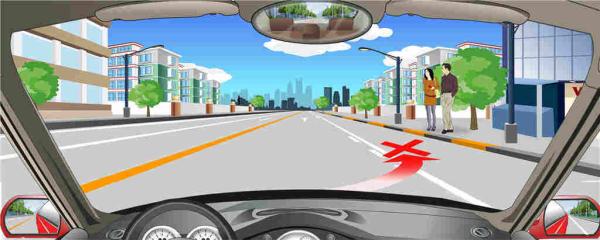
13. The yellow broken line on the curb indicates that vehicles are not allowed to stop and let passengers embark or disembark or load and unload freight at the roadside.
A. Right
B. Wrong
Answer: B
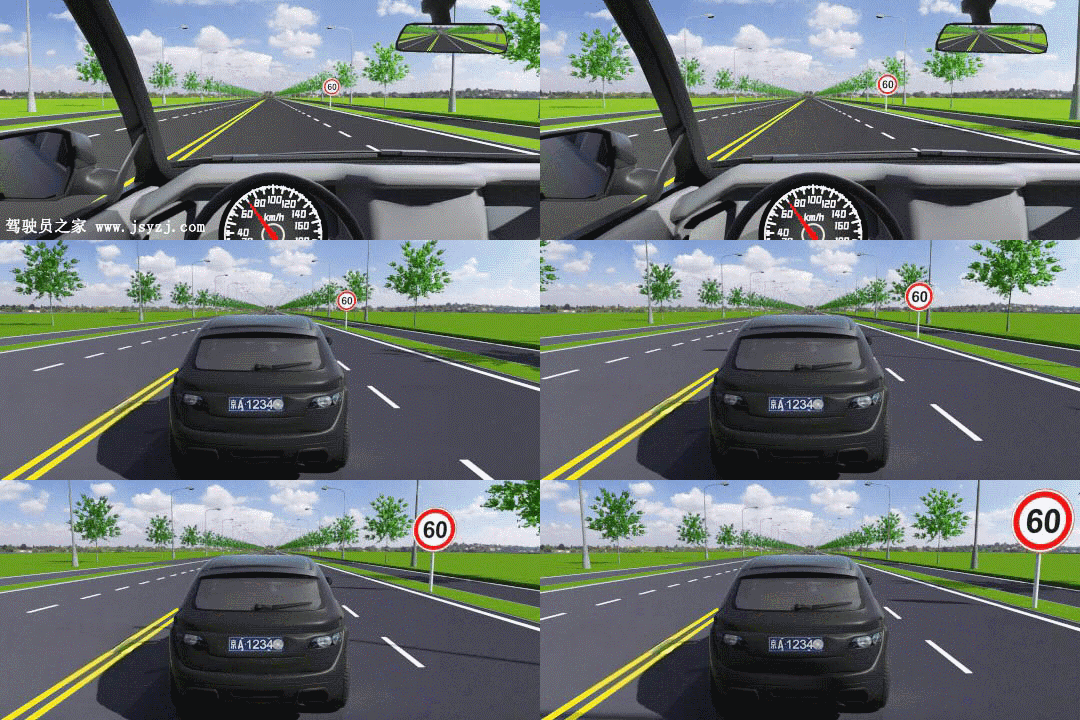
14. Mr. Li drove a large bus with 21 passengers (capacity 35 people). He found the braking system was abnormal on the way but failed to repair it. When running on the Shuangdao Haiwan Bridge at a speed of 50 kilometers per hour (speed limit 40 km/h), the bus fell into the sea due to a braking system failure, killing 13 people and injuring 8. What is the main illegal act committed by Mr. Li?
A. Speeding
B. Fatigued driving
C. Carrying more passengers than permitted
D. Driving a motor vehicle with potential safety hazard
Answer: AD
15. How many kinds of law-breaking acts are displayed in flash 3?
A. One
B. Two
C. Three
D. Four
Answer: B
16. When driving on an expressway, what should the driver do if he has missed an exit but the next exit is far away?
A. Reverse along the road shoulder
B. Continue on
C. Stop immediately
D. Make a U-turn at the current location
Answer: B
17. When a motor vehicle breaks down on a mountain road, what should the driver do?
A. Park on a downhill section
B. Park on an uphill section
C. Park on a gentle section of the mountain road
D. Park on the crest of a slope
Answer: C
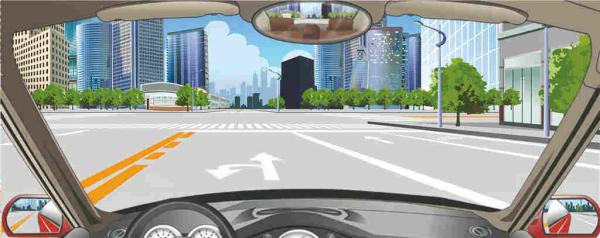
18. The guide arrow on the road surface of this lane indicates that only U-turns are permitted at the intersection ahead.
A. Right
B. Wrong
Answer: B
19. How should lamps be used when a motor vehicle meets an oncoming bicycle on a narrow road or a narrow bridge at night?
A. Continuously change between low-beam and high-beam
B. Use clearance lamp
C. Use high-beam
D. Use low-beam
Answer: D
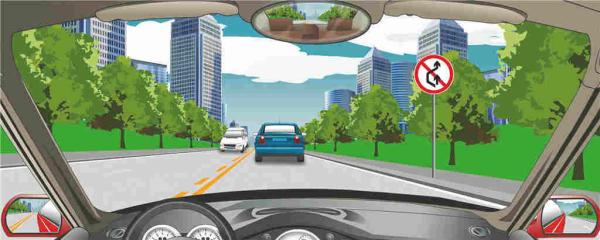
20. The sign on the right indicates that overtaking is allowed on the section ahead.
A. Right
B. Wrong
Answer: B