

1. Whats the meaning of this sign?

A. straight-going lane
B. going straight only
C. one-way road
D. no going straight
Answer: B
2. When a vehicle changes lane before an intersection, the driver should do so ______.
A. In the area marked by solid lines before the intersection
B. In the area marked by solid lines in the intersection
C. In the area marked by broken lines as indicated by the guide arrow
D. Before the stop line at the intersection
Answer: C
3. If a motorized vehicle driver allows his vehicle to be driven by a person whose driving license has been revoked, the traffic police will detain the driving license.
A. Right
B. Wrong
Answer: A
4. It lights to indicate that ______

A. the side fans work
B. air external circulation
C. the front fan works
D. air internal circulation
Answer: C
5. Reducing the speed to yield when encountering this situation in the intersection.
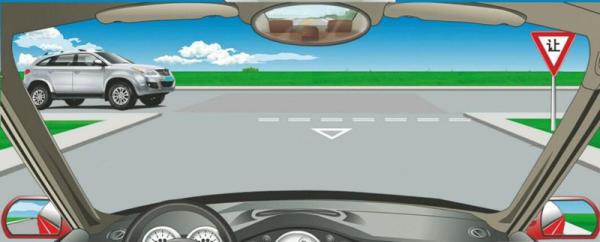
A. Right
B. Wrong
Answer: A
6. In which situation the traffic police may detain the vehicle on road?
A. not hang the license plate
B. no ID card
C. no insurance contract
D. no lable of environmental protection
Answer: A
7. When driving in windy, rainy, snowy, foggy and other complex weather conditions, the driver should turn on the head light, honk continuously and overtake rapidly if the vehicle in front goes slowly.
A. Right
B. Wrong
Answer: B
8. How long is the period of probation of a motor vehicle driver who has applied for a driver license for the first time?
A. 18 months
B. 16 months
C. 12 months
D. 6 months
Answer: C
9. It lights continuously to indicate that ______

A. safety bags work
B. not buckled up
C. ABS system malfunction
D. safety bags malfunction
Answer: D
10. A rear tire blowout can sway the tail of the vehicle. The driver should firmly hold the steering wheel with both hands to ensure the vehicle go straight, reduce speed and then stop.
A. Right
B. Wrong
Answer: A
11. You can overtake from both sides in this case.
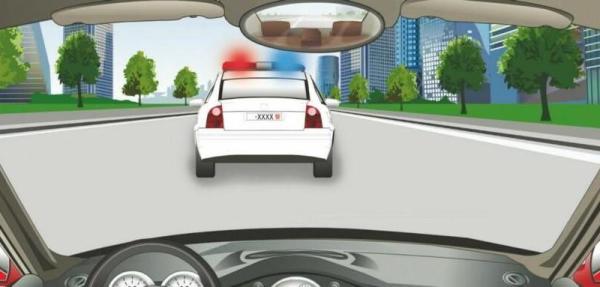
A. Right
B. Wrong
Answer: B
12. This sign warns the driver there is a crosswalk ahead.
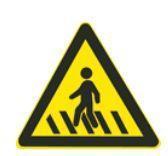
A. Right
B. Wrong
Answer: B
13. How to do first when encountering such kind of bridge?
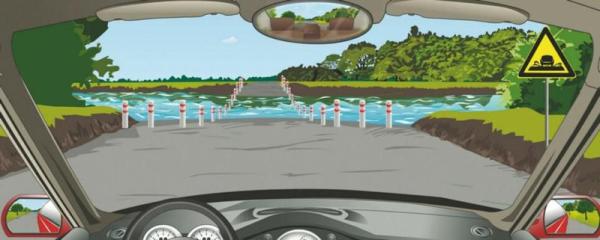
A. maintain the speed and pass
B. speed up and pass as soon as possible
C. stop and observe
D. pass slowly
Answer: C
14. Whats the meaning of this sign?
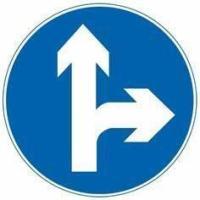
A. going straight and left turn
B. going straight and right turn
C. no going straight and no right turn
D. left turn and right turn only
Answer: B
15. A motorized vehicle that will turn right at an intersection but has a vehicle in front in the same lane waiting for the green light should ______________.
A. Stop and wait for his turn
B. Honk to indicate the vehicle in front to yield
C. Bypass the vehicle in front from the right side and go through the intersection
D. Bypass the vehicle in front from the left side and go through the intersection
Answer: A
16. Whats the meaning of this sign?
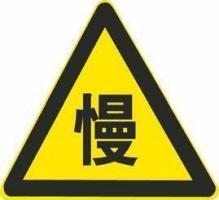
A. more vehicles section
B. passing slowly
C. jammed section
D. construction section
Answer: B
17. When passing a section of a mountain road which is prone to landside and mudflow, the driver should not stop.
A. Right
B. Wrong
Answer: A
18. How to pass the intersection when running straight
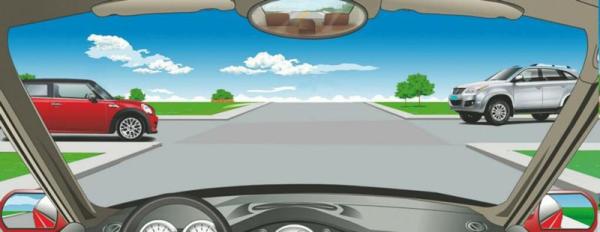
A. turn on the hazard lights and pass
B. directly speed up and pass straight
C. yield to the vehicle from the right road
D. yield to the vehicle from the left road
Answer: C
19. When driving a small vehicle downhill, the driver may coast down by stopping the engine.
A. Right
B. Wrong
Answer: B
20. Traffic Signs and traffic markings are not traffic signals.
A. Right
B. Wrong
Answer: B