

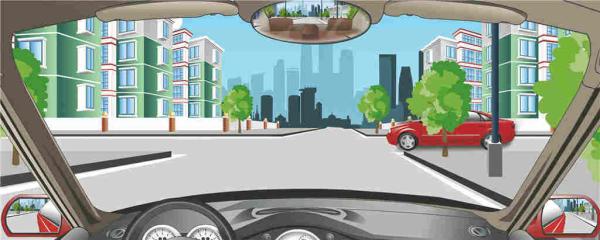
1. The driver should pay attention to the left side when the motor vehicle passes this intersection.
A. Right
B. Wrong
Answer: B
2. This sign indicates that vehicles can either drive straight or turn right at the fly-over junction ahead.

A. Right
B. Wrong
Answer: B
3. Under such circumstances, motor vehicle drivers should bypass on the left quickly.

A. Right
B. Wrong
Answer: B
4. Unless stopping due to obstacles or vehicle breakdown on an expressway, motor vehicles are not allowed to stop to pick up or drop off people or load and unload cargo.
A. Right
B. Wrong
Answer: A
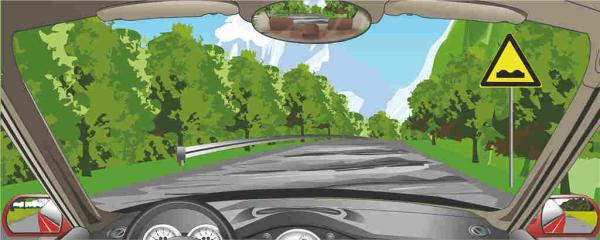
5. Which one of the following is the safest way when driving a motor vehicle on this kind of road surface?
A. Slide over by using neutral gear
B. Pass with a high speed
C. Pass by speeding up
D. Pass with a low speed
Answer: D
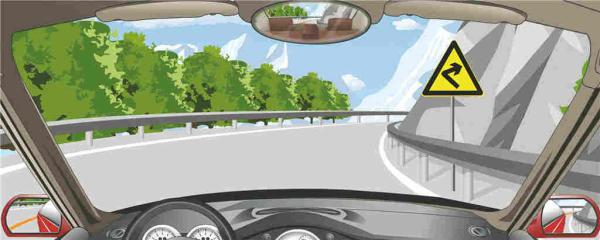
6. When driving on this dangerous mountainside road motor vehicle drivers should drive along the left side of the road.
A. Right
B. Wrong
Answer: B
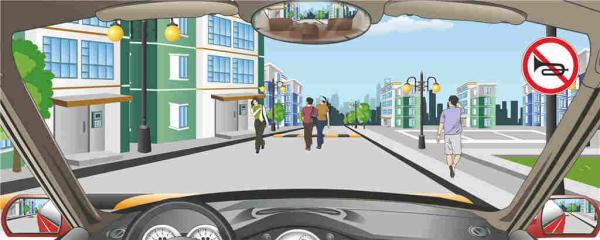
7. When encountering this situation in a residential area the driver should sound the horn continuously.
A. Right
B. Wrong
Answer: B
8. Mr. Shi drove a low-speed cargo vehicle (capacity 1.2 tons)with 4.05 tons of cargo. At the spot of 51 kilometers mark by 260 meters on the No. 314 County Road in Ningjin County, the cargo vehicle had a head-on collision with a normally running midsize bus( capacity 11 people and carrying12) from the opposite direction after passing the central line of the road and overtaking the front vehicle in the same direction. As a result of this accident, 10 people were killed and 2 injured. What are the illegal acts in this case?
A. The cargo vehicle carried more cargo than capacity
B. The cargo vehicle illegally overtook other vehicles
C. The bus carried more passengers than capacity
D. The driver of the bus kept driving when tired
Answer: ABC
9. The solid yellow line on the curb indicates that temporary stopping or parking is allowed at the roadside.
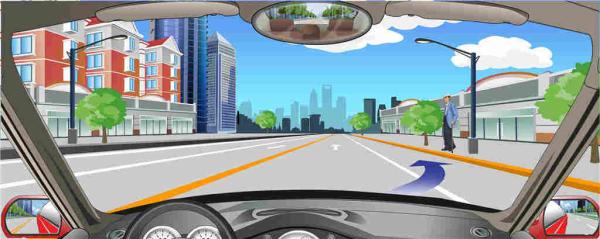
A. Right
B. Wrong
Answer: B
10. One day, Mr. Yang drove a large bus with 57 passengers (bus capacity 55 people) from 7 pm to 1 am the following morning. At the spot of 3008 kilometers mark by 110 meters on the No. 050 National Road in Jin Chengjiang District, the bus had a malignant traffic accident caused by front left tire burst, killing 12 people and injuring 22. What is the main illegal act committed by Mr. Yang?
A. Fatigued driving
B. Carrying more passengers than permitted
C. Speeding
D. Misoperation
Answer: AB
11. The sign on the right warns of low-lying road ahead.

A. Right
B. Wrong
Answer: A
12. What should the driver do in this situation?
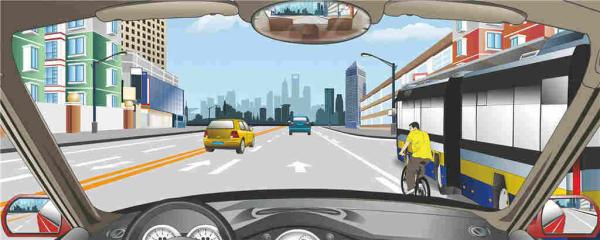
A. Speed up and overtake from the left side
B. Sound the horn continuously to warn the bicycle
C. Follow the bicycle closely
D. Slow down and yield to the bicycle
Answer: D
13. The guide arrow on the road surface of this lane indicates that only left turns are permitted at the intersection ahead.
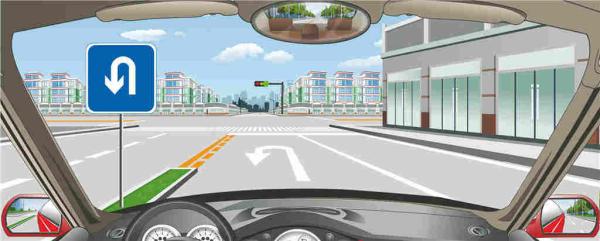
A. Right
B. Wrong
Answer: B
14. The sign on the right warns of a hump bridge right ahead.
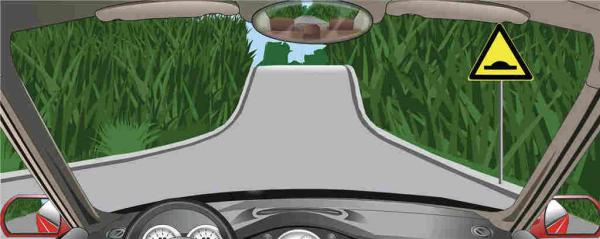
A. Right
B. Wrong
Answer: B
15. When the motor vehicle stops on a downhill section how should the driver use the foot brake?
A. Earlier than on a level road
B. Later than on a level road
C. As timely as on a level road
D. Gently depress the foot brake pedal
Answer: A
16. When driving on the highway in foggy, rainy, or snowy weather with a range of visibility between 100 meters and 200 meters, what should motor vehicle drivers do?
A. Turn on the fog lamp, low-beam, clearance lamp and front and rear position lamp
B. Drive at a speed of no more than 60 km/hour
C. Keep a breaking distance of more than 100 meters from the vehicle in front in the same lane
D. Leave the highway from the nearest exit as soon as possible
Answer: ABC
17. Motor vehicle drivers don?ˉt need to fasten their seatbelt
A. Right
B. Wrong
Answer: B
18. Having driven a medium passenger vehicle (carrying 27 passengers) to the southern end of Qianling Village of Sidu Town, Mr. Xu drove upslope but the vehicle slid backward and dropped from an 80-meter cliff, killing 11 people and injuring 7. Which of the following law-breaking acts did Mr. Xu commit?
A. Fatigued driving
B. Drunk driving
C. Exceeding the carrying capacity of the passenger vehicle
D. Speeding
Answer: C
19. Motor vehicle drivers may make a U-turn in the broken line area as long as it will not affect the normal traffic flow.
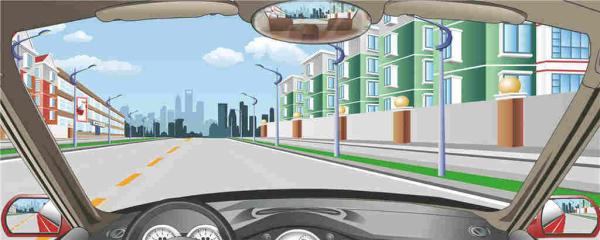
A. Right
B. Wrong
Answer: A
20. The sign on the right warns of a dangerous mountainside road on the left of the road ahead.
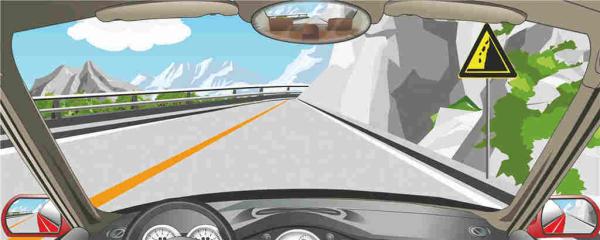
A. Right
B. Wrong
Answer: B