

1. This sign warns to bypass from either side to avoid roadblock.

A. Right
B. Wrong
Answer: A
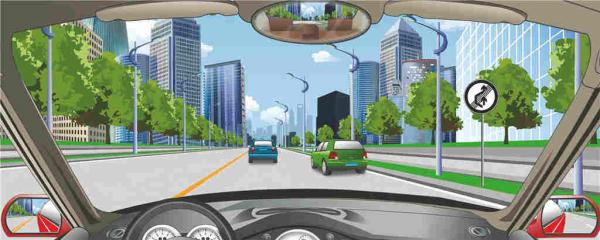
2. The sign indicates no overtaking on the section ahead.
A. Right
B. Wrong
Answer: B
3. Mr. Shi drove a low-speed cargo vehicle (capacity 1.2 tons)with 4.05 tons of cargo. At the spot of 51 kilometers mark by 260 meters on the No. 314 County Road in Ningjin County, the cargo vehicle had a head-on collision with a normally running midsize bus( capacity 11 people and carrying12) from the opposite direction after passing the central line of the road and overtaking the front vehicle in the same direction. As a result of this accident, 10 people were killed and 2 injured. What are the illegal acts in this case?
A. The cargo vehicle carried more cargo than capacity
B. The cargo vehicle illegally overtook other vehicles
C. The bus carried more passengers than capacity
D. The driver of the bus kept driving when tired
Answer: ABC
4. Where is the proper parking place for motor vehicles driving on an expressway?
A. On the expressway ramp
B. In the acceleration lane
C. In the deceleration lane
D. In a service area
Answer: D
5. When a tire bursts suddenly on the road, the driver should refrain from violently depressing the brake pedal in panic. Instead, he should try his best to change to a low gear and use engine braking to reduce the speed of the vehicle.
A. Right
B. Wrong
Answer: A
6. The motor vehicle equipped with ABS may sideslip during an emergency brake.
A. Right
B. Wrong
Answer: A
7. When a motor vehicle on an expressway stops in an emergency due to breakdown or an accident, what should the driver and the passengers do?
A. Stand in front of the motor vehicle
B. Wait in the motor vehicle for rescue
C. Stand behind the motor vehicle
D. Promptly move to the road shoulder on the right side or the emergency lane
Answer: D
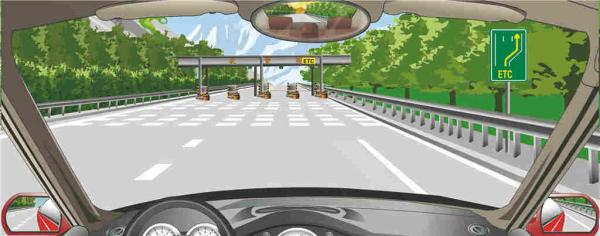
8. The sign on the right indicates an ETC lane at toll station ahead.
A. Right
B. Wrong
Answer: A
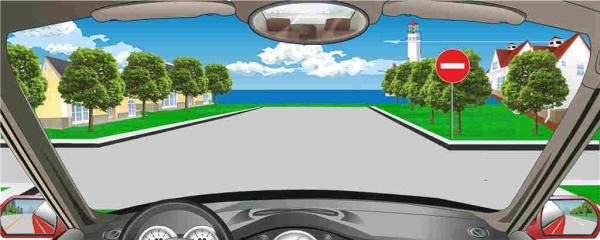
9. The sign on the right side indicates no entry for all vehicles.
A. Right
B. Wrong
Answer: A
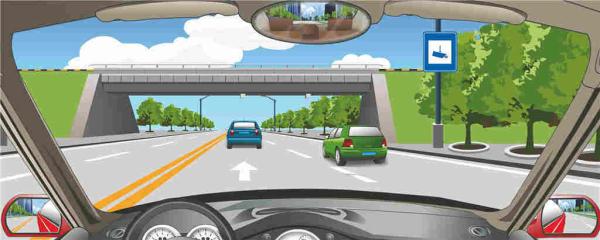
10. This sign warns that the section ahead is under traffic monitoring.
A. Right
B. Wrong
Answer: A
11. When driving on a road covered with ice and snow, drivers tend to encounter glare caused by reflection of light rays from the road surface.
A. Right
B. Wrong
Answer: A
12. Mr. Tong drove a large bus (capacity 55 people and carrying 54) to Taiyuan City. When he drove on a muddy road at the speed of 45 kilometers per hour, the bus skidded into a deep ditch, killing 14 people dead and badly injuring 40 What is the main illegal act committed by Mr. Tong?
A. Overloaded
B. Speeding
C. Driving after drinking
D. Fatigued driving
Answer: B
13. Drivers may go straight and pass through when traffic police give these hand signals.
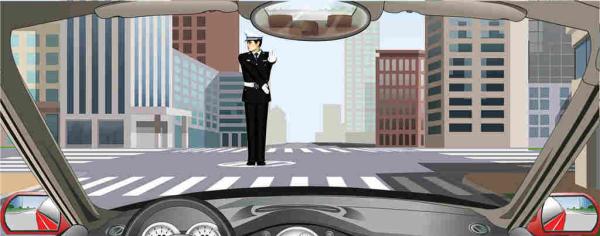
A. Right
B. Wrong
Answer: B
14. How should a motor vehicle follow the other vehicle In front when driving on a road covered with ice and snow?
A. Keep a long safe distance
B. Turn on hazard lamp
C. Change between high-and-low beam alternatively
D. Sound the horn in due time to give a notice to the vehicle in front
Answer: A
15. The slow-down-and-yield line at the intersection ahead indicates that vehicle drivers should stop and give the right of way to vehicles on the trunk road.

A. Right
B. Wrong
Answer: B
16. After a traffic accident, what is the most effective measure to prevent secondary accidents?
A. Evacuate all passengers
B. Turn on the hazard lamps
C. Mark the original place of the injured persons
D. Properly place the danger warning sign
Answer: ABD
17. The sign on the right warns that the road will narrow over the next 5 kilometers.
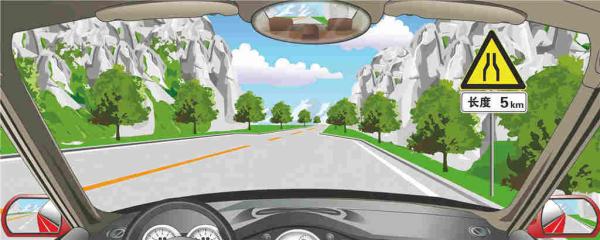
A. Right
B. Wrong
Answer: A
18. The sign in front indicates the distance to highway destination.
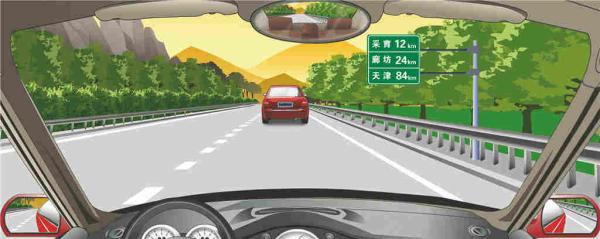
A. Right
B. Wrong
Answer: B
19. As shown in this picture, the vehicles intending to turn left are not allowed to drive into left-turn waiting area directly to wait for green light.
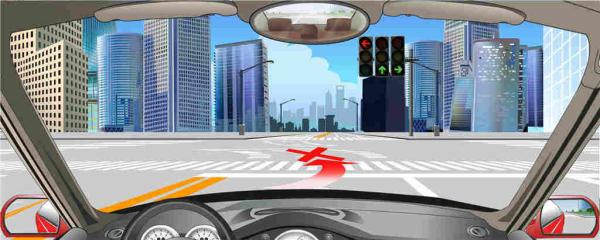
A. Right
B. Wrong
Answer: B
20. When following other vehicles on a foggy day, what should the driver do?
A. Maintain a large safety distance
B. Turn on the high-beam
C. Turn on the low-beam
D. Sound the horn in due time
Answer: A