

1. One day, Mr. Yang drove a large bus with 57 passengers (bus capacity 55 people) from 7 pm to 1 am the following morning. At the spot of 3008 kilometers mark by 110 meters on the No. 050 National Road in Jin Chengjiang District, the bus had a malignant traffic accident caused by front left tire burst, killing 12 people and injuring 22. What is the main illegal act committed by Mr. Yang?
A. Fatigued driving
B. Carrying more passengers than permitted
C. Speeding
D. Misoperation
Answer: AB
2. Under such circumstances, motor vehicle drivers should stop and yield
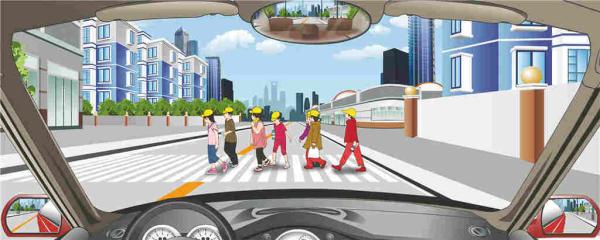
A. Right
B. Wrong
Answer: A
3. When driving on a foggy day, what kind of lamps should the driver turn on?
A. Fog lamp and hazard lamp
B. Fog lamp and indicator
C. Fog lamp and high-beam
D. Fog lamp and low-beam
Answer: A
4. The diamond-shaped sign on the road indicates a crosswalk on the road ahead.
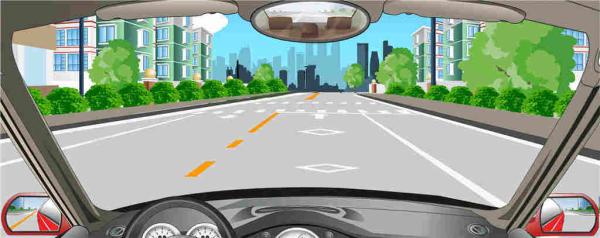
A. Right
B. Wrong
Answer: A
5. In which ones of the following ways can motor vehicle drivers effectively prevent braking failure?
A. Maintaining the braking system periodically
B. Checking the free brake pedal travel before driving
C. Using the braking system correctly to avoid brake-fade
D. For vehicles with hydraulic braking system, checking if the brake fluid leaks before driving
Answer: ABCD
6. Under such circumstances, what should be done by the motor vehicle driver?

A. Overtaking the vehicle in front on its left
B. Overtaking by occupying the opposite lane
C. Overtaking the vehicle in front on its right
D. Following the vehicle in front
Answer: D
7. This sign warns that the section ahead is under traffic monitoring.
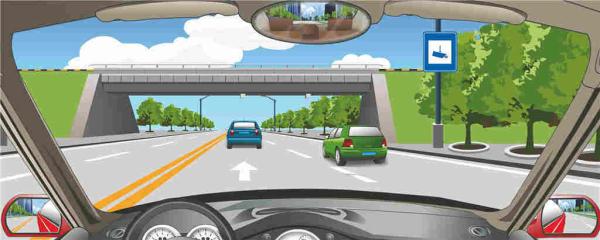
A. Right
B. Wrong
Answer: A
8. The drivers, loaders and supercargoes responsible for dangerous chemicals transportation should all full understand the chemical characteristics, potential risks, features of the packaging containers and emergency measures for any unexpected accidents.
A. Right
B. Wrong
Answer: A
9. The sign in front indicates that the highway entry is on the right side of the road.
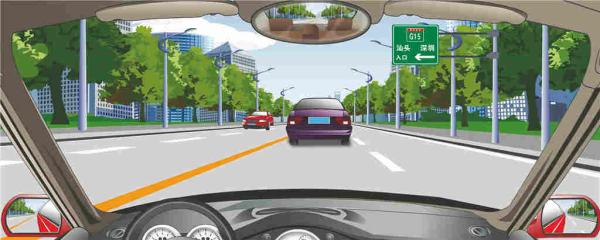
A. Right
B. Wrong
Answer: B
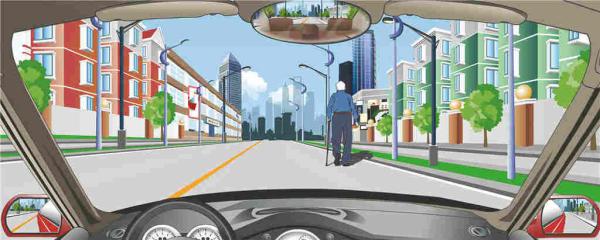
10. When encountering such pedestrians, motor vehicle drivers may continuously sound the horn to alert them to yield.
A. Right
B. Wrong
Answer: B
11. What is the emergency measure to deal with a sudden tire burst on the road?
A. Swiftly braking to slow down
B. Firmly hold the steering wheel and steadily stop the vehicle as early as possible
C. Swiftly turn the steering wheel to adjust the direction
D. Go ahead at a low speed and find a place for tire change
Answer: B
12. Motor vehicle drivers may borrow a special lane for other vehicle types, if one exists, to overtake.
A. Right
B. Wrong
Answer: B
13. The sign on the right warns that there are vehicles converging into the intersection on the right.
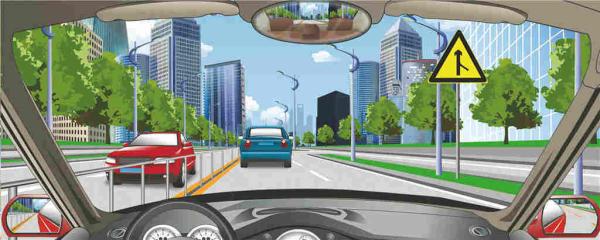
A. Right
B. Wrong
Answer: A
14. When the rear wheels of a motor vehicle skid sideways on a muddy road, the driver should turn the steering wheel in the opposite direction of the side skid.
A. Right
B. Wrong
Answer: B
15. When driving a motor vehicle equipped with power steering, the driver should firmly hold the steering wheel and drive slowly if he suddenly finds that steering is difficult.
A. Right
B. Wrong
Answer: B
16. Under such circumstances, motor vehicles are allowed to cross the central solid line to overtake.
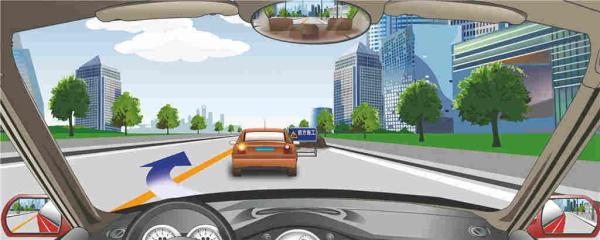
A. Right
B. Wrong
Answer: B
17. When encountering such pedestrians, what should motor vehicle drivers do?
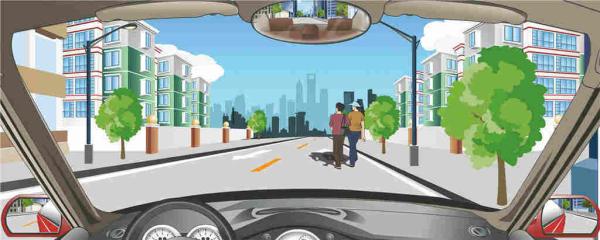
A. Go ahead along the middle line of the road
B. Continuously sound the horn
C. Speed up and overtake
D. Pay attention to the actions of such pedestrians
Answer: D
18. What is the meaning of the sign on the right?
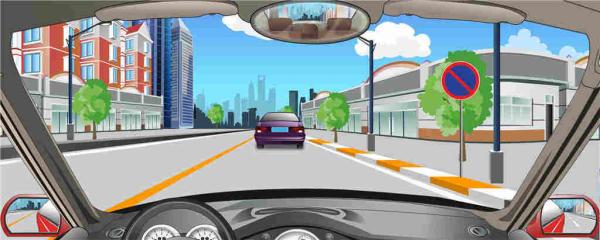
A. Long-time parking permitted
B. Temporary parking permitted
C. Long waiting for passengers permitted
D. No parking
Answer: B
19. When driving on this dangerous mountainside road, motor vehicles should drive along the right side of the road.
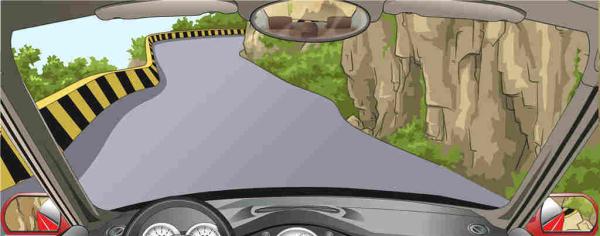
A. Right
B. Wrong
Answer: A
20. When a wounded person suffering bone fracture in the thigh, shank or spine, moving the wounded person is usually prohibited.
A. Right
B. Wrong
Answer: A