

1. When a bicycle occupies the motor vehicle lane and obstructs the traffic, the driver should sound the horn continuously and speed up to bypass on the left of the bicycle.
A. Right
B. Wrong
Answer: B
2. When driving on this section of the road, drivers should observe closely and prepare to yield to the animals crossing the road.
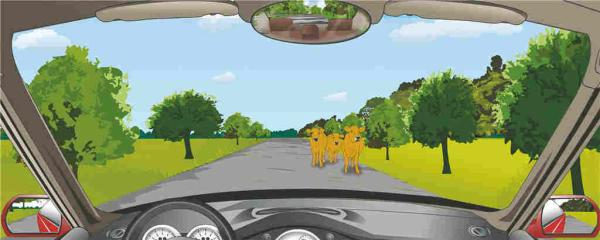
A. Right
B. Wrong
Answer: A
3. Under such circumstances, what should motor vehicle drivers do?
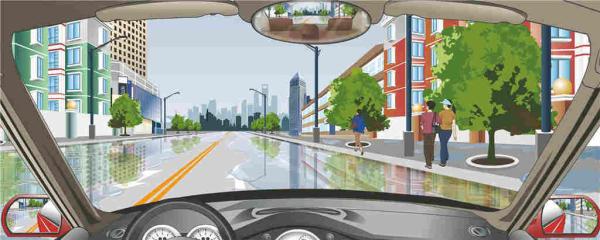
A. Pass slowly at a lower speed
B. Speed up and pass
C. Continuously sound the horn and pass
D. Pass at a normal speed
Answer: A
4. What should be done by drivers in order to drive safely on the road in this condition?
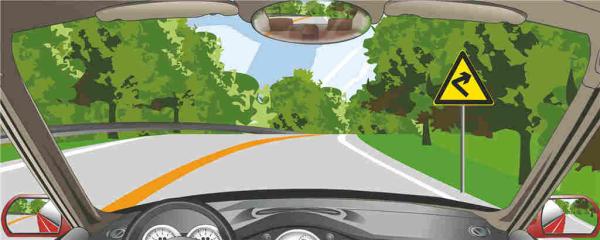
A. Make a large turn on the left side of the road
B. Make a turn on the central line of the curve
C. Make a small turn on the right side of the road
D. Make a turn by borrowing the opposite lane
Answer: C
5. Which one of the following measures is correct when a motor vehicle intends to overtake but the vehicle in front refuses to yield?
A. Use a long-sounding horn
B. Follow the vehicle in front while turning high-beam
C. Wait for it to yield while keeping a safe distance
D. Use high-beam and low-beam alternatively
Answer: C
6. What should the motor vehicle driver do when the motor vehicle encounters the crosswalk in this situation?

A. Slow down and pass
B. Speed up and pass
C. Sound the horn and pass
D. Stop immediately
Answer: A
7. When there is no bandage for rescuing a wounded person, towels, handkerchiefs, bed sheets and stockings can all be used for dressing.
A. Right
B. Wrong
Answer: A
8. This sign indicates that vehicles can either drive straight or turn right at the fly-over junction ahead.

A. Right
B. Wrong
Answer: B
9. The motor vehicle equipped with ABS may sideslip during an emergency brake.
A. Right
B. Wrong
Answer: A
10. The driver may not yield when the motor vehicle encounters this situation at the intersection.
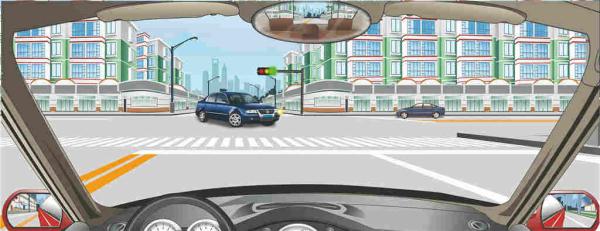
A. Right
B. Wrong
Answer: B
11. When removing a wounded person suffering spinal fracture, the rescuer should never help the wounded person to walk. He may be carried away with a soft stretcher.
A. Right
B. Wrong
Answer: B
12. Drivers may turn left when traffic police give these hand signals.
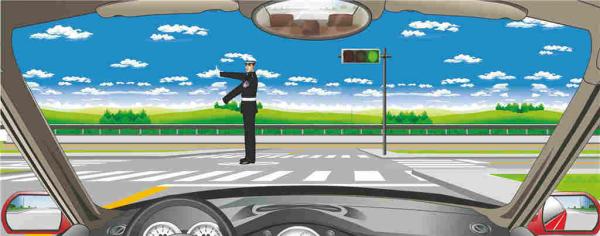
A. Right
B. Wrong
Answer: A
13. What should the driver do if he encounters this situation at the intersection when driving straight?
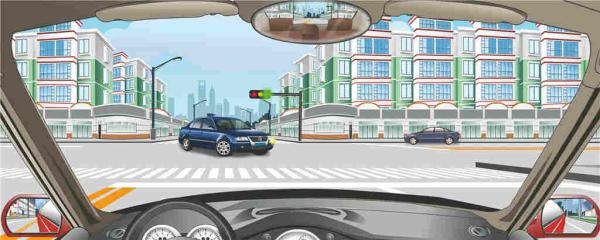
A. Sound the horn to warn the other vehicle to yield
B. Speed up and pass in the front of the vehicle
C. Turn on the headlamp to warn the other vehicle to yield
D. Slow down or stop to yield
Answer: D
14. When a bus encounters an unexpected situation or an accident, the driver should do his best to minimize the loss and should never cause a secondary accident or even greater loss for the sake of avoiding danger.
A. Right
B. Wrong
Answer: A
15. When encountering such pedestrians, what should motor vehicle drivers do?
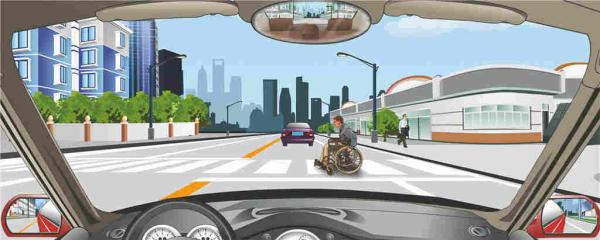
A. Bypass in front of the pedestrians
B. Bypass from behind the pedestrians
C. Sound the horn to alert the pedestrians
D. Voluntarily stop and yield
Answer: D
16. The guide arrow on the road surface of this lane indicates that only left turns are permitted at the intersection ahead.
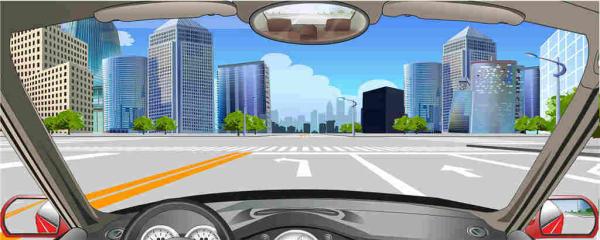
A. Right
B. Wrong
Answer: A
17. The sign on the right warns of a widened right-hand road ahead.
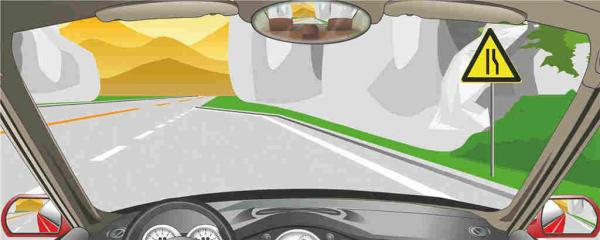
A. Right
B. Wrong
Answer: B
18. When encountering a school bus which stops at the right roadside and students are embarking or disembarking, and there are two motor vehicle lanes in each direction, motor vehicle drivers on the left lane behind the bus should stop and wait.
A. Right
B. Wrong
Answer: A
19. If a motor vehicle breaks down or causes a traffic accident on the expressway and cannot run normally the vehicle may be towed by any accompanying motor vehicles.
A. Right
B. Wrong
Answer: B
20. When approaching another vehicle at night, why should the driver alternate between high-and-low-beam at a distance more than 150 meters?
A. Warn each other before passing
B. Driving habit
C. Easy to observe the situation ahead from either side
D. Courtesy
Answer: C