

1. The sign on the right indicates that turning right is not permitted at the intersection ahead.

A. Right
B. Wrong
Answer: A
2. What should the driver do when the motor vehicle counters this situation?
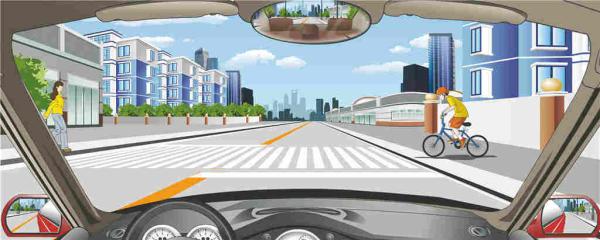
A. Sound the horn continuously to warn
B. Speed up and bypass from the front
C. Slow down when encountering any risks
D. Slow down voluntarily and yield
Answer: D
3. What should the driver do on this kind of curving mountain road?
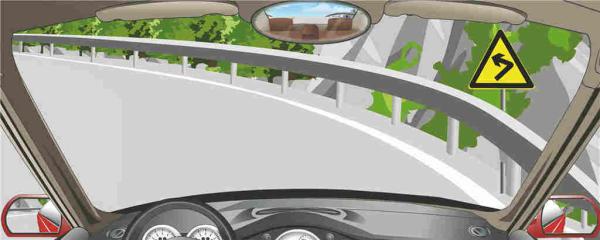
A. Borrow the opposite lane
B. Slow down and drive on the right
C. Stick to the central line of the road
D. Drive close to the right side
Answer: B
4. The sign on the right warns of right-hand S-shaped bend ahead.
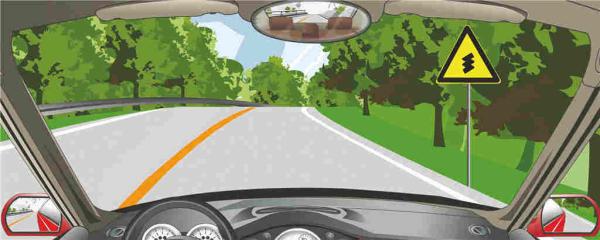
A. Right
B. Wrong
Answer: B
5. When a motor vehicle deviates from the normal direction due to steering failure and an accident is unavoidable, what should the driver do?
A. Apply emergency brake
B. Immediately steer and adjust
C. Immediately steer to the side where there is no obstacle and evade
D. Immediately steer to the side where there is an obstacle and evade
Answer: A
6. How to pass the intersection when running straight
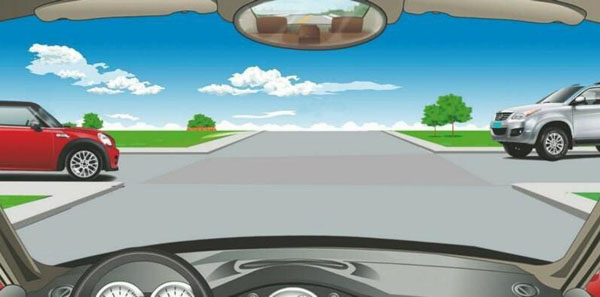
A. turn on the hazard lights and pass
B. directly speed up and pass straight
C. yield to the vehicle from the right road
D. yield to the vehicle from the left road
Answer: C
7. Under such circumstances, what should be done by the motor vehicle driver who has been overtaken?
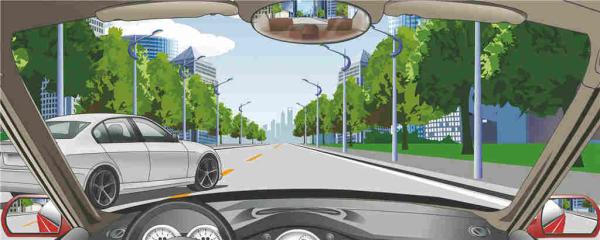
A. Sounding the horn to warn the vehicle that overtook
B. Reducing speed or pulling over by the right side
C. Protesting by turning on the high-beam
D. Catching up with and overtaking the vehicle that overtook, and offering admonitions
Answer: B
8. Once inflammable gas causes a fire disaster, it should be put out with water in good time.
A. Right
B. Wrong
Answer: B
9. How should the driver use vehicle lights when the motor vehicle enters this intersection?
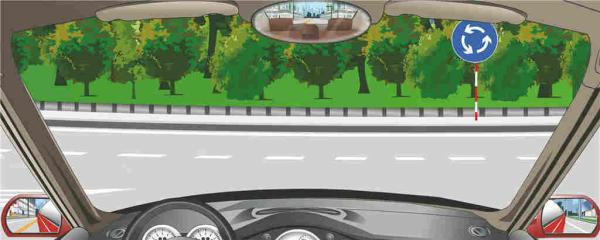
A. Turn on the right-turn indicator
B. Turn on the hazard lamps
C. No need to turn on any indicators
D. Turn on the left indicator
Answer: C
10. Gun powder, explosives and detonating powder belong to which of the following dangerous chemicals?
A. Oxidizing materials
B. Inflammable solid materials
C. Explosives
D. Self-igniting articles
Answer: C
11. The sign on the right indicates notice by sounding the horn.
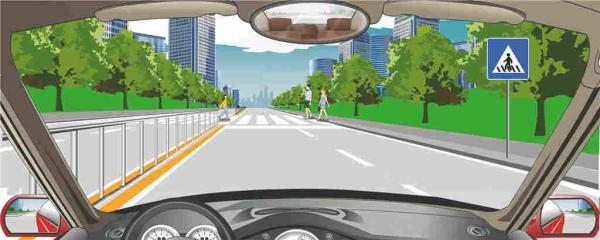
A. Right
B. Wrong
Answer: B
12. The sign in front indicates a 4-kilometer distance from the next exit.
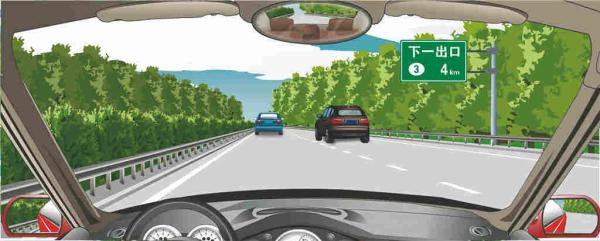
A. Right
B. Wrong
Answer: A
13. Under such circumstance at an intersection. motor vehicle drivers should be prepared to stop and yield at any time.
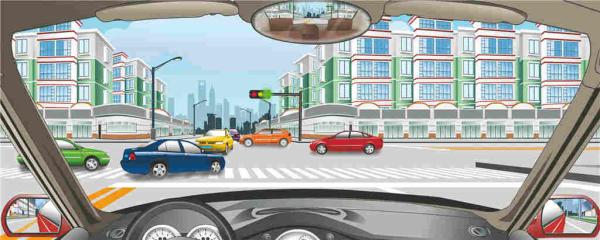
A. Right
B. Wrong
Answer: A
14. When driving on this section of the road, drivers should observe closely and prepare to yield to the animals crossing the road.
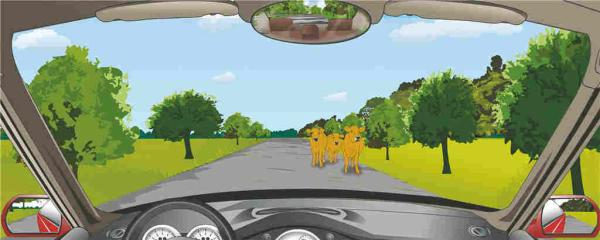
A. Right
B. Wrong
Answer: A
15. The sign on the right indicates that no restriction for temporary parking.
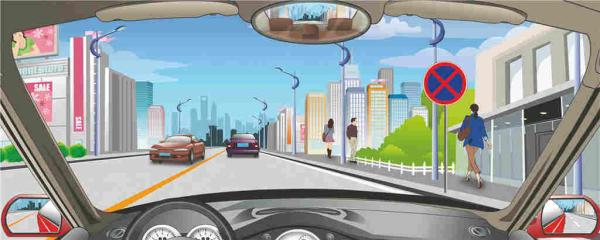
A. Right
B. Wrong
Answer: B
16. The broken white line rectangle area on the right side of the road indicates that long stopping is permitted here.
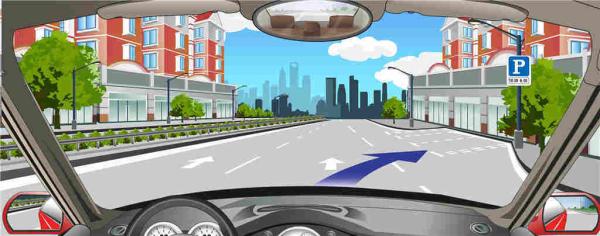
A. Right
B. Wrong
Answer: B
17. When a collision occurs on the passenger seat side or the impact is relatively small, which of the following methods is incorrect?
A. Firmly holding the steering wheel
B. Stretching both feet forward
C. Jumping out of the vehicle from one side
D. Leaning body backwards against the seat
Answer: C
18. When a motor vehicle skids sideways on a muddy road, the driver should turn the steering wheel in the direction of the rear wheel skidding to properly adjust the direction.
A. Right
B. Wrong
Answer: A
19. Driving and smoking has no negative effect on safe driving
A. Right
B. Wrong
Answer: B
20. Which one of the following measures is correct when a motor vehicle encounters this situation at night?
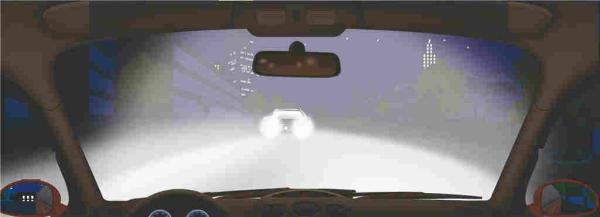
A. Keep driving at a normal speed
B. Drive at an increased speed to avoid light
C. Cut speed or stop to yield
D. Turn on high-beam to reject
Answer: C