

1. The sign on the right indicates that vehicles from the primary road have priority.
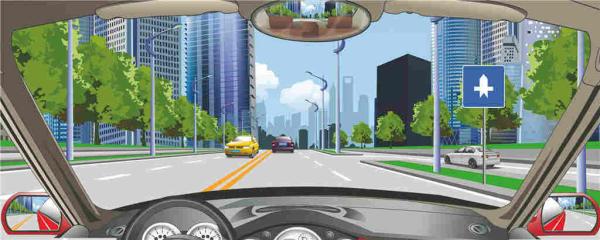
A. Right
B. Wrong
Answer: A
2. Which of the following is a safe way for motor vehicles to pass the intersection marked with this sign?
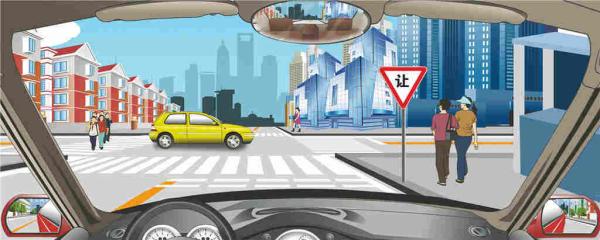
A. Stop and observe the traffic situation around the intersection
B. Approach the intersection by speeding up
C. Observe the traffic situation on the left rear side
D. Approach the intersection at a reduced speed
Answer: D
3. The sign on the right indicates an ETC lane at toll station ahead.
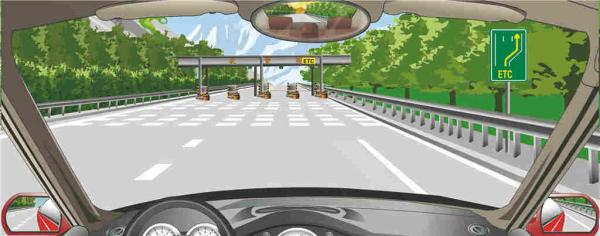
A. Right
B. Wrong
Answer: A
4. After a tire bursts and before the driver can control the speed of the vehicle, he should not risk using the foot brake to stop the vehicle. Otherwise, a horizontal swing of the vehicle can cause greater danger.
A. Right
B. Wrong
Answer: A
5. What should be done by motor vehicle drivers in order to yield politely to such pedestrians?
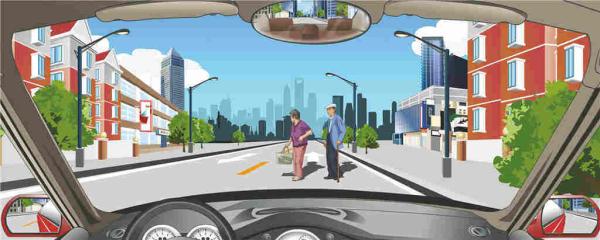
A. Speed up and bypass in front of the pedestrians
B. Speed up and bypass from behind the pedestrians
C. Reduce speed or stop to yield
D. Continuously sound the horn to alert the pedestrians
Answer: C
6. The signs on each side warn of changes in road alignment ahead.
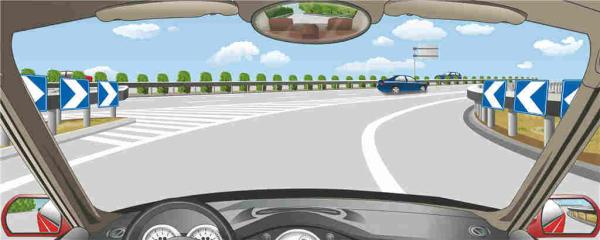
A. Right
B. Wrong
Answer: A
7. In rain, the most effective way to avoid the danger arising from water slide is to drive at high speed
A. Right
B. Wrong
Answer: B
8. The motor vehicle should speed up and pass rapidly under this situation.
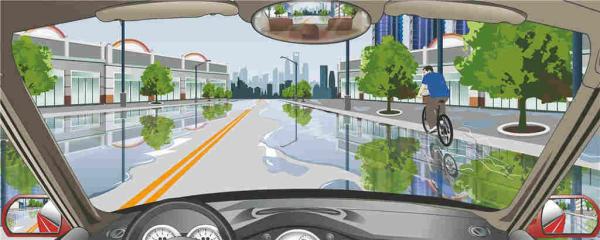
A. Right
B. Wrong
Answer: B
9. How should the driver use vehicle lights when the motor vehicle enters this intersection?
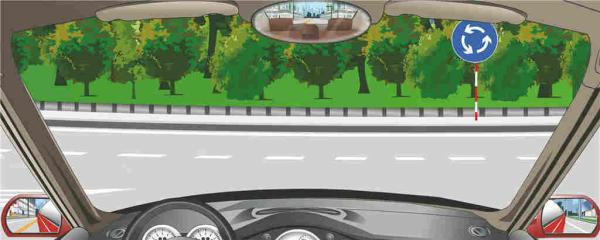
A. Turn on the right-turn indicator
B. Turn on the hazard lamps
C. No need to turn on any indicators
D. Turn on the left indicator
Answer: C
10. When driving a motor vehicle not equipped with the anti-lock braking system (ABS), what should the driver do if he brakes on a road covered by ice and snow?
A. Gently or intermittently depress the brake pedal
B. Depress the brake pedal as on other roads
C. Violently depress the brake pedal
D. Suddenly depress the pedal with force
Answer: A
11. What does this sign on the fly-over junction indicate?
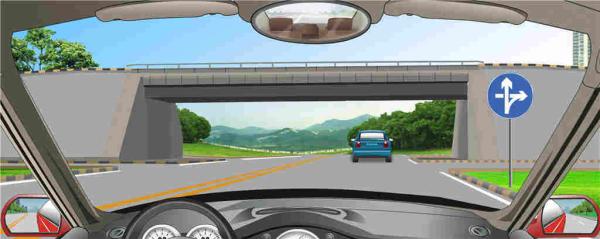
A. Turn right
B. Drive straight or turn left
C. Drive straight or turn right
D. Take a U-turn under bridge
Answer: C
12. Mr. Peng drove a heavy semi-trailer tractor with 37.7 tons of cargo (capacity 25 tons). When descending a slope on the Daguang Expressway, the tractor had a rear-end collision with Mr. Li?ˉs heavy dump truck (carrying 3.17 cubes of loess and 24 passengers in the container) occupying the emergency lane. As a result of this accident, 16 people were killed and 13 injured. What are the main illegal acts in this case?
A. Mr Peng exceeded the speed limit
B. Mr. Peng?ˉs tractor carried more cargo than limited
C. Mr Li illegally drove in the emergency lane
D. Mr. Li?ˉs truck illegally carried passengers in the container
Answer: BCD
13. How should lamps be used when a motor vehicle meets an oncoming bicycle on a narrow road or a narrow bridge at night?
A. Continuously change between low-beam and high-beam
B. Use clearance lamp
C. Use high-beam
D. Use low-beam
Answer: D
14. When encountering such pedestrians, what should motor vehicle drivers do?
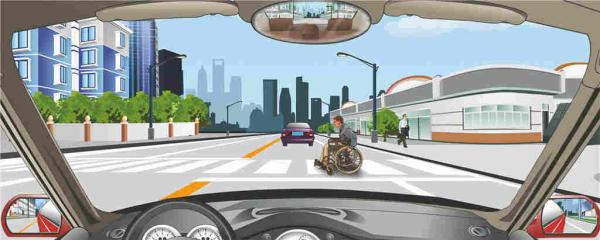
A. Bypass in front of the pedestrians
B. Bypass from behind the pedestrians
C. Sound the horn to alert the pedestrians
D. Voluntarily stop and yield
Answer: D
15. The sign in front indicates an indoor parking ground 100 meters ahead.
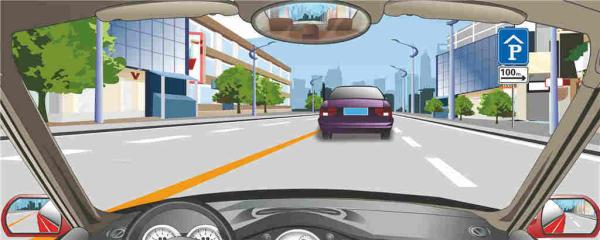
A. Right
B. Wrong
Answer: A
16. The sign in the red circle indicates that the left road is only for small vehicles.
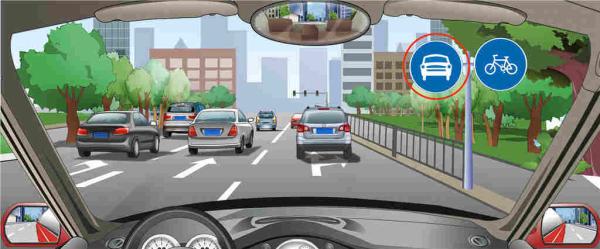
A. Right
B. Wrong
Answer: B
17. When a motor vehicle turns at an excessively high speed, it can easily slide sideways.
A. Right
B. Wrong
Answer: A
18. Where is the proper parking place for breakdown motor vehicles stopping for examination?
A. In the far outer lane
B. In the inner lane
C. In the emergency lane
D. Entrance area of the ramp
Answer: C
19. The guide arrow on the road surface of this lane indicates that drivers are only permitted to continue straight at the intersection ahead.
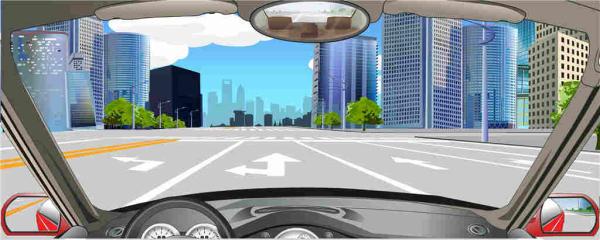
A. Right
B. Wrong
Answer: B
20. Drivers may go ahead when traffic polices posture is like this.
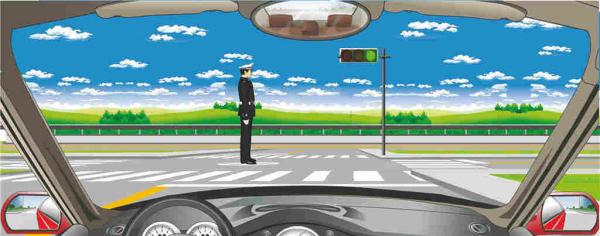
A. Right
B. Wrong
Answer: A