

1. If a motor vehicle deviates from the straight direction due to steering failure, what should be done by the driver in order to reduce speed and stop the vehicle as soon as possible?
A. Gently depressing the brake pedal
B. Pulling up the handbrake
C. Immediately changing to a low gear to reduce speed
D. Decisively and continuously depressing and releasing the brake pedal
Answer: D
2. The sign in front indicates the distance to highway destination.
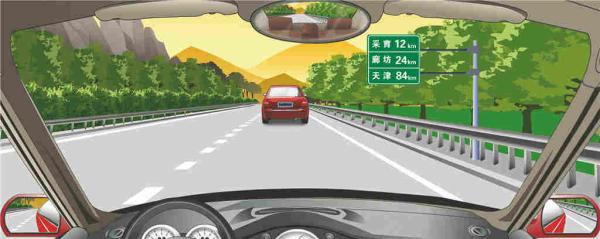
A. Right
B. Wrong
Answer: B
3. Which one of the following statements is the safest measure for a motor vehicle driver to take on this kind of road?
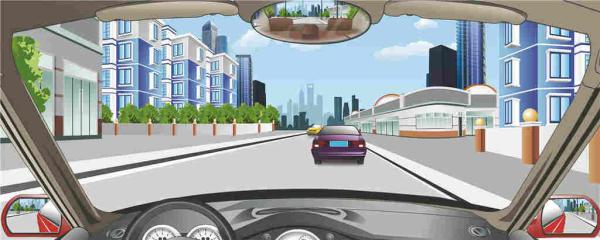
A. Accelerate to overtake the vehicle in front as soon as possible
B. Sound the horn to warn the vehicle in front to yield
C. Follow the vehicle in front and keep a certain distance
D. Overtake the vehicle in front from its righthand
Answer: C
4. When a motor vehicle catches fire on the expressway the driver should drive the motor vehicle to the service area or the parking lot to extinguish the fire.
A. Right
B. Wrong
Answer: B
5. When the tire pressure is too low, what will happen if the tire changes its shape in waves and increases in temperature due to fast movement?
A. Unstable tire pressure
B. Even lower tire pressure
C. Driving resistance increases
D. Tire burst
Answer: D
6. At 3: 40 a.m. one day, Mr. Sun drove a large bus with 54 passengers(capacity 55 people). At the spot of 229 kilometers mark by 300 meters on Suiyue Expressway, the bus had a rear-end collision with a heavy semi-trailer driven by Mr. Li when passengers were getting off from the bus. As a result of the accident, 26 people were killed and 29 injured. According to the investigation afterwards, Mr. Li had been driving the bus since he left the place of departure at 6 p.m. the day before without any rest. What are the main illegal acts of the two drivers?
A. Mr. Sun illegally parked
B. Mr. Sun carried more passengers than permitted
C. Mr. Li exceeded speed limit
D. Mr. Li kept driving when tired
Answer: AD
7. The guide arrow on the road surface of this lane indicates that only left turns are permitted at the intersection ahead.
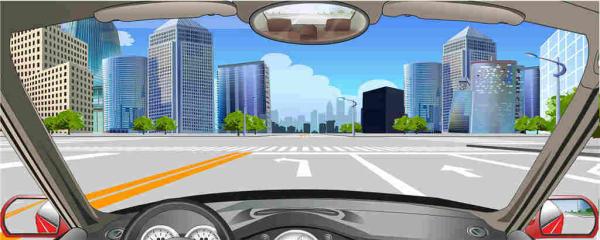
A. Right
B. Wrong
Answer: A
8. This sign indicates the traffic broadcast and radio television channel of highway.
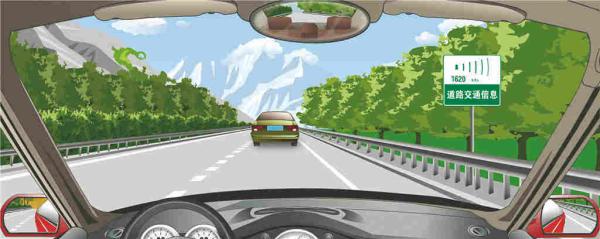
A. Right
B. Wrong
Answer: B
9. The driver should take emergency evasion measures when the motor vehicle suddenly self-ignites. Which ones of the following methods are correct?
A. Spray clean water to extinguish the fire
B. Report to the police
C. Use the spare fire extinguisher in the vehicle to put out the fire
D. Set up a warning sign in the oncoming direction
Answer: BCD
10. What should be done to keep safe when a motor vehicle driver is overtaking in this condition?
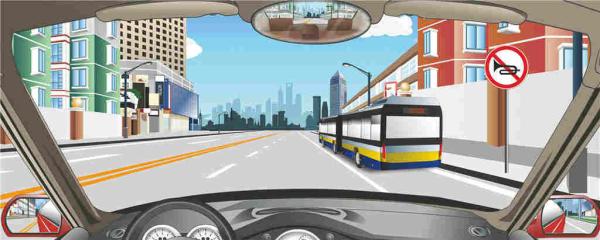
A. Reducing speed and keeping a safe distance
B. Continuously sounding the horn to indicate the vehicle in front
C. Accelerating to pass while keeping a certain distance
D. Overtaking by occupying the opposite lane
Answer: A
11. When a motor vehicle accidentally hits the guardrail of the highway, what should be done by the driver in order to keep safe?
A. Firmly holding and properly adjusting the steering wheel
B. Turning swiftly to the opposite direction
C. Immediately applying emergency braking
D. Immediately steering to the collision side
Answer: A
12. After setting off from a roadside, motor vehicle drivers should watch both sides of the road, turn left and drive into the normal lane slowly.
A. Right
B. Wrong
Answer: A
13. What should the motor vehicle driver do when the motor vehicle encounters the crosswalk in this situation?

A. Slow down and pass
B. Speed up and pass
C. Sound the horn and pass
D. Stop immediately
Answer: A
14. Mr. Li drove a large bus with 21 passengers (capacity 35 people). He found the braking system was abnormal on the way but failed to repair it. When running on the Shuangdao Haiwan Bridge at a speed of 50 kilometers per hour (speed limit 40 km/h), the bus fell into the sea due to a braking system failure, killing 13 people and injuring 8. What is the main illegal act committed by Mr. Li?
A. Speeding
B. Fatigued driving
C. Carrying more passengers than permitted
D. Driving a motor vehicle with potential safety hazard
Answer: AD
15. Drivers may turn left when traffic police give these hand signals.
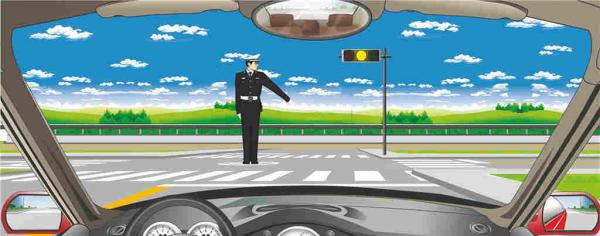
A. Right
B. Wrong
Answer: B
16. When a wounded person suffering bone fracture in the thigh, shank or spine, moving the wounded person is usually prohibited.
A. Right
B. Wrong
Answer: A
17. When the engine suddenly stalls on the road and cannot be restarted, the driver should pull over in a timely fashion and identify the cause of the stalling.
A. Right
B. Wrong
Answer: A
18. The driver may turn right directly at this intersection.
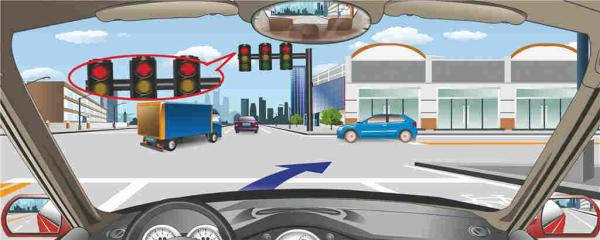
A. Right
B. Wrong
Answer: B
19. When rescuing a wounded person suffering from bone fracture, which of the following should be kept in mind?
A. Immediately send him/her to the hospital on a stretcher
B. Properly change the original posture when the injured person wounded
C. Dress the fracture with a bandage
D. Do not move the fractured body-part
Answer: D
20. Motor vehicles on this kind of road are only allowed to overtake the vehicle in front from left.
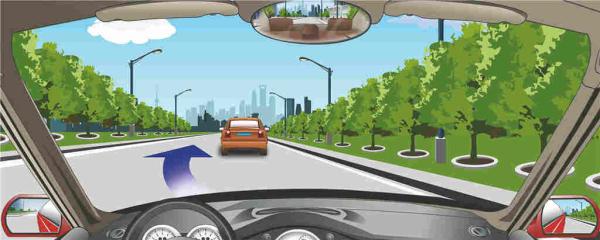
A. Right
B. Wrong
Answer: A