

1. The guide arrow on the road surface of this lane indicates that the lanes ahead will merge to the left side.
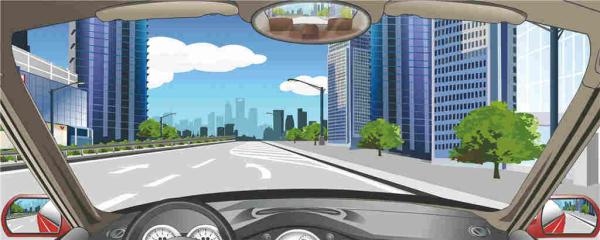
A. Right
B. Wrong
Answer: A
2. When encountering this situation in a residential area the driver should sound the horn continuously.
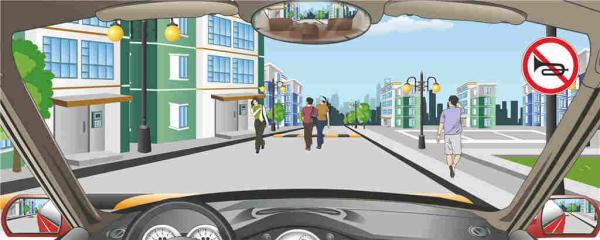
A. Right
B. Wrong
Answer: B
3. Sounding the horn on a foggy day can arouse the attention of the opposite side. After hearing the horn from the opposite side, the driver should also sound their own horn to respond.
A. Right
B. Wrong
Answer: A
4. On which of the following roads may the wheels be most easily locked when braking?
A. Concrete road
B. Dirt road
C. Road covered by ice and snow
D. Sand road
Answer: C
5. When a wounded person suffering bone fracture in the thigh, shank or spine, moving the wounded person is usually prohibited.
A. Right
B. Wrong
Answer: A
6. What should drivers keep in mind when driving on a mountainous road?
A. Keep a safe distance
B. Avoid occupancy of another lane when making a turn
C. Downshift in advance when ascending an abrupt slope
D. Taking full advantage of engine braking when descending a long slope
Answer: ABCD
7. Where is the proper parking place for motor vehicles driving on an expressway?
A. On the expressway ramp
B. In the acceleration lane
C. In the deceleration lane
D. In a service area
Answer: D
8. When approaching each other at night in this situation, drivers should watch for the danger where the two motor vehicles headlamps meet (the sight dead zone).
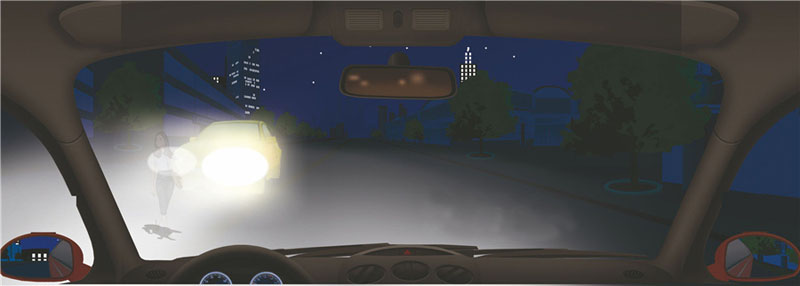
A. Right
B. Wrong
Answer: A
9. The slanted filled-in yellow marking in the middle of the road warns that there is a stationary obstacle ahead.
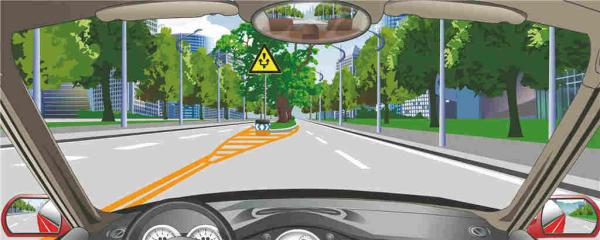
A. Right
B. Wrong
Answer: A
10. Under such circumstance at an intersection. motor vehicle drivers should be prepared to stop and yield at any time.
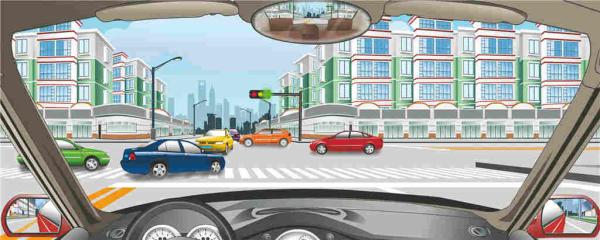
A. Right
B. Wrong
Answer: A
11. When a motor vehicle encounters an emergency on an expressway, the driver should not swiftly turn the steering wheel to evade.
A. Right
B. Wrong
Answer: A
12. The circle in the center of the intersection indicates that drivers should drive along the inner side when making a small left turn.
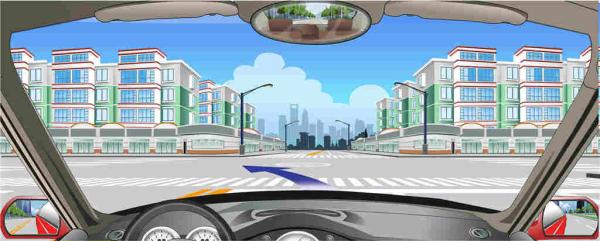
A. Right
B. Wrong
Answer: A
13. Drivers may cross these central solid and broken yellow lines when overtaking.
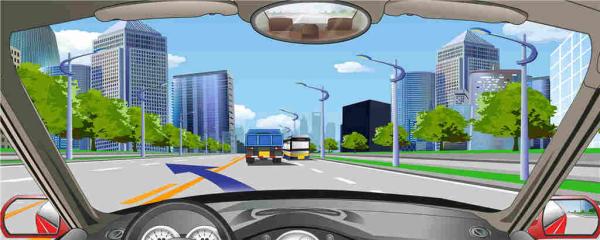
A. Right
B. Wrong
Answer: B
14. When encountering such pedestrians, what should motor vehicle drivers do?
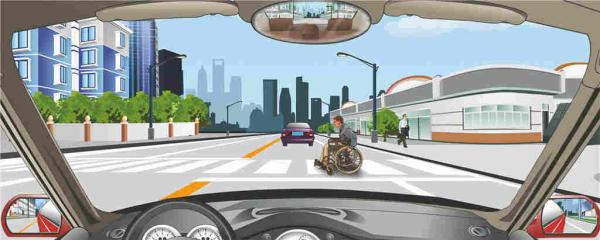
A. Bypass in front of the pedestrians
B. Bypass from behind the pedestrians
C. Sound the horn to alert the pedestrians
D. Voluntarily stop and yield
Answer: D
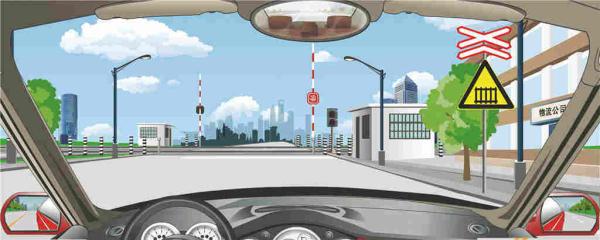
15. This sign warns of an intersection of railways and highways ahead.
A. Right
B. Wrong
Answer: A
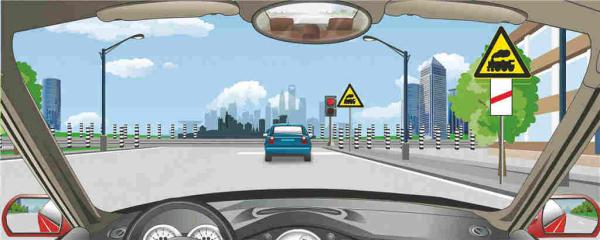
16. The sign on the right warns of a guarded railway crossing 100 meters ahead.
A. Right
B. Wrong
Answer: B
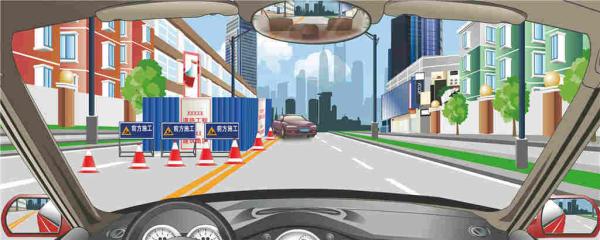
17. Under this circumstance, motor vehicle drivers should not reduce speed.
A. Right
B. Wrong
Answer: B
18. How should the driver use vehicle lights when the motor vehicle enters this intersection?
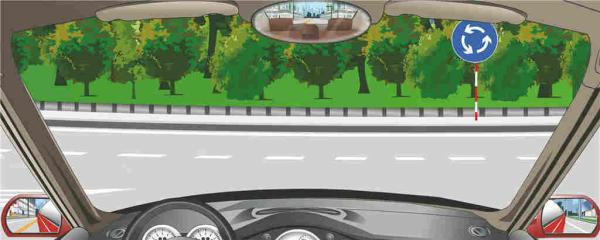
A. Turn on the right-turn indicator
B. Turn on the hazard lamps
C. No need to turn on any indicators
D. Turn on the left indicator
Answer: C
19. When the vehicle behind gives a notice of overtaking at night, the vehicle in front should not yield blindly.
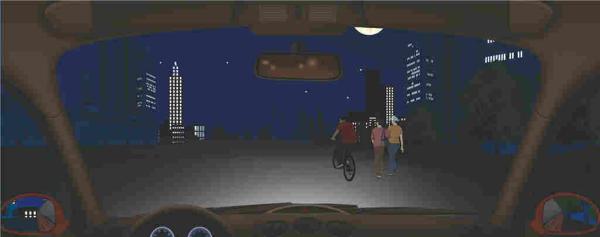
A. Right
B. Wrong
Answer: A
20. Which of the following is a basic requirement for rescuing the injured at the scene of a traffic accident?
A. Treat wounds first and safe life later
B. Save life first and treat wounds later
C. Help lightly wounded persons first
D. Help seriously wounded persons later
Answer: B