

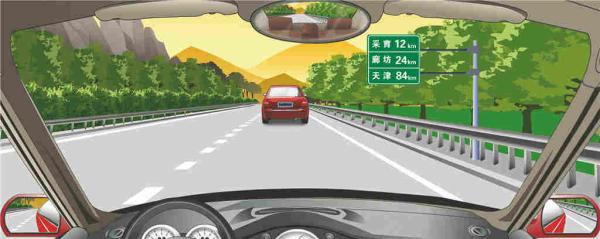
1. The sign in front indicates the distance to highway destination.
A. Right
B. Wrong
Answer: B
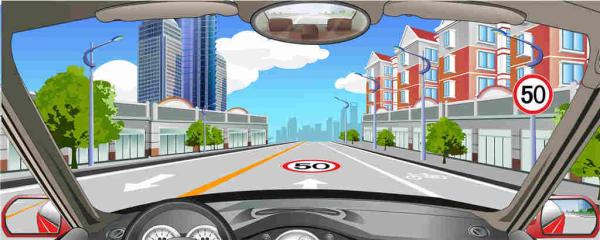
2. The marking on the road surface indicates that the speed limit of this road section is 50 km/hour.
A. Right
B. Wrong
Answer: A
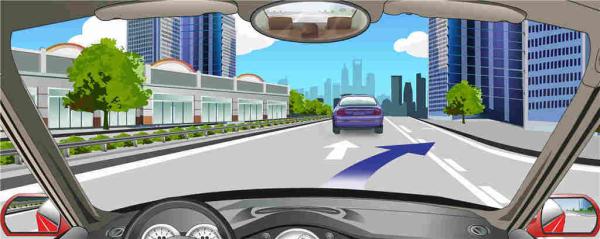
3. The broken and solid white line on the road indicates that crossing is allowed on the solid line side.
A. Right
B. Wrong
Answer: B
4. Mr. Tong drove a large bus (capacity 55 people and carrying 54) to Taiyuan City. When he drove on a muddy road at the speed of 45 kilometers per hour, the bus skidded into a deep ditch, killing 14 people dead and badly injuring 40 What is the main illegal act committed by Mr. Tong?
A. Overloaded
B. Speeding
C. Driving after drinking
D. Fatigued driving
Answer: B
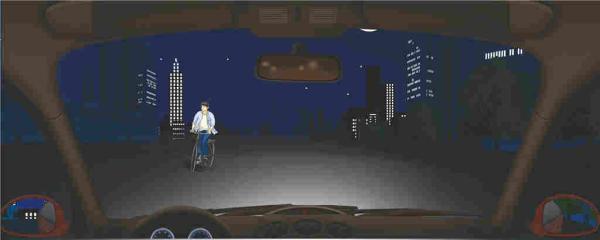
5. What should motor vehicle drivers do under such circumstances at night?
A. Turn off the headlamp when approaching
B. Use low-beam
C. Use high-beam
D. Turn off all lamps in advance
Answer: B
6. The sign in front indicates a one-way lane after turning right.
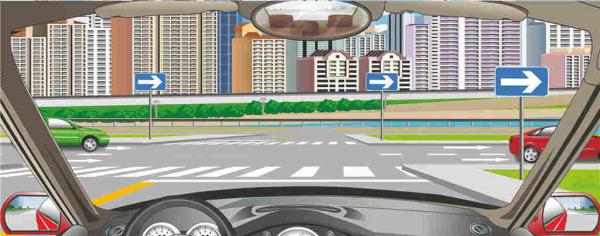
A. Right
B. Wrong
Answer: A
7. What needs attention when a motor vehicle drives on a road covered with ice and snow?
A. Braking length is extended
B. Anti-skating resistance will be greater
C. The adhesive force of the road will be greater
D. The braking length will be shorter
Answer: A
8. When driving in a strong wind, what should the driver do if he feels the steering wheel is suddenly out of control due to the frequent changes in speed and direction of the wind?
A. Turn the steering wheel against the wind
B. Turn the steering wheel with the wind
C. Use emergency brake
D. Firmly hold the steering wheel with both hands
Answer: D
9. When a motor vehicle breaks down on a mountain road, what should the driver do?
A. Park on a downhill section
B. Park on an uphill section
C. Park on a gentle section of the mountain road
D. Park on the crest of a slope
Answer: C
10. The sign on the right indicates that drivers should choose their lanes in accordance withthe directions indicated by arrows.
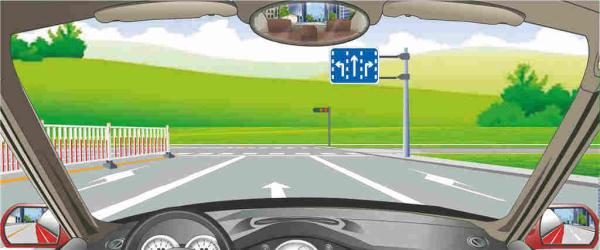
A. Right
B. Wrong
Answer: A
11. Mr. He drove his large bus with 53 passengers (permitted carrying capacity 47) to 454 km mark by 100m along the Yining-hefei Expressway in Nanjing jurisdiction, where he was tailgated by a heavy-type semitrailer tractor. The bus left the road, breaking through the guardrail and catching fire. 17 people were killed and 27 injured. Which of the following law-breaking acts did Mr. He commit?
A. Speeding
B. Exceeding the carrying capacity of the motor bus
C. Driving a motor vehicle overdue for annual inspection
D. Improper operation
Answer: B
12. Drivers may turn left when traffic police give these hand signals.
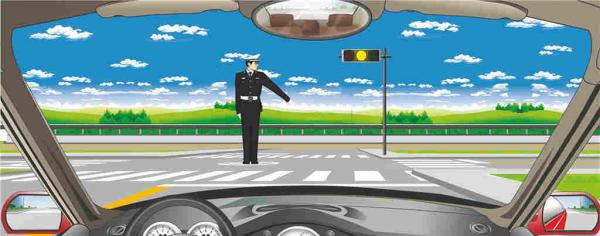
A. Right
B. Wrong
Answer: B
13. When a wounded person is unable to get off the vehicle by himself, he should be removed from the vehicle so as to avoid a secondary injury.
A. Right
B. Wrong
Answer: A
14. When there is a braking failure on a downhill road, the driver should immediately try to find and drive to an emergency lane; after stopping the vehicle on the emergency lane, the driver should pull up the stopping brake so as to prevent a second danger arising from the vehicle sliding.
A. Right
B. Wrong
Answer: A
15. The sign on the right indicates to stop and yield at the intersection ahead.
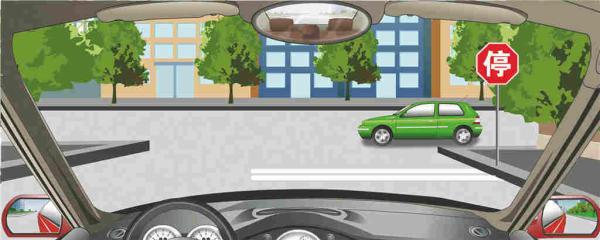
A. Right
B. Wrong
Answer: A
16. The sign indicates no overtaking on the section ahead.
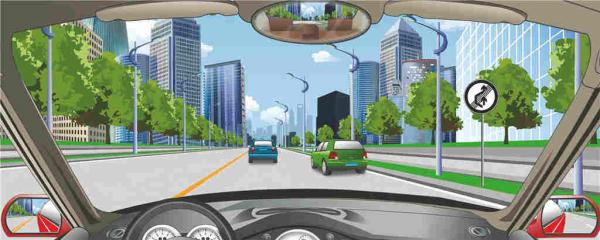
A. Right
B. Wrong
Answer: B
17. When encountering this situation in a residential area the driver should speed up and pass in front of the bicycle.
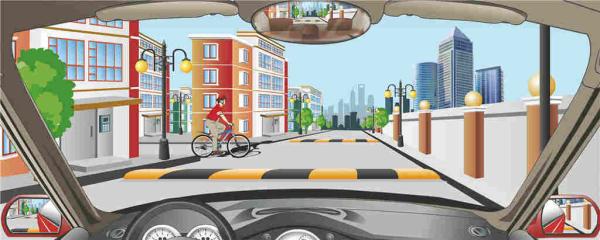
A. Right
B. Wrong
Answer: B
18. The signs on each side warn of changes in road alignment ahead.
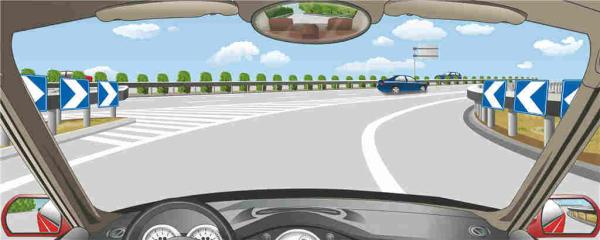
A. Right
B. Wrong
Answer: A
19. Which of the following is a safe way for motor vehicles to pass the intersection marked with this sign?
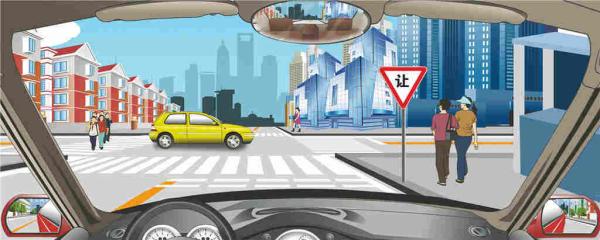
A. Stop and observe the traffic situation around the intersection
B. Approach the intersection by speeding up
C. Observe the traffic situation on the left rear side
D. Approach the intersection at a reduced speed
Answer: D
20. The sign on the right indicates a passing bay ahead.
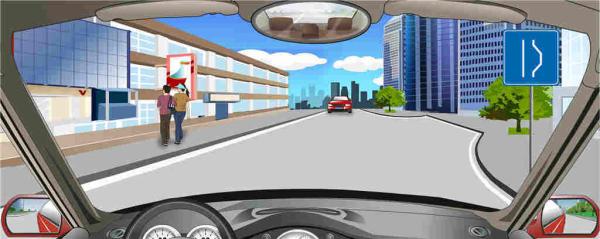
A. Right
B. Wrong
Answer: A