

1. When removing a wounded person suffering spinal fracture, the rescuer should never help the wounded person to walk. He may be carried away with a soft stretcher.
A. Right
B. Wrong
Answer: B
2. The sign on the right indicates a one-kilometer distance from ETC toll station ahead.
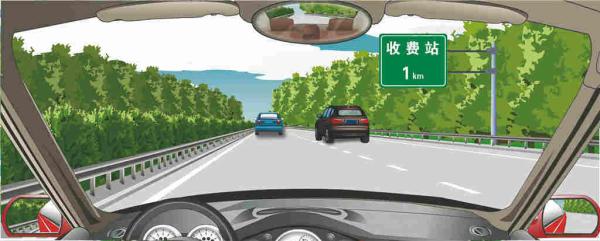
A. Right
B. Wrong
Answer: B
3. The sign on the left indicates U-turn is allowed here.
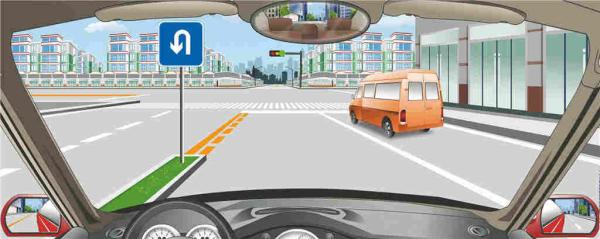
A. Right
B. Wrong
Answer: A
4. The sign in front indicates a one-kilometer distance from the highway entry.

A. Right
B. Wrong
Answer: A
5. The sign on the right indicates a bypass route at the intersection ahead.
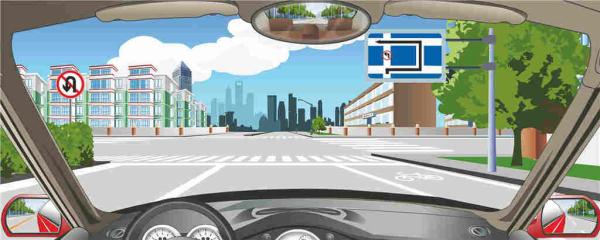
A. Right
B. Wrong
Answer: A
6. What is the meaning of the sign on the right?
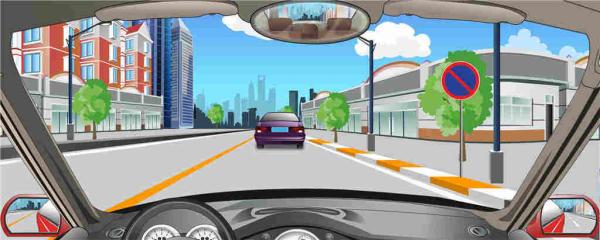
A. Long-time parking permitted
B. Temporary parking permitted
C. Long waiting for passengers permitted
D. No parking
Answer: B
7. The sign in front indicates a one-way lane after turning right.
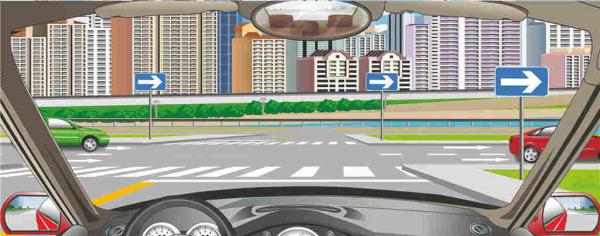
A. Right
B. Wrong
Answer: A
8. Drivers may turn left when traffic police give these hand signals.
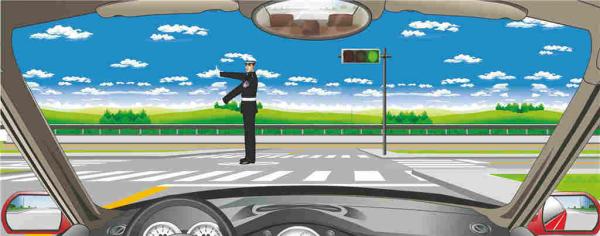
A. Right
B. Wrong
Answer: A
9. When the tire pressure is too low, what can happen when driving at a high speed?
A. Tire pressure will be unstable
B. Tire pressure will increase
C. Driving resistance will decrease
D. The tire will burst
Answer: D
10. Drivers may turn left when seeing these hand signals.
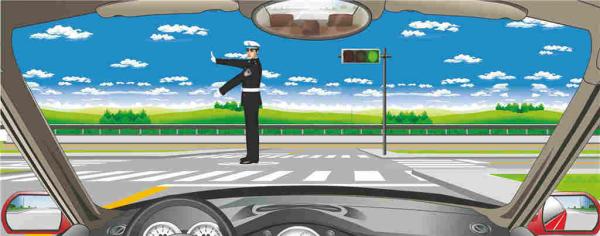
A. Right
B. Wrong
Answer: A
11. The sign on the right warns of three or more winding roads ahead.
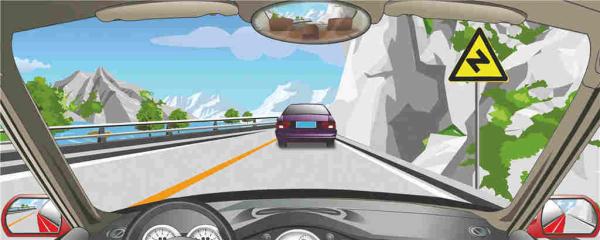
A. Right
B. Wrong
Answer: B
12. What should be done by drivers in order to drive safely on the road in this condition?
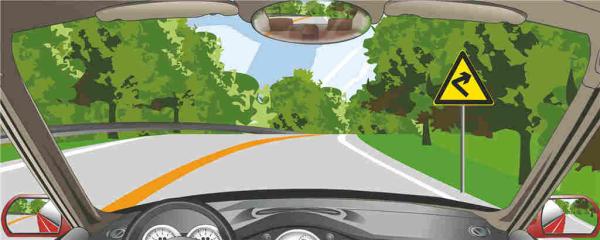
A. Make a large turn on the left side of the road
B. Make a turn on the central line of the curve
C. Make a small turn on the right side of the road
D. Make a turn by borrowing the opposite lane
Answer: C
13. When encountering such pedestrians, motor vehicle drivers may continuously sound the horn to alert them to yield.
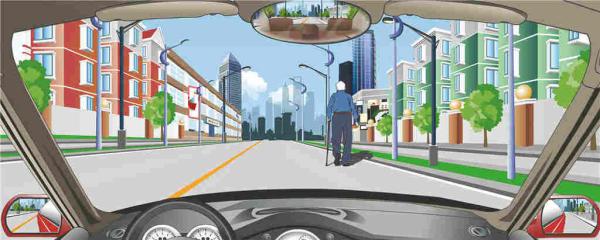
A. Right
B. Wrong
Answer: B
14. When approaching a sharp curve, motor vehicle drivers should reduce speed only after entering the curve.
A. Right
B. Wrong
Answer: B
15. When a bicycle occupies the motor vehicle lane and obstructs the traffic, the driver should sound the horn continuously and speed up to bypass on the left of the bicycle.
A. Right
B. Wrong
Answer: B
16. What should the driver do in this condition?

A. Go through normally on the right side
B. Sound the horn and speed up to go through the tunnel
C. Stop and yield to the oncoming vehicle
D. Turn on the headlamp to warn the oncoming vehicle to yield
Answer: C
17. The sign on the right warns of a road section ahead under construction.
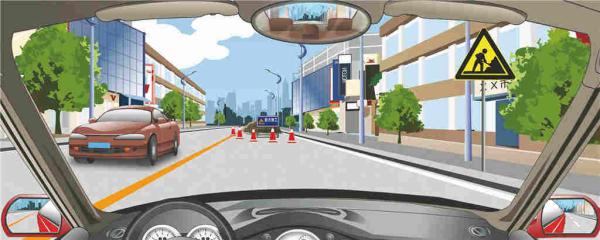
A. Right
B. Wrong
Answer: A
18. The sign on the right side warns of an abrupt downhill section ahead.
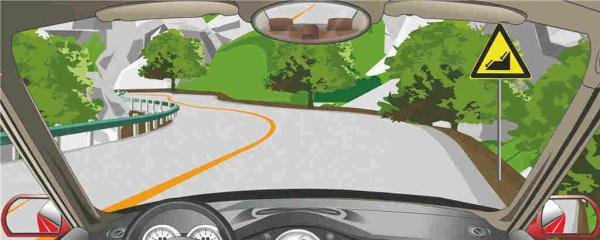
A. Right
B. Wrong
Answer: B
19. When driving a motor vehicle equipped with power steering, the driver should firmly hold the steering wheel and drive slowly if he suddenly finds that steering is difficult.
A. Right
B. Wrong
Answer: B
20. Under such circumstances, what should the motor vehicle driver do?
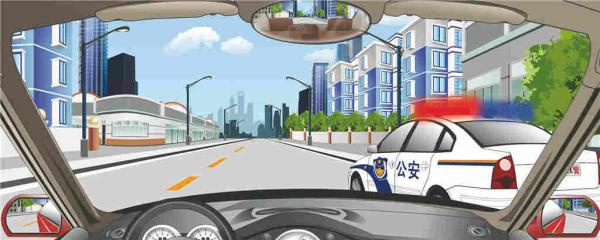
A. Reduce speed and yield by the left side
B. Reduce speed and yield by the right side
C. Speed up and yield by the left side
D. Go ahead along the original route
Answer: A