

1. The sign on the right warns of no passing on either side of the road ahead.
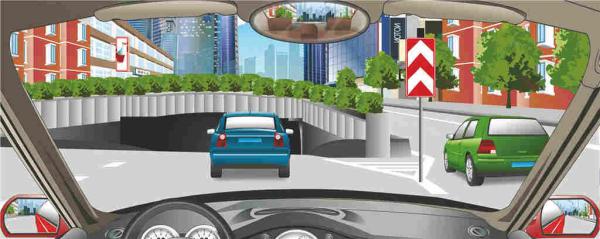
A. Right
B. Wrong
Answer: B
2. Mr. Li drove a large bus with 21 passengers (capacity 35 people). He found the braking system was abnormal on the way but failed to repair it. When running on the Shuangdao Haiwan Bridge at a speed of 50 kilometers per hour (speed limit 40 km/h), the bus fell into the sea due to a braking system failure, killing 13 people and injuring 8. What is the main illegal act committed by Mr. Li?
A. Speeding
B. Fatigued driving
C. Carrying more passengers than permitted
D. Driving a motor vehicle with potential safety hazard
Answer: AD
3. What should be done by the driver who intends to overtake but finds that the vehicle in front is also overtaking?
A. Following the vehicle in front closely and finding a chance to overtake it
B. Accelerating to overtake forcefully
C. Continuously sounding the horn to urge the vehicle in front to yield
D. Refraining from overtaking and letting the vehicle in front overtake first
Answer: D
4. A motor vehicle may stop and yield if it encounters any problem when changing to the driving lane from an acceleration lane.
A. Right
B. Wrong
Answer: B
5. The slow-down-and-yield line at the intersection ahead indicates that vehicle drivers should stop and give the right of way to vehicles on the trunk road.

A. Right
B. Wrong
Answer: B
6. When passing this mountainous road, motor vehicle drivers should drive along the center of the road.
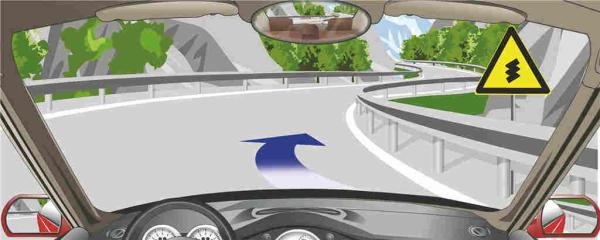
A. Right
B. Wrong
Answer: B
7. What should the driver do when the motor vehicle passes a flyover?
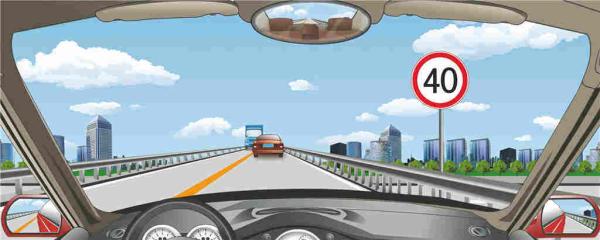
A. Speed up and pass rapidly
B. Keep the speed under 15 km/hour
C. Drive at the speed indicated by the traffic sign
D. Drive close to the central line of the flyover
Answer: C
8. When driving a vehicle equipped with power steering what should the driver do upon finding that steering is difficult?
A. Stop and identify the cause
B. Control the steering and drive slowly
C. Drive at a lower speed
D. Keep the vehicle going straight
Answer: A
9. The sign on the right warns of a guarded crossing 150 meters ahead.
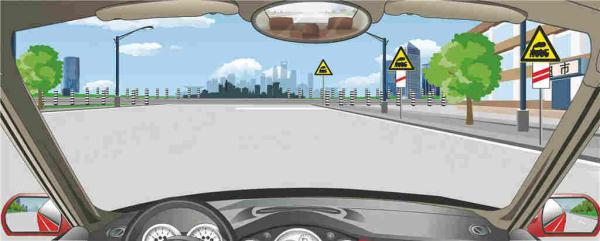
A. Right
B. Wrong
Answer: B
10. Motor vehicles are prohibited from driving straight or turning left in this situation.
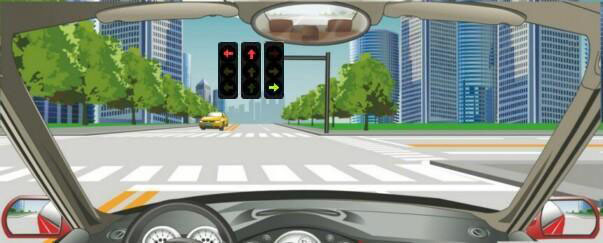
A. Right
B. Wrong
Answer: A
11. Dangerous chemicals possess the characteristics of explosion, inflammation, poison, erosion and radiation.
A. Right
B. Wrong
Answer: A
12. Motor vehicle drivers are allowed to overtake as long as there are no oncoming vehicles.
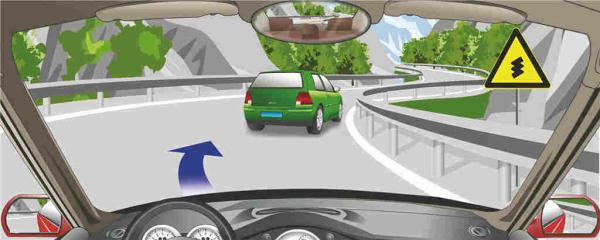
A. Right
B. Wrong
Answer: B
13. When driving on an expressway, where should the driver park?
A. The service area
B. The acceleration lane
C. The deceleration lane
D. On the ramp
Answer: A
14. When the vehicle engine catches fire, what should the driver do first?
A. Turn off the engine as soon as possible
B. Extinguish the fire with water
C. Open the hood to extinguish the fire
D. Extinguish the fire from the leeward direction
Answer: A
15. Motor vehicles are not allowed to stop in this area for a long time.
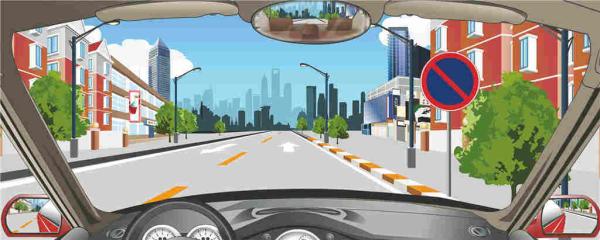
A. Right
B. Wrong
Answer: A
16. The broken white line rectangle area on the right side of the road indicates that long stopping is permitted here.
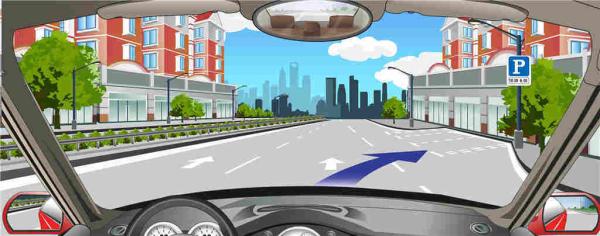
A. Right
B. Wrong
Answer: B
17. As shown in the flash, the driver?ˉs act is correct.
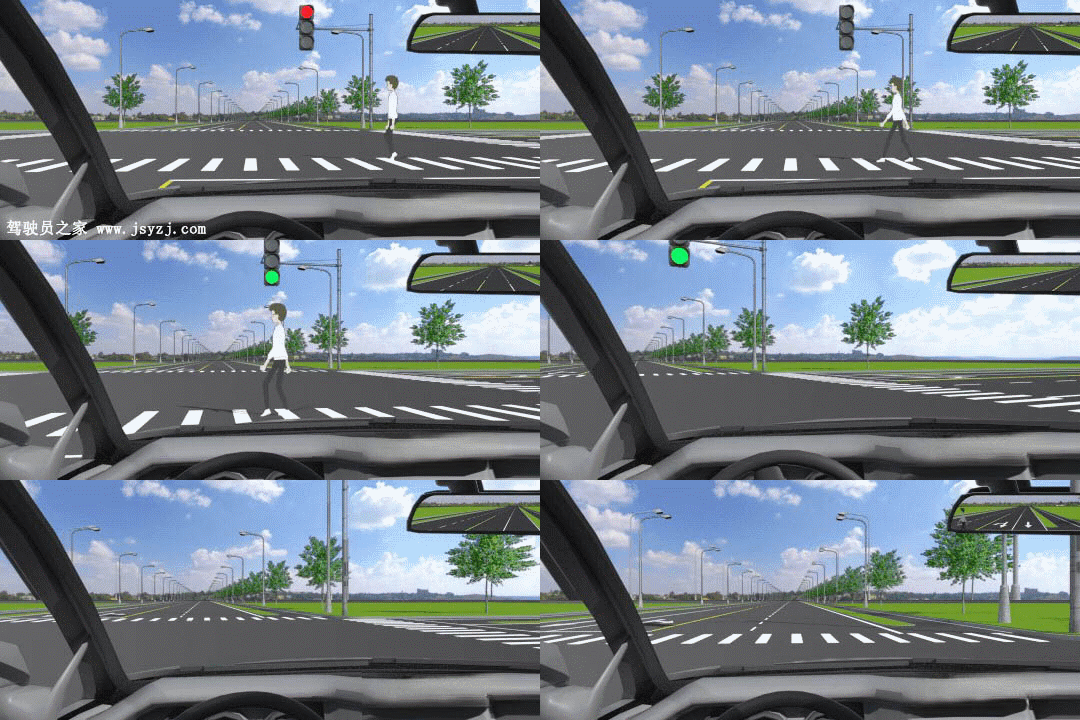
A. Right
B. Wrong
Answer: B
18. The sign on the right warns of a dangerous mountainside road on the left of the road ahead.
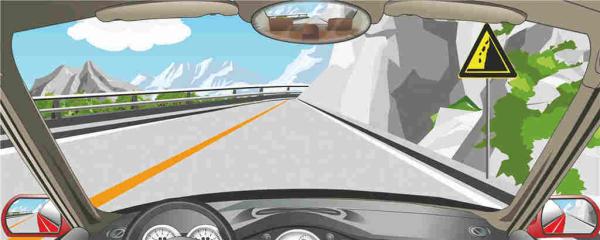
A. Right
B. Wrong
Answer: B
19. When the motor vehicle encounters a crosswalk in this situation, the driver may speed up and pass rapidly.
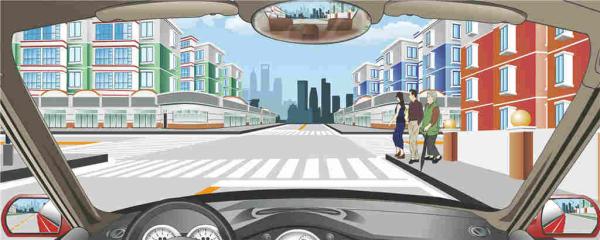
A. Right
B. Wrong
Answer: B
20. When a motor vehicle encounters thick fog on an expressway and the visibility is poor, the driver should immediately brake and stop.
A. Right
B. Wrong
Answer: B