

1. When a motor vehicle needs to stop for inspection after having an accident on an expressway, where should the driver park?
A. On the far outer lane
B. On the inner lane
C. On the emergency lane
D. In the triangle area on the ramp
Answer: C
2. How should lamps be used when setting off in this situation?
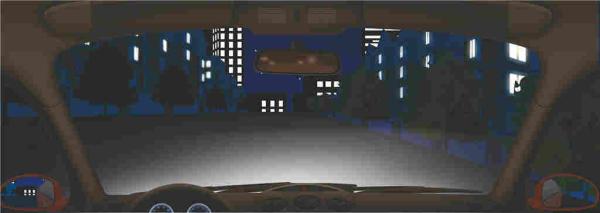
A. Turn on the high-beam
B. Turn on the left indicator only
C. Turn on the left indicator and low-beam
D. Turn on hazard lamp
Answer: C
3. When there is no bandage for rescuing a wounded person, towels, handkerchiefs, bed sheets and stockings can all be used for dressing.
A. Right
B. Wrong
Answer: A
4. The sign on the right indicates a bypass flow intersection ahead.
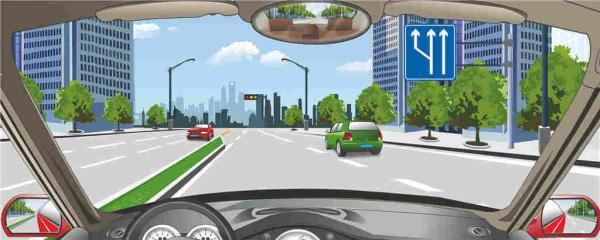
A. Right
B. Wrong
Answer: B
5. When extinguishing a fire, the driver should refrain from breathing through mouth or crying loudly Otherwise, the fire and smoke will scorch the upper respiratory tract.
A. Right
B. Wrong
Answer: A
6. When a vehicle encounters a strong side wind, the driver should firmly hold the steering wheel and press the brake urgently if he feels the vehicle deviates horizontally from the normal direction.
A. Right
B. Wrong
Answer: B
7. Drivers may turn left when traffic police give these hand signals.
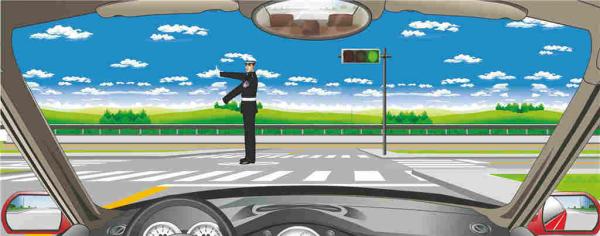
A. Right
B. Wrong
Answer: A
8. The crosswalk of the intersection warns that pedestrians have priority.

A. Right
B. Wrong
Answer: A
9. The sign on the right warns of no passing due to collapse on the road ahead.
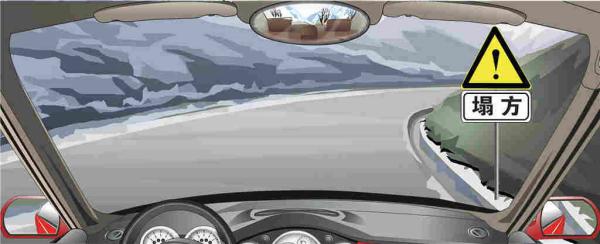
A. Right
B. Wrong
Answer: B
10. The driver should take emergency evasion measures when the motor vehicle suddenly self-ignites. Which ones of the following methods are correct?
A. Spray clean water to extinguish the fire
B. Report to the police
C. Use the spare fire extinguisher in the vehicle to put out the fire
D. Set up a warning sign in the oncoming direction
Answer: BCD
11. The sign on the right warns of a dangerous mountainside road ahead.
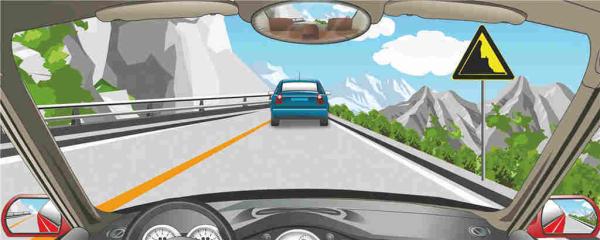
A. Right
B. Wrong
Answer: A
12. What should be checked before driving?
A. No parts need to be checked
B. Whether the tires have been cleaned
C. Where the spare tire is placed
D. The fastening and air pressure of tires
Answer: D
13. When driving a motor vehicle not equipped with the anti-lock braking system (ABS), what should the driver do if he brakes on a road covered by ice and snow?
A. Gently or intermittently depress the brake pedal
B. Depress the brake pedal as on other roads
C. Violently depress the brake pedal
D. Suddenly depress the pedal with force
Answer: A
14. What should the driver do to follow other motor vehicles on a mountain road?
A. Closely follow the vehicle in front
B. Increase the safety distance
C. Reduce the vertical distance between vehicles
D. Try to overtake the vehicle in front as soon as possible
Answer: B
15. Those traffic police signals mean turning right.
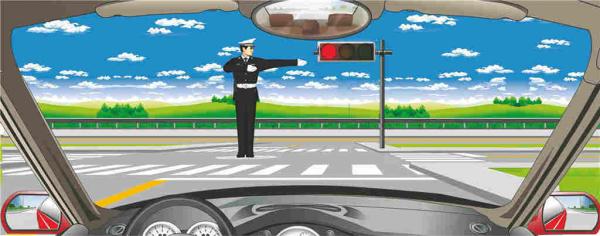
A. Right
B. Wrong
Answer: B
16. What kind of harmful effect will be brought about by continuously using the foot brake on a long downhill road?
A. Shorten the engine?ˉs service life
B. Make the driver feel tired
C. Easily cause the vehicle to overturn
D. Reduce the braking efficiency
Answer: D
17. When this signal is constantly flashing, how should a driver react?
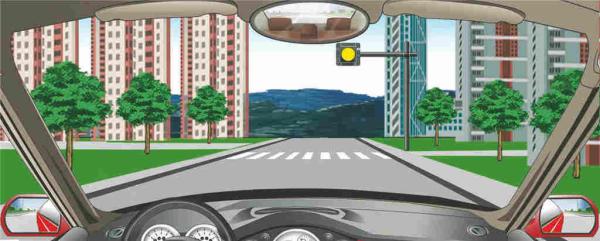
A. Speed up as soon as possible
B. Pull over and wait
C. Observe the traffic situation around to make sure of safe driving
D. Refrain from passing
Answer: C
18. What should be done by drivers in order to drive safely on the road in this condition?
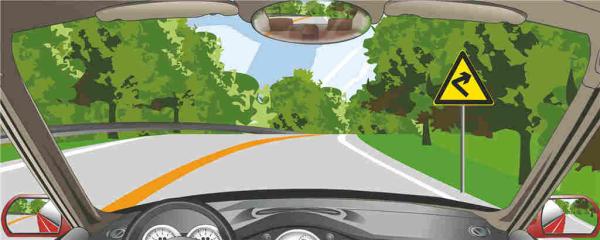
A. Make a large turn on the left side of the road
B. Make a turn on the central line of the curve
C. Make a small turn on the right side of the road
D. Make a turn by borrowing the opposite lane
Answer: C
19. Motor vehicle drivers should rush to the top of the slope in this situation.
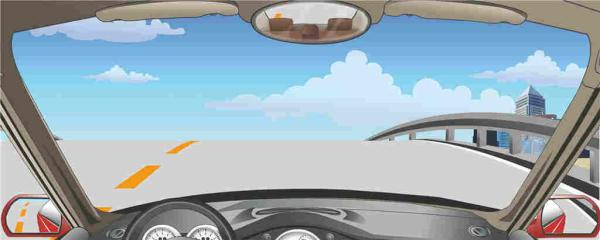
A. Right
B. Wrong
Answer: B
20. When there is a braking failure on a downhill road the driver should change the gear to one position or two positions lower, and control the speed by taking advantage of the braking role of the engine.
A. Right
B. Wrong
Answer: A