

1. A motorized vehicle driver who does not hang the license plate is subject to a ________.
A. 6-point penalty
B. 12-point penalty
C. 2-point penalty
D. 3-point penalty
Answer: B
2. In which situation the traffic police may detain the vehicle?
A. no lable of inspection
B. no ID card
C. no lable of environmental protection
D. no vehicle registration papers
Answer: A
3. A motorized vehicle driver who violates of traffic lights is subject to a 6-point penalty.
A. Right
B. Wrong
Answer: A
4. When a motorcycle wades across the water, the braking efficiency of the brake does not change.
A. Right
B. Wrong
Answer: B
5. If the vehicle has no license plate, label of inspection or label of insurance, preserve the scene and immediately report to the police.
A. Right
B. Wrong
Answer: A
6. When driving into the traffic flow on a main road from a relief road, drivers should speed up.
A. Right
B. Wrong
Answer: B
7. When a motorized vehicle crosses a non-motorized vehicle on a narrow road or a narrow bridge at night, the motorized vehicle should use the high beam light.
A. Right
B. Wrong
Answer: B
8. When the driver discovers a tire is leaking and steers the vehicle off the main driving lane, he/she should refrain from applying emergency braking so as to avoid a vehicle turnover or a rear-end collision arising from the late braking of the vehicle behind.
A. Right
B. Wrong
Answer: A
9. If a motorized vehicle driver has caused a major accident in violation of the traffic regulations which has caused heavy loss to public or private property, the driver is subject to a prison term of less than 3 years or a criminal detention.
A. Right
B. Wrong
Answer: A
10. If a motorized vehicle driver has caused a major accident in violation of the traffic regulations which has caused serious injury, the driver is subject to a prison term of less than 3 years or a criminal detention.
A. Right
B. Wrong
Answer: A
11. What is the meaning of this sign?

A. no changing lane
B. no left turn
C. no going straight
D. no U turn
Answer: D
12. When driving a motorized vehicle uphill, you should speed up and honk when you going to reach the top of the slope.
A. Right
B. Wrong
Answer: B
13. How to ensure motor vehicles have sufficient power when driving uphill?
A. Downshift before reducing speed
B. Downshift after reducing speed
C. Downshift when the speed is excessively low
D. Downshift to the fullest extent
Answer: A
14. How to do when the vehicle breaks down on road and needs to stop to solve the problem?
A. stop in the middle of the road
B. stop the vehicle where will not interfere the traffc
C. turn on the low beam lights or fog lights
D. stop on the spot to solve the problem
Answer: B
15. How to reduce speed or stop when driving on a road covered with snow and ice?
A. Take full advantage of driving brake
B. Take full advantage of the control power from engine
C. Take full advantage of parking brake
D. Take full advantage of speed retarder
Answer: B
16. What is the meaning of this sign?

A. reducing speed 40m ahead
B. minimum speed is 40km/hr
C. axle weight limit is 40 tons
D. maximum speed limit is 40km/hr
Answer: D
17. Which of the following vehicle in front in the same lane is not allowed to be overtaken?
A. the vehicle is making a stop
B. the vehicle is reducing speed to yield
C. the vehicle is taking a U turn
D. the vehicle is running normally
Answer: C
18. What is the meaning of this sign?
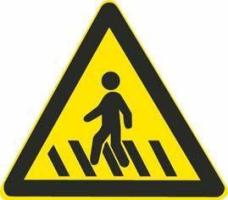
A. watch for pedestrians
B. watch for children
C. school area
D. crosswalk
Answer: A
19. The motorized vehicle driver who lives outside the jurisdiction of the issuing vehicle management station may apply to the vehicle management station at the place where he is living, for license change.
A. Right
B. Wrong
Answer: A
20. If a motorized vehicle driver allows his vehicle to be driven by a person whose driving license has been revoked, the traffic police will detain the driving license.
A. Right
B. Wrong
Answer: A