

1. Unless stopping due to obstacles or vehicle breakdown on an expressway, motor vehicles are not allowed to stop to pick up or drop off people or load and unload cargo.
A. Right
B. Wrong
Answer: A
2. The sign on the right warns of a widened right-hand road ahead.

A. Right
B. Wrong
Answer: B
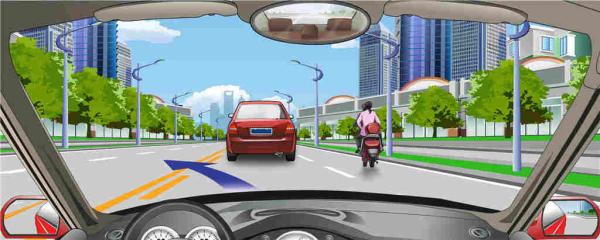
3. Drivers may temporarily cross these central broken and solid yellow lines when overtaking.
A. Right
B. Wrong
Answer: A
4. When a head-on collision with another vehicle is unavoidable, what should the driver do?
A. Change head-on collision to side collision
B. Immediately turn the steering wheel to the right side to evade
C. Immediately apply emergency braking
D. Immediately turn the steering wheel to the left side to evade
Answer: C
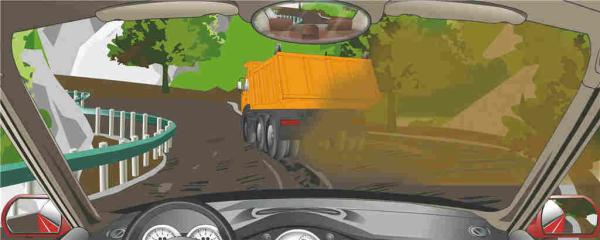
5. When encountering this situation on a mountainous road, motor vehicle drivers should overtake the vehicle in front by speeding up.
A. Right
B. Wrong
Answer: B
6. The crosswalk of the intersection warns that pedestrians have priority.

A. Right
B. Wrong
Answer: A
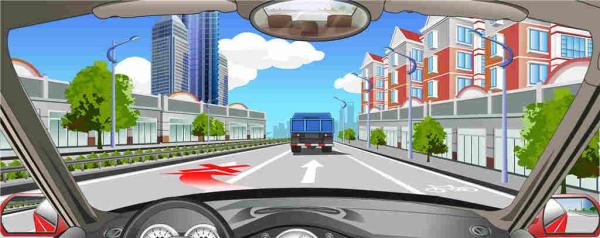
7. Drivers are not allowed to cross these lane-dividing lines when overtaking in the same direction.
A. Right
B. Wrong
Answer: A
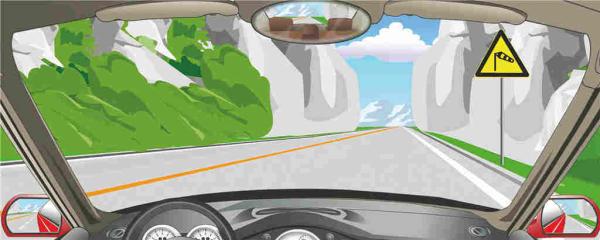
8. The sign on the right side warns of crosswind on the mountain pass ahead.
A. Right
B. Wrong
Answer: A
9. This sign warns to bypass from the left side to avoid the roadblock.
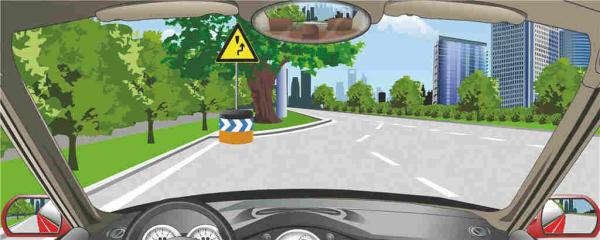
A. Right
B. Wrong
Answer: B
10. What should be given attention when setting off in this weather?
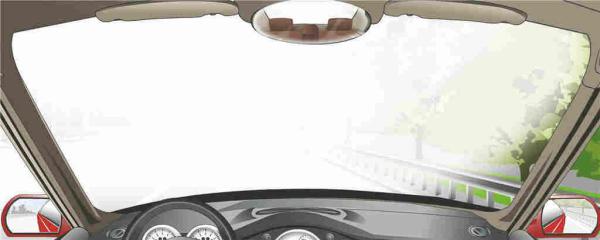
A. Turning on the high-beam
B. Turning on the front and rear fog lamps
C. Turning on the left indicator only
D. Continuously sounding the horn
Answer: B
11. The sign on the left indicates that drivers should stop to take a pass card at the toll station ahead.
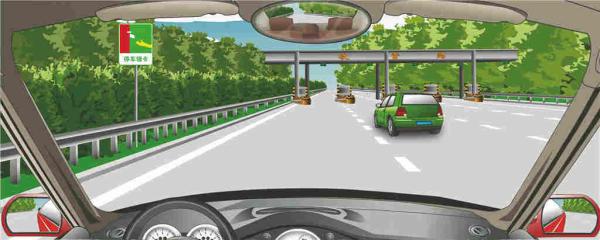
A. Right
B. Wrong
Answer: A
12. What should the driver do to follow other motor vehicles on a mountain road?
A. Closely follow the vehicle in front
B. Increase the safety distance
C. Reduce the vertical distance between vehicles
D. Try to overtake the vehicle in front as soon as possible
Answer: B
13. The sign in front is an advance announcement of the directions led by the interchange.
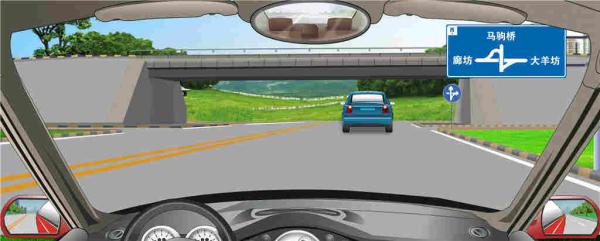
A. Right
B. Wrong
Answer: A
14. Which of the following materials should not be used to stop bleeding?
A. Bandage
B. Sling
C. Tourniquet
D. Hemp rope
Answer: D
15. What should motor vehicle drivers do when parking temporarily on a rainy day?
A. Turn on hazard lamp
B. Turn on front and back fog lamp
C. Turn on low-beam
D. Set up warning sign at the back of the vehicle
Answer: A
16. This sign indicates that vehicles can either drive straight or turn right at the fly-over junction ahead.

A. Right
B. Wrong
Answer: B
17. What should the driver do in this condition?

A. Go through normally on the right side
B. Sound the horn and speed up to go through the tunnel
C. Stop and yield to the oncoming vehicle
D. Turn on the headlamp to warn the oncoming vehicle to yield
Answer: C
18. When there is no bandage for rescuing a wounded person, towels, handkerchiefs, bed sheets and stockings can all be used for dressing.
A. Right
B. Wrong
Answer: A
19. When a wounded person is beneath the wheel or cargo, we should help him out immediately by pulling the limbs of the wounded.
A. Right
B. Wrong
Answer: B
20. When a vehicle encounters a strong side wind, the driver should firmly hold the steering wheel and press the brake urgently if he feels the vehicle deviates horizontally from the normal direction.
A. Right
B. Wrong
Answer: B