

1. As the braking distance increases on a wet road in a rainy day, the driver should use the emergency brake as much as possible to reduce speed.
A. Right
B. Wrong
Answer: B
2. If a front tire blowout has caused a turn in direction, the driver should not avoid excess adjustment. Instead, he should control the direction of the vehicle, ____, and slowly reduce the speed of the vehicle.
A. Apply emergency braking
B. Use the handbrake
C. Gently depress the brake pedal
D. Swiftly depress the brake pedal
Answer: C
3. When driving in a rainy day, the driver should _____ when a pedestrian holding umbrella or in raincoat is walking on the highway.
A. Continuously honk to indicate him to yield
B. Speed up and bypass
C. Honk in advance and properly reduce speed
D. Drive at the normal speed
Answer: C
4. In such road sections, you can enter the cross-hatched marking area to wait.
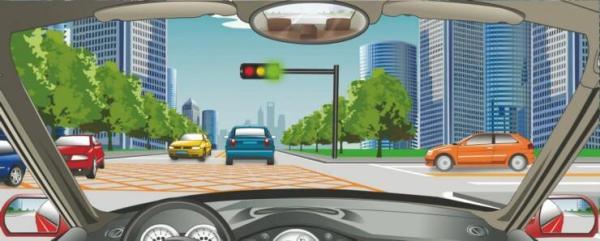
A. Right
B. Wrong
Answer: B
5. How to do in this intersection?
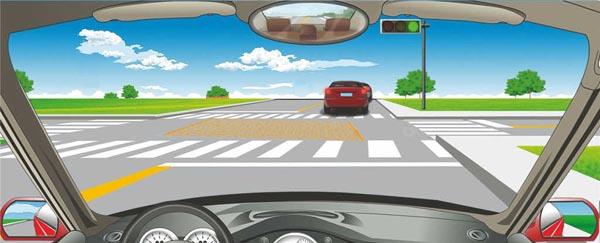
A. wait in the cross-hatched marking area
B. stop and wait outside the intersection
C. follow the vehicle in front and pass
D. wait inside the intersection
Answer: B
6. If a motorized vehicle causes a traffic accident on the expressway and cannot to run normally, the vehicle should be towed by a rescue vehicle or a tow truck.
A. Right
B. Wrong
Answer: A
7. When driving a small vehicle downhill, the driver may coast down by stopping the engine.
A. Right
B. Wrong
Answer: B
8. What does the traffic light mean?
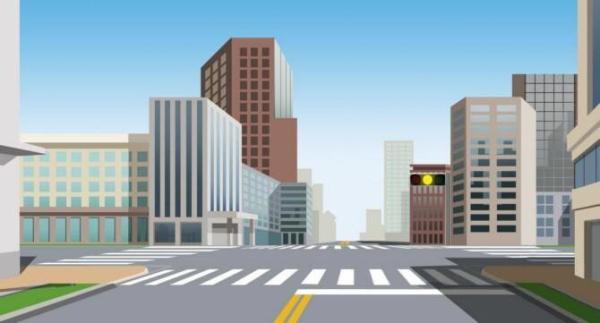
A. speed up and turn left
B. no right turn
C. intersection warning
D. speed and run straight
Answer: C
9. When a vehicle changes lane before an intersection, the driver should do so ______.
A. In the area marked by solid lines before the intersection
B. In the area marked by solid lines in the intersection
C. In the area marked by broken lines as indicated by the guide arrow
D. Before the stop line at the intersection
Answer: C
10. When discovering a road congestion ahead, the correct way to deal with this situation is to _______.
A. Continue to weave through
B. Find space and overtake one vehicle after another
C. Honk to indicate the vehicle in front to speed up
D. Stop and wait in line
Answer: D
11. Whats the meaning of this sign?
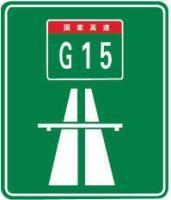
A. expressway exit
B. expressway beginning
C. expressway entry
D. expressway ending
Answer: B
12. Motor vehicle frontal collision, the double protection of the airbag and the safety belts can give full play to the role.
A. Right
B. Wrong
Answer: A
13. It lights to indicate that ______

A. the tail fog light is turned on
B. the low beam light is turned on
C. the high beam light is turned on
D. the head fog light is turned on
Answer: D
14. When bicycles ahead obstruct the traffic flow, the driver may honk to remind them,speed up and bypass.
A. Right
B. Wrong
Answer: B
15. The police can detain the vehicle if one drives a vehicle without ______
A. vehicle license
B. qualification certificate
C. ID card
D. pass paper
Answer: A
16. Traffic Signs and traffic markings are not traffic signals.
A. Right
B. Wrong
Answer: B
17. When the motor vehicle installed ABS system brakes, the braking distance will be greatly shortened, so you do not have to keep a safe distance between vehicles.
A. Right
B. Wrong
Answer: B
18. A motorized vehicle is not allowed to stop in the section 50 meters to the intersection.
A. Right
B. Wrong
Answer: A
19. When the vehicles cross each other at night, the driver may continuous change lights to remind the vehicle coming in the opposite direction and at the same should reduce speed and go forward or stop on the right side.
A. Right
B. Wrong
Answer: A
20. A driver should stop on the expressway at once to have a rest when he feel tired.
A. Right
B. Wrong
Answer: B