

1. If a motor vehicle encounters a strong side wind when it leaves the opening of an expressway tunnel, what will happen?
A. A feeling of deceleration
B. A feeling of acceleration
C. A feeling of pressure
D. Deviation in direction
Answer: D
2. Under such circumstances, motor vehicle drivers may sound the horn at the proper time and speed up to pass through.
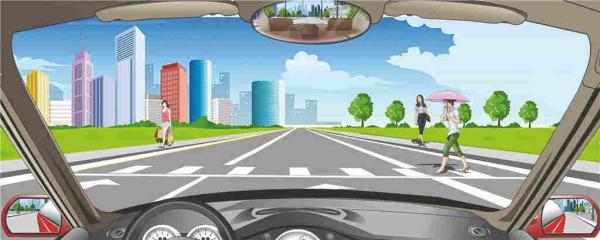
A. Right
B. Wrong
Answer: B
3. When following other vehicles on the uphill section of a mountain road, what should the driver do if the vehicle in front stops?
A. Overtake from either side of the front vehicle
B. Stop close to the vehicle in front
C. Stop with a larger space from the vehicle in front
D. Sound the horn continuously to warn the other driver
Answer: C
4. When driving on a long downhill road, which is the best way to control the speed?
A. Coast in neutral gear
B. Take a low gear
C. Depress the clutch
D. Pull up the handbrake
Answer: B
5. The sign on the right warns of a widened left-hand road ahead.
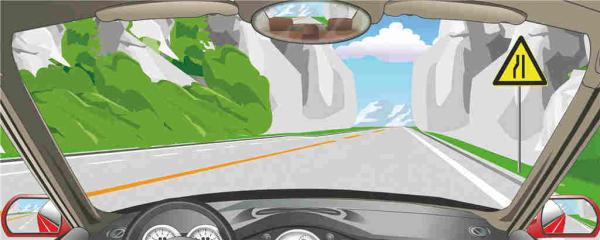
A. Right
B. Wrong
Answer: B
6. When following a vehicle on the road, the distance from the vehicle in front is not important. As long as the driver goes forward at the same speed as the vehicle in front does, he can avoid a rear-end collision.
A. Right
B. Wrong
Answer: B
7. When passing this mountainous road, motor vehicle drivers should drive along the center of the road.
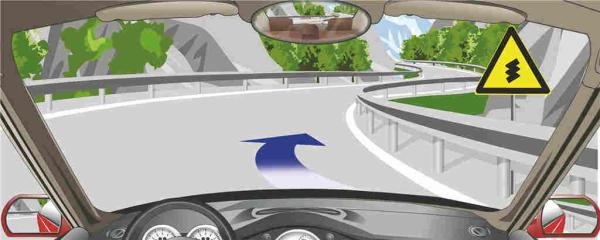
A. Right
B. Wrong
Answer: B
8. As shown in this picture, the intersection guide line is designed to help drivers make turns.
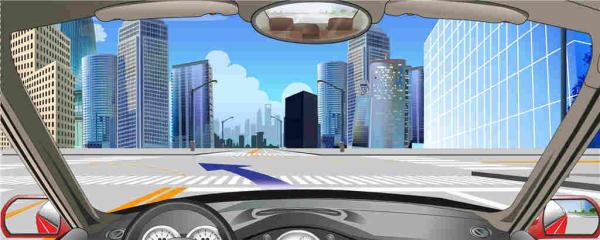
A. Right
B. Wrong
Answer: A
9. The motor vehicle should stop on the right and wait in this situation.
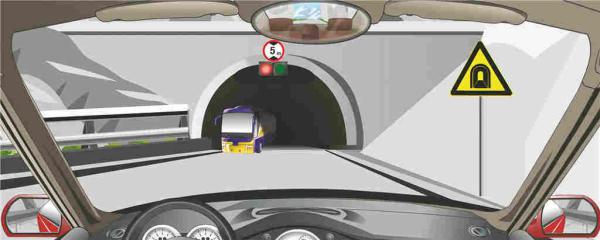
A. Right
B. Wrong
Answer: A
10. When a motor vehicle moves through water, the driver should try to maintain a constant speed and sufficient power and pass through without stopping.
A. Right
B. Wrong
Answer: A
11. When encountering such a situation, the vehicles should cut speed or stop to yield as approaching each other.
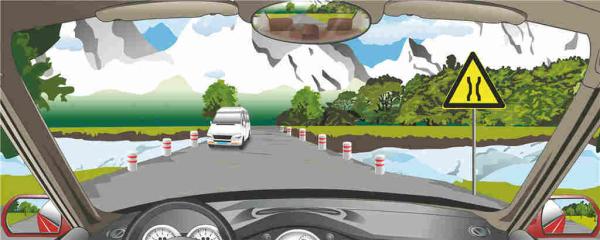
A. Right
B. Wrong
Answer: A
12. The sign on the right warns of an unguarded railway crossing 150 meters ahead.
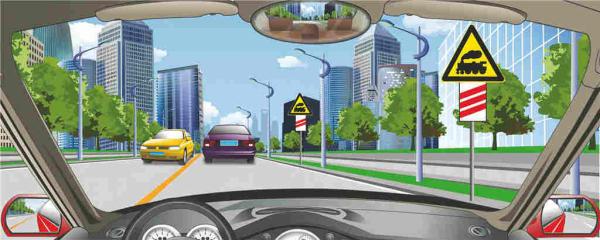
A. Right
B. Wrong
Answer: A
13. Under this circumstance, motor vehicle drivers should not reduce speed.
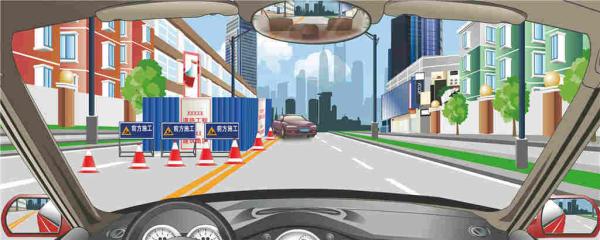
A. Right
B. Wrong
Answer: B
14. Motor vehicle drivers don?ˉt need to fasten their seatbelt
A. Right
B. Wrong
Answer: B
15. When there is a sudden braking failure on a downhill road, in which ones of the following ways can drivers reduce speed?
A. Driving onto the emergency lane and reduce speed and stop there
B. Rubbing the vehicle body against the rocks or trees on roadside
C. Pulling up the handbrake first
D. Immediately changing to a low gear
Answer: ABD
16. Two parallel broken double-yellow lines indicate the position of a diversion lane.
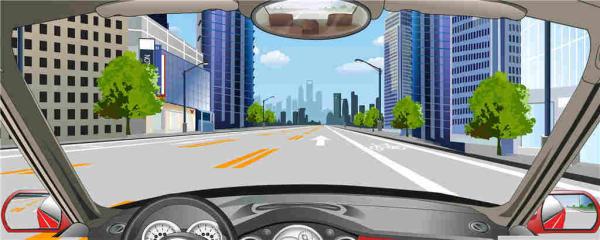
A. Right
B. Wrong
Answer: A
17. Which one of the following is the safest way when driving a motor vehicle on this road?
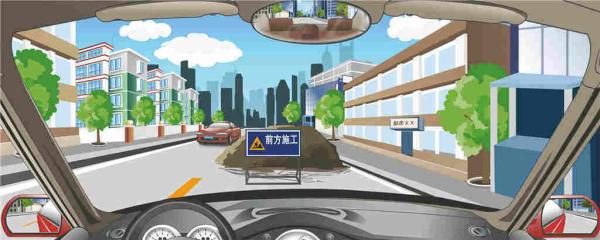
A. Speed up and bypass the obstacle
B. Take the opposite lane and compel the other vehicle to yield
C. Stop and yield to the oncoming vehicle
D. Sound the horn or turn on the headlamp
Answer: C
18. When driving a motor vehicle equipped with power steering, the driver should firmly hold the steering wheel and drive slowly if he suddenly finds that steering is difficult.
A. Right
B. Wrong
Answer: B
19. The sign on the right warns of an uneven road ahead.
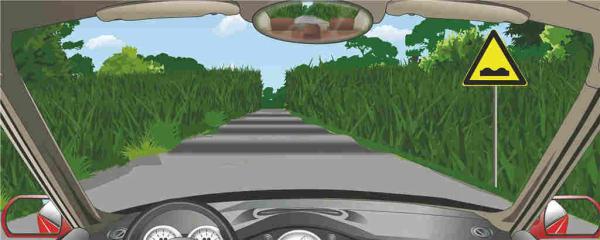
A. Right
B. Wrong
Answer: A
20. The sign on the right indicates notice by sounding the horn.
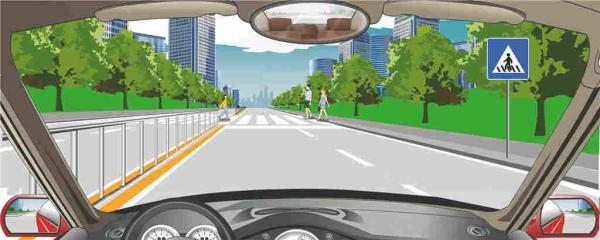
A. Right
B. Wrong
Answer: B