

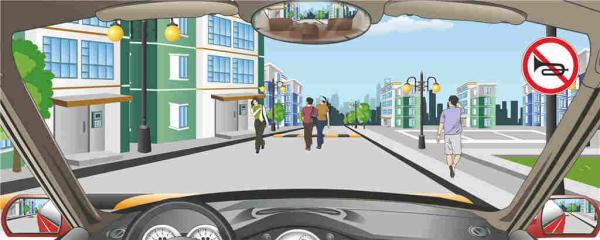
1. When encountering this situation in a residential area the driver should sound the horn continuously.
A. Right
B. Wrong
Answer: B
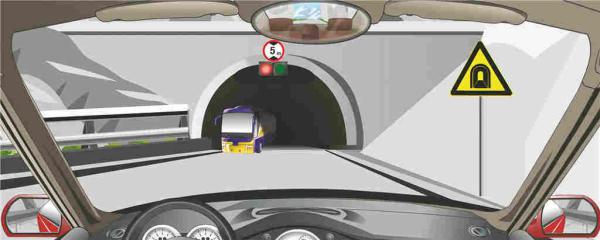
2. The motor vehicle should stop on the right and wait in this situation.
A. Right
B. Wrong
Answer: A
3. When following other vehicles on a foggy day, what should the driver do?
A. Maintain a large safety distance
B. Turn on the high-beam
C. Turn on the low-beam
D. Sound the horn in due time
Answer: A
4. The drivers, loaders and supercargoes responsible for dangerous chemicals transportation should all full understand the chemical characteristics, potential risks, features of the packaging containers and emergency measures for any unexpected accidents.
A. Right
B. Wrong
Answer: A
5. What should the driver do when the motor vehicle counters this situation?
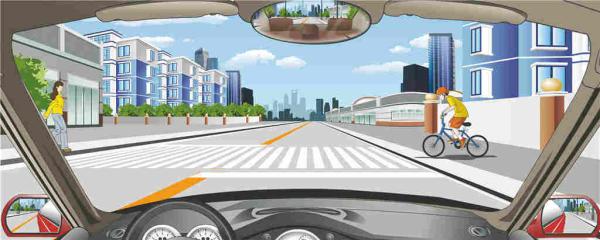
A. Sound the horn continuously to warn
B. Speed up and bypass from the front
C. Slow down when encountering any risks
D. Slow down voluntarily and yield
Answer: D
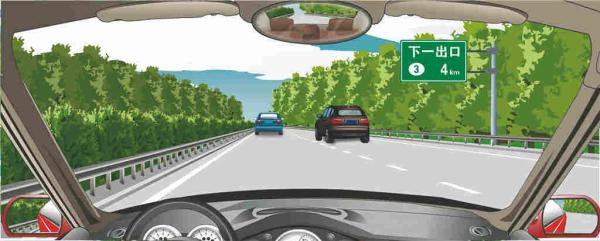
6. The sign in front indicates a 4-kilometer distance from the next exit.
A. Right
B. Wrong
Answer: A
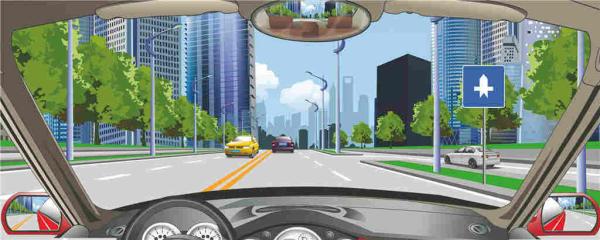
7. The sign on the right indicates that vehicles from the primary road have priority.
A. Right
B. Wrong
Answer: A
8. When a wounded person is beneath the wheel or cargo, we should help him out immediately by pulling the limbs of the wounded.
A. Right
B. Wrong
Answer: B
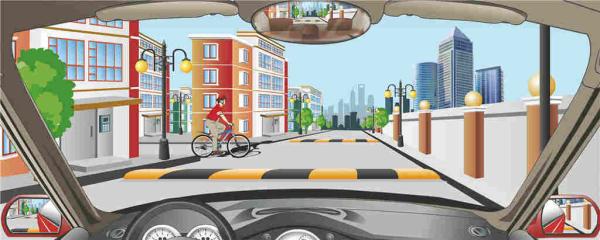
9. When encountering this situation in a residential area the driver should speed up and pass in front of the bicycle.
A. Right
B. Wrong
Answer: B
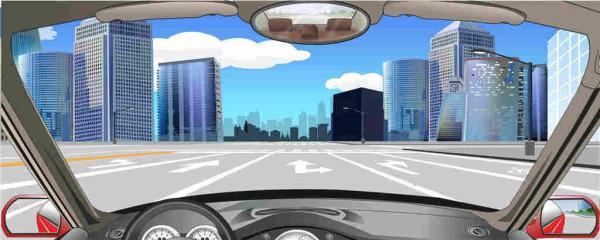
10. The guide arrow on the road surface of this lane indicates that only right turns are permitted at the intersection ahead.
A. Right
B. Wrong
Answer: B
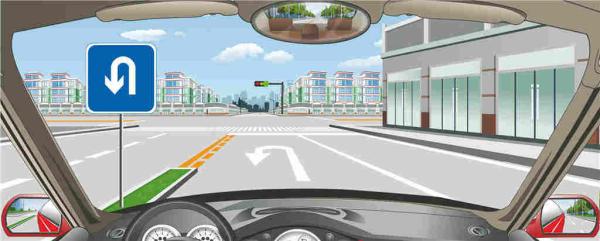
11. The guide arrow on the road surface of this lane indicates that only left turns are permitted at the intersection ahead.
A. Right
B. Wrong
Answer: B
12. When a wounded person suffering burns is thirsty, he should only drink plain boiled water.
A. Right
B. Wrong
Answer: B
13. When driving on a muddy road, what should drivers do if the wheels spin and slide?
A. Cover the ground under the wheels with gravels
B. Change to a high gear and speed out
C. Cover the ground under the driving wheels with gravels
D. Violently turn the steering wheel and suddenly speed up
Answer: C
14. When driving on the expressway in a heavy rain, what should the driver do to avoid water sliding phenomenon?
A. Install slide-proof devices
B. Speed up
C. Slow down
D. Continue to depress the brake
Answer: C
15. The sign on the right indicates a passing bay ahead.
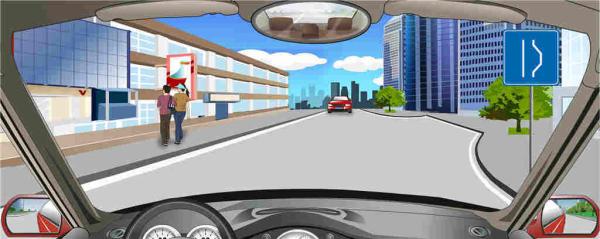
A. Right
B. Wrong
Answer: A
16. When a motor vehicle enters an expressway from the ramp, which of the following lamps should be turned on?
A. The left-turn indicator
B. The right-turn indicator
C. The hazard warning lamp
D. The headlamp
Answer: A
17. When encountering a school bus which stops at the right roadside and students are embarking or disembarking, and there are two motor vehicle lanes in each direction, motor vehicle drivers on the left lane behind the bus should stop and wait.
A. Right
B. Wrong
Answer: A
18. When a wounded person is unable to get off the vehicle by himself, he should be removed from the vehicle so as to avoid a secondary injury.
A. Right
B. Wrong
Answer: A
19. When seeing this sign, the driver should slow down promptly.
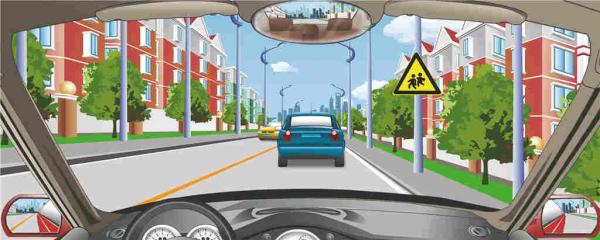
A. Right
B. Wrong
Answer: A
20. When rescuing a wounded person suffering from bone fracture, which of the following should be kept in mind?
A. Immediately send him/her to the hospital on a stretcher
B. Properly change the original posture when the injured person wounded
C. Dress the fracture with a bandage
D. Do not move the fractured body-part
Answer: D