

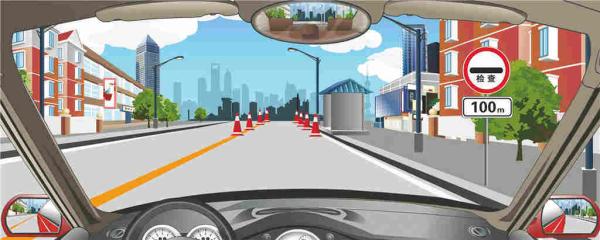
1. The sign on the right indicates an inspection station 100 meters ahead.
A. Right
B. Wrong
Answer: A
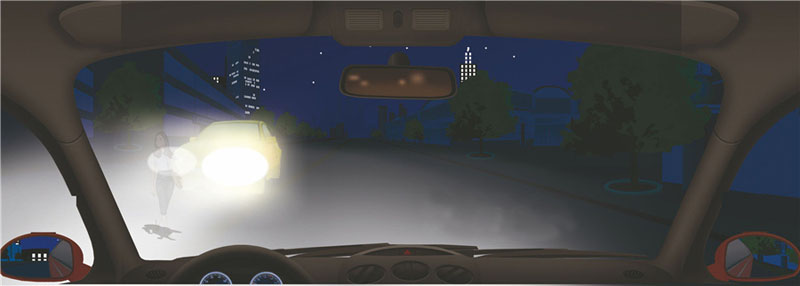
2. When approaching each other at night in this situation, drivers should watch for the danger where the two motor vehicles headlamps meet (the sight dead zone).
A. Right
B. Wrong
Answer: A
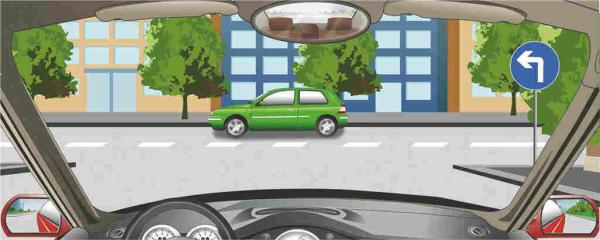
3. The sign on the right indicates left turn only at the intersection ahead.
A. Right
B. Wrong
Answer: A
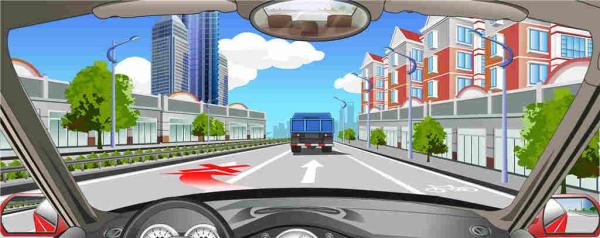
4. Drivers are not allowed to cross these lane-dividing lines when overtaking in the same direction.
A. Right
B. Wrong
Answer: A
5. When a motor vehicle deviates from the normal direction due to steering failure, what should the driver do?
A. Immediately steer and adjust
B. Reduce speed and stop the vehicle as early as possible
C. Steer to the side where there is no obstacle to evade
D. Steer to the side where there is an obstacle to evade
Answer: B
6. Under the circumstances shown in the flash, what should be done by the vehicle in front?
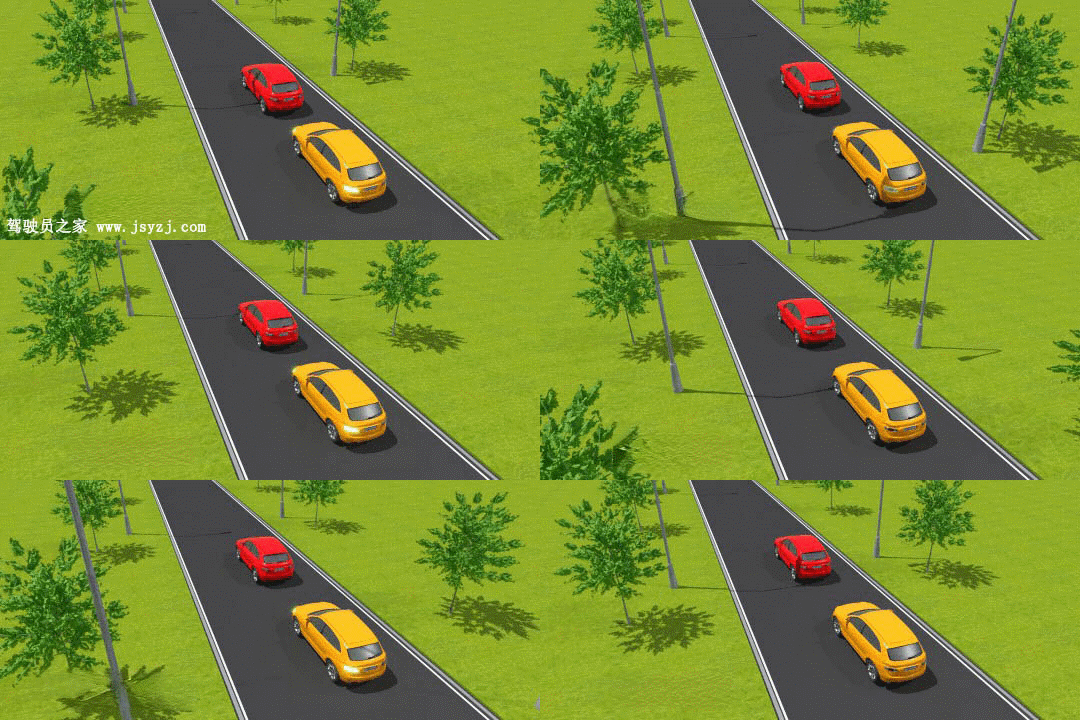
A. Reduce speed swiftly or apply emergency brake
B. Drive at a higher speed after giving a proper space
C. Reduce speed and yield by the right side of the road
D. Drive at a higher speed by the right side of the road
Answer: C
7. If a motor vehicle enters a driving lane under this situation, what should the driver do?
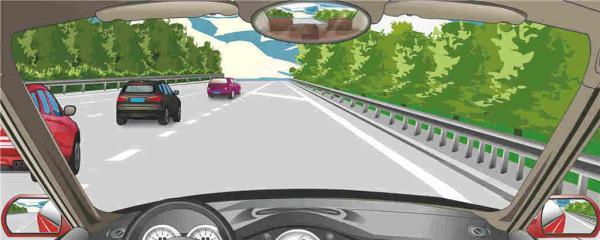
A. Control the driving speed and follow the last vehicle
B. Speed up and cut in front of the second vehicle
C. Speed up and cut in front of the first vehicle
D. Cut in between two vehicles at will
Answer: A
8. What should the driver do when the motor vehicle passes a flyover?
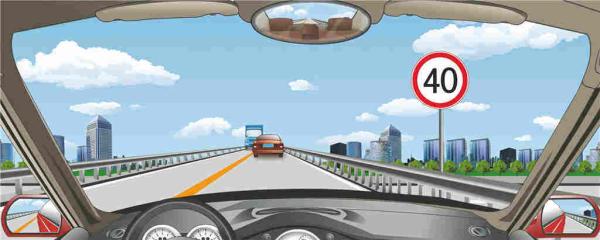
A. Speed up and pass rapidly
B. Keep the speed under 15 km/hour
C. Drive at the speed indicated by the traffic sign
D. Drive close to the central line of the flyover
Answer: C
9. How to pass the intersection when running straight
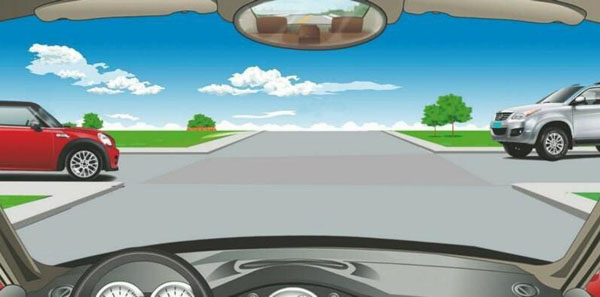
A. turn on the hazard lights and pass
B. directly speed up and pass straight
C. yield to the vehicle from the right road
D. yield to the vehicle from the left road
Answer: C
10. When the tire pressure is too low, what can happen when driving at a high speed?
A. Tire pressure will be unstable
B. Tire pressure will increase
C. Driving resistance will decrease
D. The tire will burst
Answer: D
11. When driving on a long downhill road, which is the best way to control driving speed?
A. Coast in neutral gear
B. Depress the clutch and coast
C. Use the engine to brake
D. Depress the brake pedal continuously
Answer: C
12. When a motor vehicle stops in snow, which lamp should be turned on?
A. Front and rear fog lamps, clearance lamp and rear position lamp
B. Reverse lamp, clearance lamp and rear position lamp
C. Headlamp, clearance lamp and rear position lamp
D. Hazard lamps, clearance lamp and rear position lamp
Answer: D
13. In which ones of the following ways can motor vehicle drivers effectively prevent braking failure?
A. Maintaining the braking system periodically
B. Checking the free brake pedal travel before driving
C. Using the braking system correctly to avoid brake-fade
D. For vehicles with hydraulic braking system, checking if the brake fluid leaks before driving
Answer: ABCD
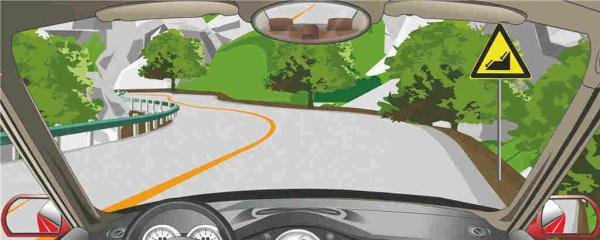
14. The sign on the right side warns of an abrupt downhill section ahead.
A. Right
B. Wrong
Answer: B
15. When driving in a strong wind, drivers should abruptly turn the steering wheel to return to the original direction if they feel the vehicle deviates horizontally due to a strong gale.
A. Right
B. Wrong
Answer: B
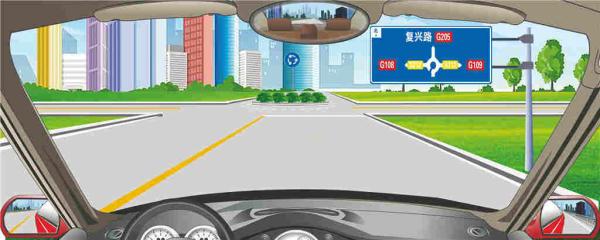
16. The sign in front gives information about the direction of road exits.
A. Right
B. Wrong
Answer: A
17. When running on an expressway with three lanes in each direction, which one of the following lanes is not appropriate for the motor vehicle to use if its speed ranges between 90 kilometers per hour and 110 kilometers per hour?
A. The far left lane
B. The middle lane
C. The far right lane
D. Any lane
Answer: A
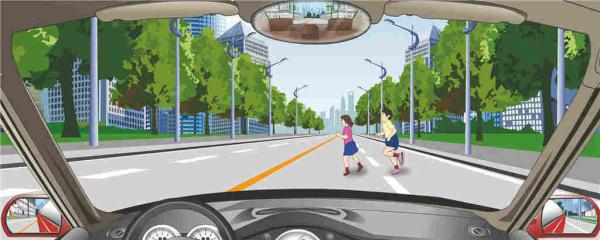
18. When such circumstances happen suddenly, drivers should reduce speed in a timely fashion or stop to yield.
A. Right
B. Wrong
Answer: A
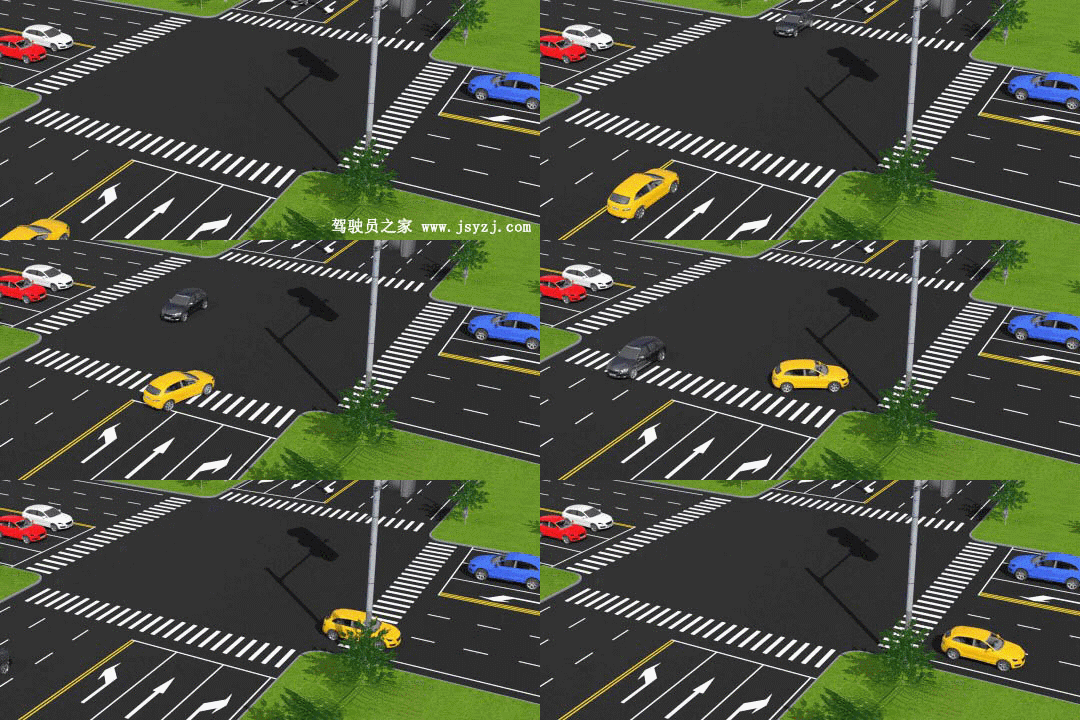
19. As shown in the flash, the actions of the driver are correct.
A. Right
B. Wrong
Answer: B
20. Motor vehicles should accelerate when driving into an intersection with this traffic signal.
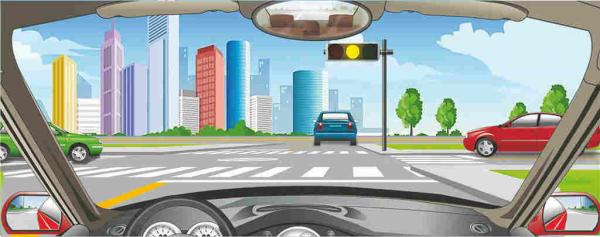
A. Right
B. Wrong
Answer: B