

1. Driving and smoking has no negative effect on safe driving
A. Right
B. Wrong
Answer: B
2. When the rear wheels of a motor vehicle skid sideways on a muddy road, the driver should turn the steering wheel in the opposite direction of the side skid.
A. Right
B. Wrong
Answer: B
3. Under this circumstance, motor vehicle drivers should give the right of way to oncoming vehicle.

A. Right
B. Wrong
Answer: A
4. Motor vehicles are not allowed to reverse in a tunnel.
A. Right
B. Wrong
Answer: A
5. The sign in front indicates that vehicles except public buses are not allowed to drive in this lane.
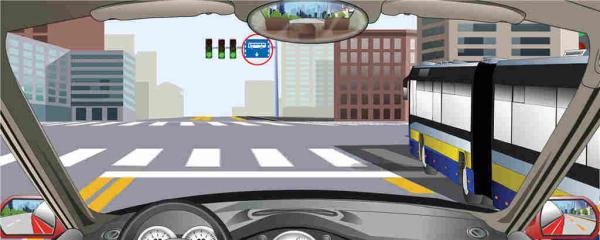
A. Right
B. Wrong
Answer: A
6. What should the driver do to ensure the motor vehicle passes the level crossing safely?
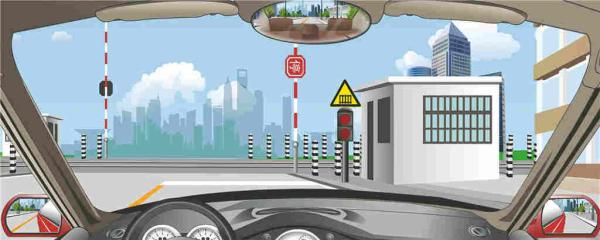
A. Change to neutral gear and slide over
B. Switch to low gear after entering the level crossing
C. Decelerate and lower the gear before entering the level crossing
D. Stop and observe inside the level crossing
Answer: C
7. What is the meaning of the sign on the right?

A. Parking prohibited
B. Temporary parking permitted
C. Picking up or dropping off passengers permitted
D. Stopping to unload permitted
Answer: A
8. How to reduce speed or stop when driving on a road covered with snow and ice?
A. Take full advantage of driving brake
B. Take full advantage of the control power from engine
C. Take full advantage of parking brake
D. Take full advantage of speed retarder
Answer: B
9. How to ensure safe driving at night?
A. Drive at speed limit
B. Cut speed and drive carefully
C. Maintain the current speed
D. Drive above the speed limit
Answer: B
10. What should the driver do in this situation?
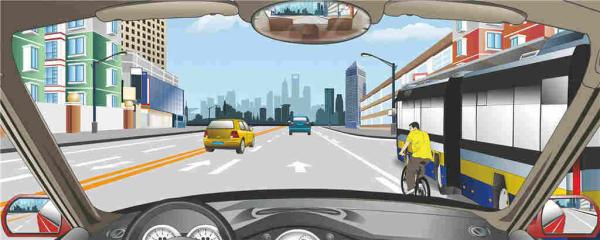
A. Speed up and overtake from the left side
B. Sound the horn continuously to warn the bicycle
C. Follow the bicycle closely
D. Slow down and yield to the bicycle
Answer: D
11. When driving in thick or extremely thick fog, what should the driver do due to the low visibility in such weather?
A. Turn on the headlamp and drive slowly
B. Turn on the fog lamp and drive slowly
C. Park in a safe place
D. Drive slowly close to the roadside
Answer: C
12. The road marker on the right side indicates that drivers may overtake by borrowing this road.
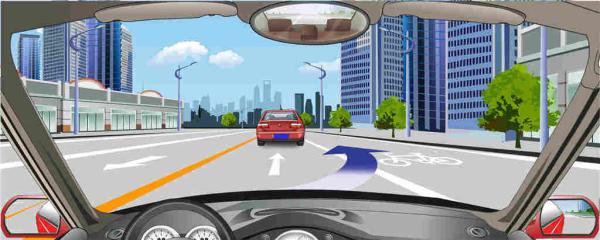
A. Right
B. Wrong
Answer: B
13. What should the driver do if he encounters pedestrians in this situation at an intersection?
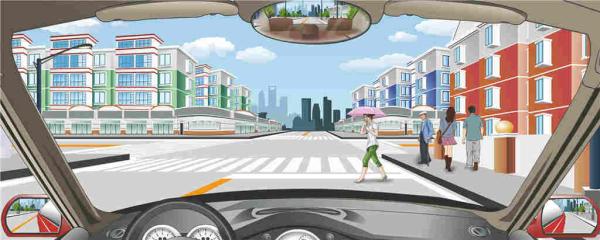
A. Slow down promptly and stop to yield
B. Sound the horn to warn the pedestrians to yield
C. Speed up and pass in front of the pedestrians
D. Turn on the headlamps to warn the pedestrians to yield
Answer: A
14. When rescuing a wounded person suffering from spinal fracture, which of the following measures should be taken?
A. Prevent heat loss
B. Rescue the wounded person with a soft stretcher
C. Keep the wounded part in position with a sling
D. Help the wounded person when walking
Answer: C
15. Having driven his truck at 90km/hour on an urban road without road lamps, Mr. Zhou is passing a narrow road using the high-beam and cutting off the way of an oncoming passenger car that runs into the right guardrail as a consequence. Which of the following law-breaking acts did Mr. Zhou commit?
A. Speeding
B. Approaching a vehicle not in accordance with related regulations and rules
C. Fatigued driving
D. Using lamps not in accordance with related regulations and rules
Answer: ABD
16. The sign in front indicates a 4-kilometer distance from the next exit.
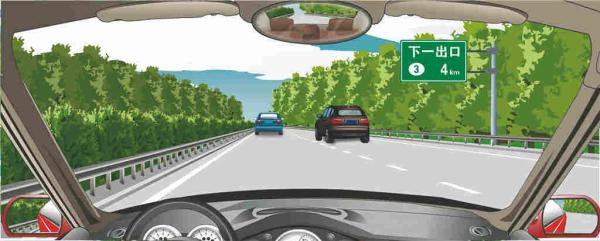
A. Right
B. Wrong
Answer: A
17. What should be checked before driving?
A. No parts need to be checked
B. Whether the tires have been cleaned
C. Where the spare tire is placed
D. The fastening and air pressure of tires
Answer: D
18. Under such circumstances, what should be done by motor vehicle drivers in order to yield to the pedestrians politely?
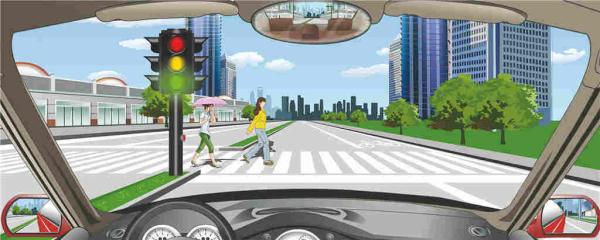
A. Set off after pedestrians pass
B. Set off and bypass in front of the pedestrians
C. Sound the horn to warn the pedestrians to yield
D. Set off and approach the pedestrians slowly
Answer: A
19. The sign on the right warns of no passing on either side of the road ahead.
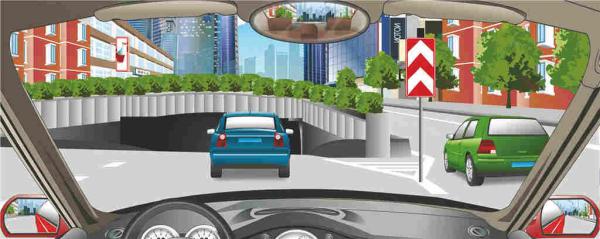
A. Right
B. Wrong
Answer: B
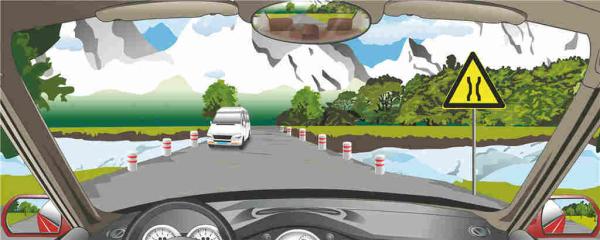
20. When encountering such a situation, the vehicles should cut speed or stop to yield as approaching each other.
A. Right
B. Wrong
Answer: A