

1. When a wounded person suffering bone fracture in the thigh, shank or spine, moving the wounded person is usually prohibited.
A. Right
B. Wrong
Answer: A
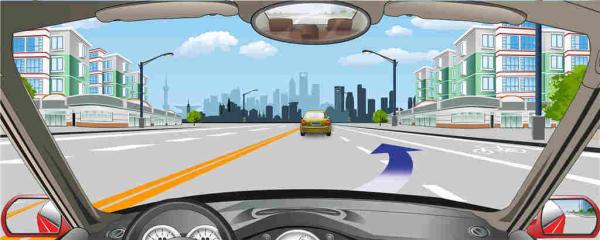
2. The broken white line on the right side of the road indicates that drivers are allowed to change lanes by crossing the line.
A. Right
B. Wrong
Answer: A
3. When the motor vehicle stops on an uphill section, how should the driver use the foot brake?
A. Earlier than on a level road
B. Later than on a level road
C. As timely as on a level road
D. Strongly depress the foot brake pedal
Answer: B
4. What should motor vehicle drivers do when parking temporarily on a rainy day?
A. Turn on hazard lamp
B. Turn on front and back fog lamp
C. Turn on low-beam
D. Set up warning sign at the back of the vehicle
Answer: A
5. Once inflammable gas causes a fire disaster, it should be put out with water in good time.
A. Right
B. Wrong
Answer: B
6. Which of the following is a bad driving habit?
A. Using lights in accordance with relevant rules
B. Carrying both vehicle and driving license
C. Discarding rubbish from the side window
D. Follow the guidance of the traffic signals
Answer: C
7. As shown in this picture, the intersection guide line is designed to help drivers make turns.

A. Right
B. Wrong
Answer: A
8. When approaching another vehicle at night, why should the driver alternate between high-and-low-beam at a distance more than 150 meters?
A. Warn each other before passing
B. Driving habit
C. Easy to observe the situation ahead from either side
D. Courtesy
Answer: C
9. What should the driver do when seeing these hand signals.
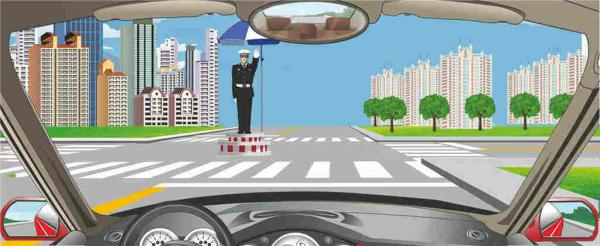
A. Stop and wait
B. Go straight and pass through the intersection
C. Turn right at the intersection
D. Turn left at the intersection
Answer: A
10. What should be checked before driving?
A. No parts need to be checked
B. Whether the tires have been cleaned
C. Where the spare tire is placed
D. The fastening and air pressure of tires
Answer: D
11. When evading an emergency, except for being calm, what principle should be held by drivers?
A. Evading people first and then objects
B. Evading objects first and then vehicles
C. Evading vehicles first and then people
D. Evading objects first and then people
Answer: A
12. What is the function of ABS during emergency braking?
A. Shortening the braking distance
B. Keeping steering capacity of the motor vehicle
C. Relief the braking inertia
D. Controlling directions automatically
Answer: B
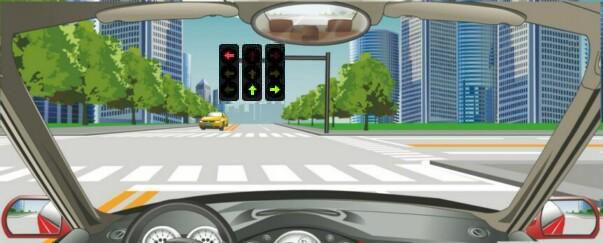
13. Motor vehicles are prohibited from turning left in this situation.
A. Right
B. Wrong
Answer: A
14. When a wounded person is unable to get off the vehicle by himself, he should be removed from the vehicle so as to avoid a secondary injury.
A. Right
B. Wrong
Answer: A
15. When driving on a muddy road, what should drivers do if the wheels spin and slide?
A. Cover the ground under the wheels with gravels
B. Change to a high gear and speed out
C. Cover the ground under the driving wheels with gravels
D. Violently turn the steering wheel and suddenly speed up
Answer: C
16. At this moment, the driver may speed up and pass the intersection rapidly.

A. Right
B. Wrong
Answer: B
17. How should motor vehicle drivers make a U-turn at the intersection ahead?
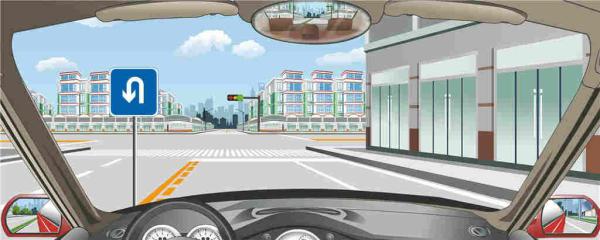
A. Make a U-turn in the waiting area for turning left
B. Make a U-turn at the broken line area of the Intersection
C. Wait until the left-turn indicator is on
D. Wait until the straight-going signal is on
Answer: B
18. When finding a tire burst on the road, the driver should use emergency braking while controlling the direction of the vehicle at the same time to stop the vehicle quickly.
A. Right
B. Wrong
Answer: B
19. When braking, the steering will become impossible if the front wheels are blocked
A. Right
B. Wrong
Answer: A
20. When a bicycle borrows the motor vehicle lane, the motor vehicle may sound the horn hurriedly to warn the bicycle to yield.
A. Right
B. Wrong
Answer: B