

1. What should the driver do when seeing these hand signals?
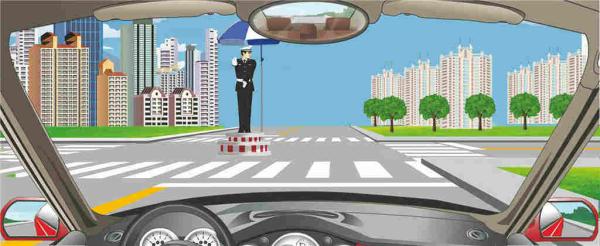
A. Go straight and pass through the intersection
B. Stop and wait
C. Turn right at the intersection
D. Turn left at the intersection
Answer: B
2. At this moment, the driver may speed up and pass the intersection rapidly.

A. Right
B. Wrong
Answer: B
3. When seeing this sign, the driver should slow down promptly.
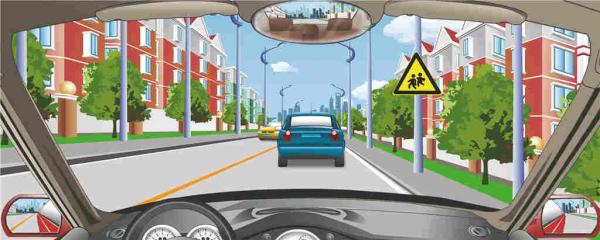
A. Right
B. Wrong
Answer: A
4. The sign on the right side warns of an emergency lane 500 meters ahead.
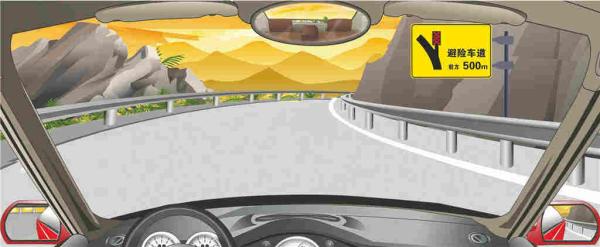
A. Right
B. Wrong
Answer: A
5. How to reduce speed or stop when driving on a road covered with snow and ice?
A. Take full advantage of driving brake
B. Take full advantage of the control power from engine
C. Take full advantage of parking brake
D. Take full advantage of speed retarder
Answer: B
6. The cross-hatched marking indicates an area where vehicle drivers are allowed to stop and wait.
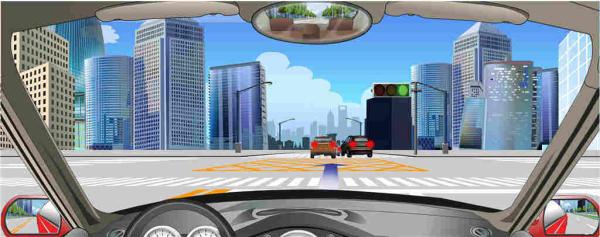
A. Right
B. Wrong
Answer: B
7. The driver should pay attention to the left side when the motor vehicle passes this intersection.
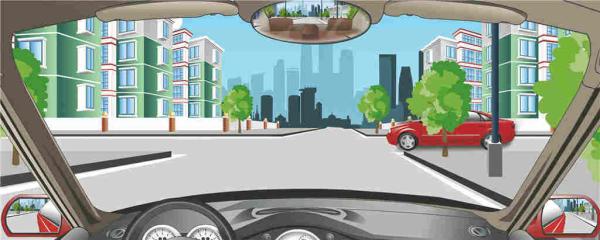
A. Right
B. Wrong
Answer: B
8. This road marker indicates that the minimum speed for this road section is 60 km/hour.
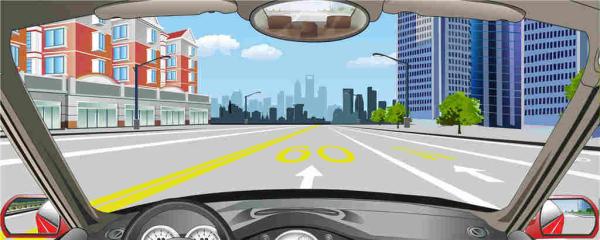
A. Right
B. Wrong
Answer: B
9. Under such circumstances, what should motor vehicle drivers do?
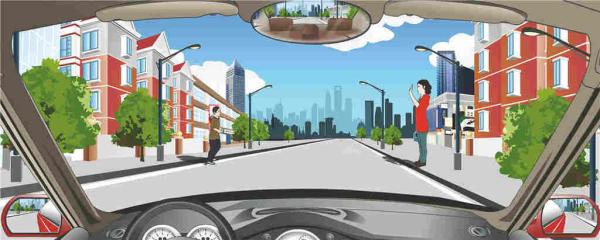
A. Guard against the sideslip of motor vehicles
B. Guard against the crossing of pedestrians
C. Speed up and pass through as quickly as possible
D. Continuously sound the horn
Answer: B
10. Which is the correct way to use a fire extinguisher?
A. Stand on the leeward side
B. Direct the fire extinguisher at the source of fire
C. Try to approach the source of fire as close as possible
D. Direct the fire extinguisher at the flames
Answer: B
11. The sign on the right indicates that the speed limit of 40km/hour is lifted on the road ahead.
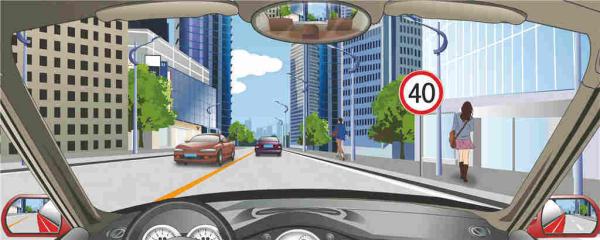
A. Right
B. Wrong
Answer: B
12. Drivers are not allowed to cross these lane-dividing lines when overtaking in the same direction.
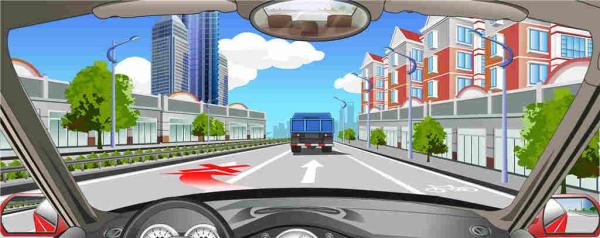
A. Right
B. Wrong
Answer: A
13. The sign on the right warns of a guarded railway intersection ahead.
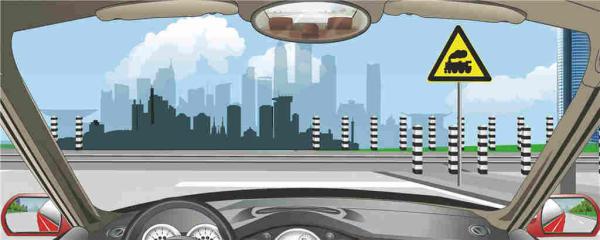
A. Right
B. Wrong
Answer: B
14. These traffic police signals indicate that passing is prohibited.
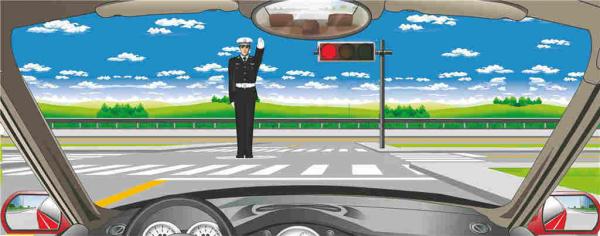
A. Right
B. Wrong
Answer: A
15. The sign on the left indicates the destinations of two highway directions
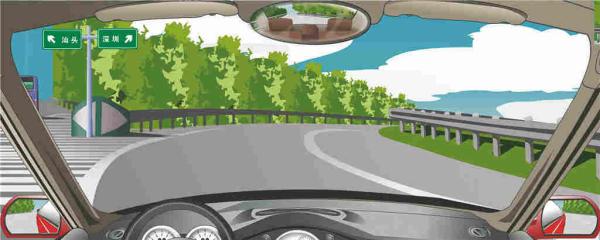
A. Right
B. Wrong
Answer: A
16. Gun powder, explosives and detonating powder belong to which of the following dangerous chemicals?
A. Oxidizing materials
B. Inflammable solid materials
C. Explosives
D. Self-igniting articles
Answer: C
17. When a motor vehicle on an expressway stops in an emergency due to breakdown or an accident, what should the driver and the passengers do?
A. Stand in front of the motor vehicle
B. Wait in the motor vehicle for rescue
C. Stand behind the motor vehicle
D. Promptly move to the road shoulder on the right side or the emergency lane
Answer: D
18. What should be done first after getting into the vehicle?
A. Observe the surrounding traffic situation
B. No need to observe the traffic situation around
C. Open the door and get in directly
D. Take note of the weather
Answer: A
19. How to run when encountering this situation at the intersection?
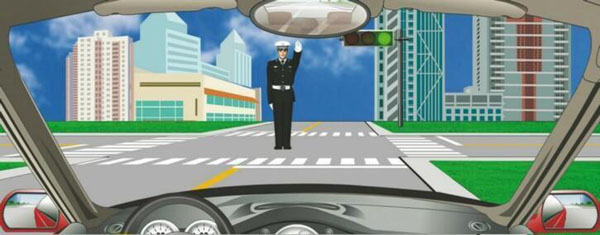
A. stop and wait
B. obey the traffic lights
C. run straight on the right side
D. may turn right
Answer: A
20. When driving into the traffic flow on a main road from a relief road, drivers should speed up.
A. Right
B. Wrong
Answer: B