

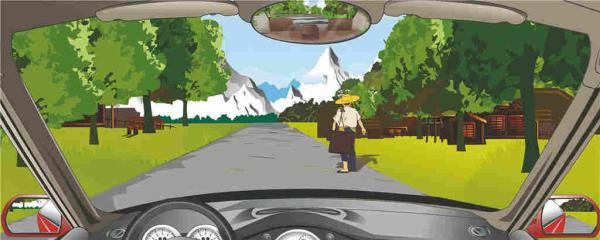
1. When encountering such pedestrians while driving, a longer safety distance should be kept by drivers.
A. Right
B. Wrong
Answer: A
2. Which one of the following statements is the safest measure for a motor vehicle driver to take on this kind of road?
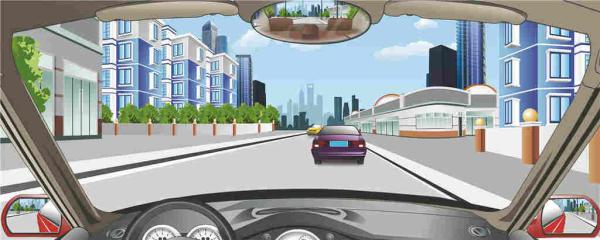
A. Accelerate to overtake the vehicle in front as soon as possible
B. Sound the horn to warn the vehicle in front to yield
C. Follow the vehicle in front and keep a certain distance
D. Overtake the vehicle in front from its righthand
Answer: C
3. When braking, the steering will become impossible if the front wheels are blocked
A. Right
B. Wrong
Answer: A
4. When extinguishing fire, the synthetic-made garments should not be taken off in order to protect the exposed skin from burning.
A. Right
B. Wrong
Answer: B
5. What should be done by motor vehicle drivers in order to yield politely to such pedestrians?
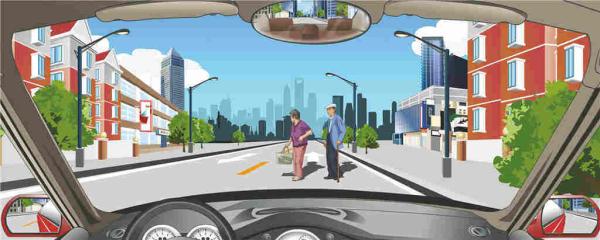
A. Speed up and bypass in front of the pedestrians
B. Speed up and bypass from behind the pedestrians
C. Reduce speed or stop to yield
D. Continuously sound the horn to alert the pedestrians
Answer: C
6. Which one of the following vehicle types is not allowed to pass, as indicated by the right-hand sign?
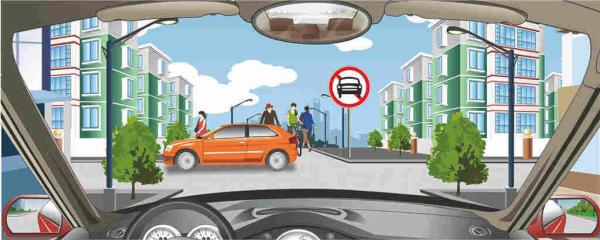
A. Large trucks
B. Large buses
C. Motor vehicles of all kinds
D. Small vans
Answer: C
7. When a motor vehicle moves through water, drivers should intermittently and gently depress the brake pedal in order to restore braking efficiency.
A. Right
B. Wrong
Answer: A
8. When putting out a fire disaster that gives out corrosive steam or poisonous gas, the firefighters should wear gas masks and other related protective articles and operate from the windward side.
A. Right
B. Wrong
Answer: A
9. What should be taken note of by drivers in this situation?
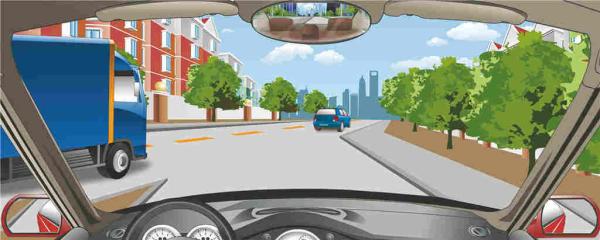
A. The motor vehicles on the left side
B. The motor vehicles on the right side
C. The motor vehicles behind
D. The motor vehicles in front
Answer: A
10. The sign on the right indicates to stop and yield at the intersection ahead.
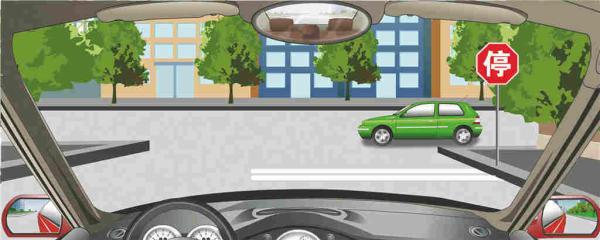
A. Right
B. Wrong
Answer: A
11. The sign on the right warns to keep a safe distance on the road ahead.
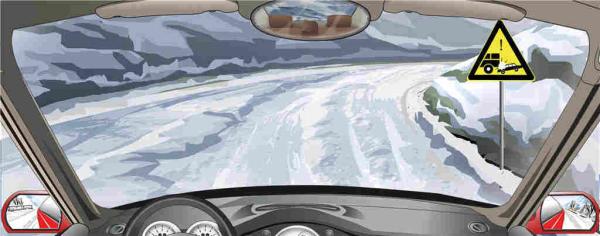
A. Right
B. Wrong
Answer: B
12. When encountering a school bus which stops at the right roadside and students are embarking or disembarking, and there is only one motor vehicle lane in each direction, motor vehicle drivers behind the bus should stop and wait.
A. Right
B. Wrong
Answer: A
13. When a motor vehicle encounters an emergency on an expressway, the driver should not swiftly turn the steering wheel to evade.
A. Right
B. Wrong
Answer: A
14. Drivers may go straight and pass through when traffic police give these hand signals.
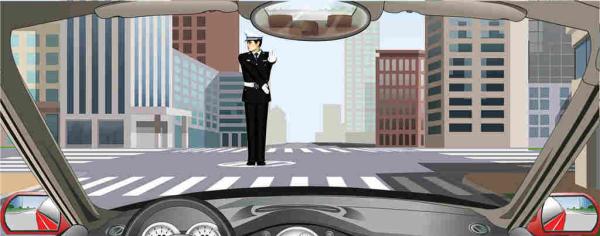
A. Right
B. Wrong
Answer: B
15. The signs on each side warn of changes in road alignment ahead.
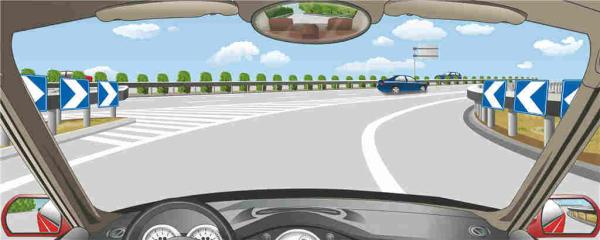
A. Right
B. Wrong
Answer: A
16. The guide arrow on the road surface of this lane indicates that only left turns are permitted at the intersection ahead.
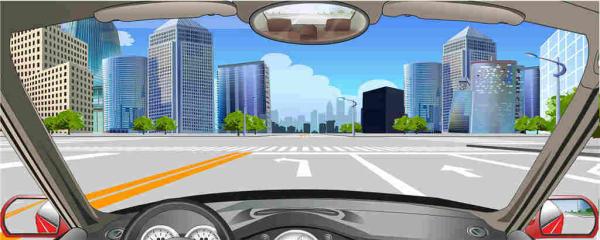
A. Right
B. Wrong
Answer: A
17. What should the driver do if he wants to turn right at this intersection?
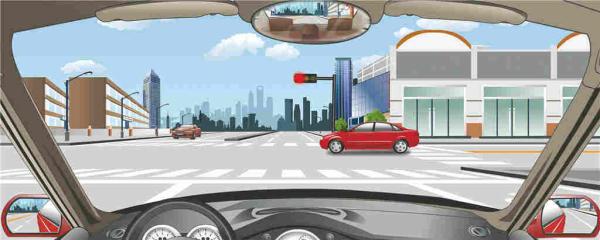
A. Turn right along the straight-going lane
B. Wait behind the stop line
C. Turn right along the right lane
D. Borrow the non-motor vehicle lane and turn right
Answer: C
18. When parking temporarily on a snowy day, drivers should turn on the headlamp and fog lamp.
A. Right
B. Wrong
Answer: B
19. The sign on the right warns of children on the section ahead.
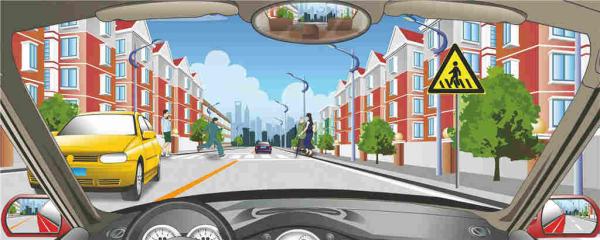
A. Right
B. Wrong
Answer: B
20. Which one of the following is a safe way for motor vehicles to pass an intersection marked with this sign?
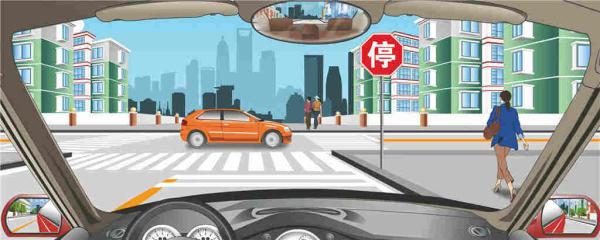
A. Stopping and observing the traffic situation around the intersection
B. Approaching the intersection by speeding up
C. Approaching the intersection at a reduced speed
D. Observing the traffic situation on the left rear side
Answer: A