

1. When a collision occurs on the passenger seat side or the impact is relatively small, which of the following methods is incorrect?
A. Firmly holding the steering wheel
B. Stretching both feet forward
C. Jumping out of the vehicle from one side
D. Leaning body backwards against the seat
Answer: C
2. This road marker indicates that the minimum speed for this road section is 60 km/hour.
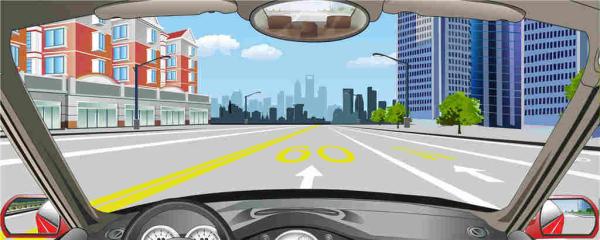
A. Right
B. Wrong
Answer: B
3. What should the driver do if he encounters pedestrians in this situation at an intersection?
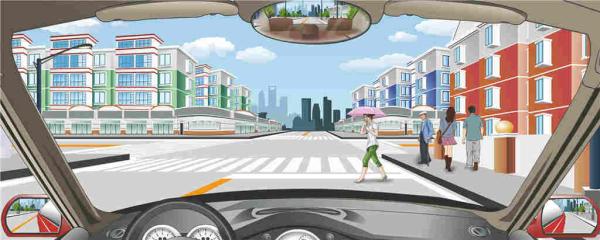
A. Slow down promptly and stop to yield
B. Sound the horn to warn the pedestrians to yield
C. Speed up and pass in front of the pedestrians
D. Turn on the headlamps to warn the pedestrians to yield
Answer: A
4. The driver should speed up to 40 kilometers per hour when he sees this traffic sign.
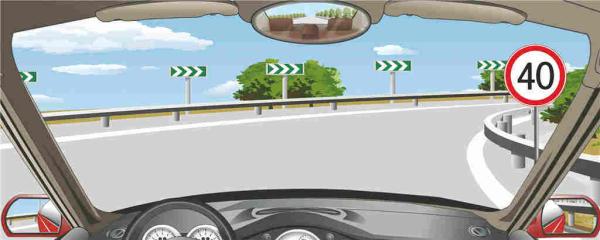
A. Right
B. Wrong
Answer: B
5. When running on an expressway with three lanes in each direction, which one of the following lanes is not appropriate for the motor vehicle to use if its speed ranges between 90 kilometers per hour and 110 kilometers per hour?
A. The far left lane
B. The middle lane
C. The far right lane
D. Any lane
Answer: A
6. When encountering a school bus which stops at the right roadside and students are embarking or disembarking, what should motor vehicle drivers do?
A. If there is only one motor vehicle lane in each direction, motor vehicle drivers behind the bus should stop and wait.
B. If there are two motor vehicle lanes in each direction, motor vehicle drivers in the left lane behind the bus may overtake the bus at a lower speed
C. If there are three motor vehicle lanes in each direction, motor vehicle drivers in the middle lane behind the bus should stop and wait
D. If there are three motor vehicle lanes in each direction, motor vehicle drivers in the left lane behind the bus may pass at a lower speed
Answer: ACD
7. What influence does smoking have upon driving?
A. Harmful for safe driving
B. Increase concentration
C. Help relaxation
D. No effect on driving
Answer: A
8. When an erosive material catches fire, it should not be put out with water cannon.
A. Right
B. Wrong
Answer: A
9. When driving a motor vehicle equipped with power steering, the driver should firmly hold the steering wheel and drive slowly if he suddenly finds that steering is difficult.
A. Right
B. Wrong
Answer: B
10. The sign on the right warns of entering a tunnel, and requires reduced speed.
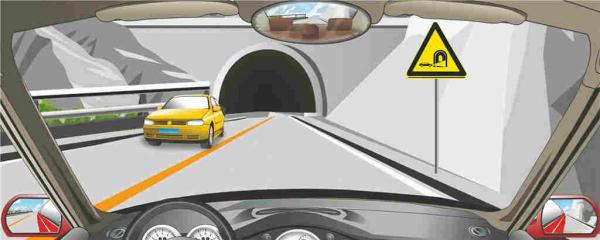
A. Right
B. Wrong
Answer: B
11. Motor vehicles should stop and yield rapidly when encountering this situation at a bus station.
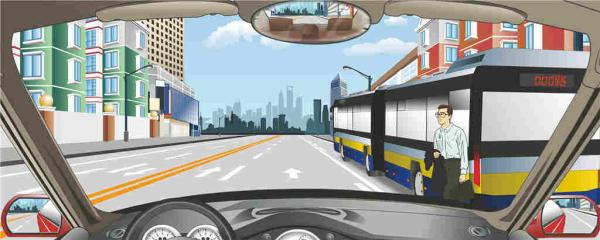
A. Right
B. Wrong
Answer: A
12. What should be done by the driver who intends to overtake but finds that the vehicle in front is also overtaking?
A. Following the vehicle in front closely and finding a chance to overtake it
B. Accelerating to overtake forcefully
C. Continuously sounding the horn to urge the vehicle in front to yield
D. Refraining from overtaking and letting the vehicle in front overtake first
Answer: D
13. The sign on the right indicates a left-turn bypass route at the intersection ahead.
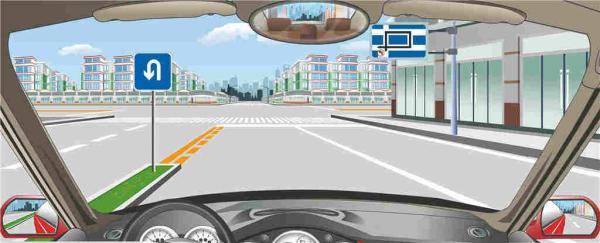
A. Right
B. Wrong
Answer: A
14. Which one of the following ways to pass this intersection is correct?
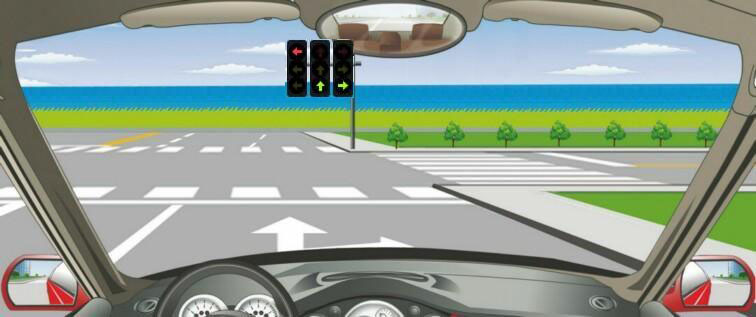
A. Turn left or right
B. Drive straight or turn left
C. Turn left
D. Drive straight or turn right
Answer: D
15. The distance-ascertaining section of an expressway is used for the drivers to ascertain the safety distance when the speed is 100 kilometers per hour.
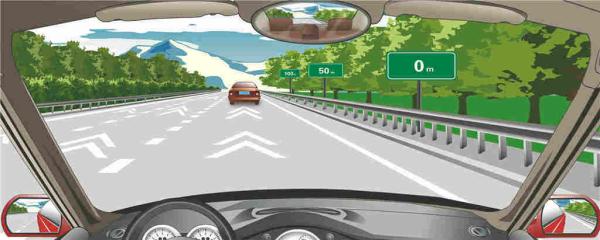
A. Right
B. Wrong
Answer: A
16. In which of the following ways can motor vehicles avoid a tire burst?
A. Lowering tire pressure
B. Checking tires regularly
C. Removing foreign matters from the tire tread grooves timely
D. Replacing the tires that have cracks or deep cuts
Answer: BCD
17. What should the driver do when the motor vehicle passes a flyover?
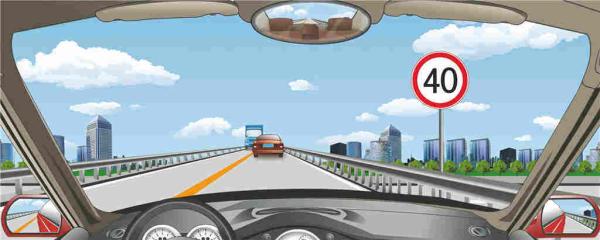
A. Speed up and pass rapidly
B. Keep the speed under 15 km/hour
C. Drive at the speed indicated by the traffic sign
D. Drive close to the central line of the flyover
Answer: C
18. When encountering an emergency on a highway, the driver should not drastically turn to evade.
A. Right
B. Wrong
Answer: A
19. How should the driver pass this place safely?
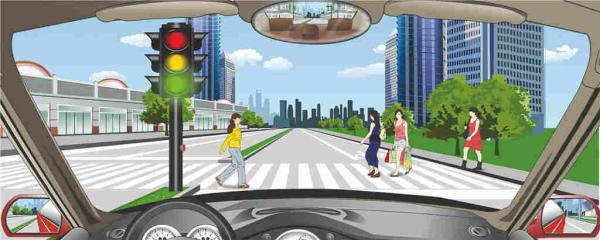
A. Speed up and pass in the front of the pedestrians
B. Bypass behind the pedestrians
C. Slow down and sound the horn
D. Stop and wait until the pedestrians pass
Answer: D
20. What should the driver do to ensure the motor vehicle passes the level crossing safely?
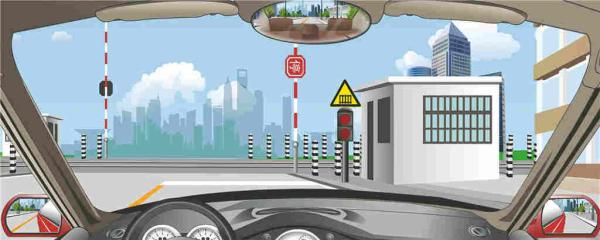
A. Change to neutral gear and slide over
B. Switch to low gear after entering the level crossing
C. Decelerate and lower the gear before entering the level crossing
D. Stop and observe inside the level crossing
Answer: C