

1. When a fast-moving vehicle is likely to collide with the vehicle in front, what should the driver do?
A. Brake to reduce speed first, and then steer to evade
B. Turn the steering wheel quickly to the left side to evade
C. Turn the steering wheel quickly to the right side to evade
D. Steer to evade first, and then brake to reduce speed
Answer: A
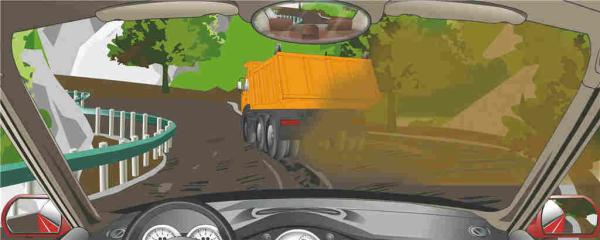
2. When encountering this situation on a mountainous road, motor vehicle drivers should overtake the vehicle in front by speeding up.
A. Right
B. Wrong
Answer: B
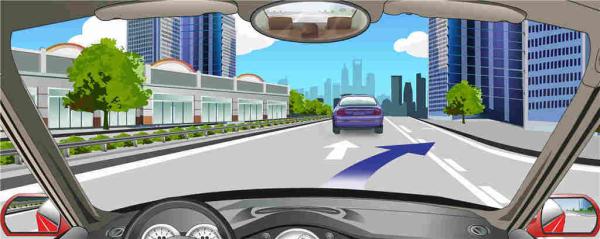
3. The broken and solid white line on the road indicates that crossing is allowed on the solid line side.
A. Right
B. Wrong
Answer: B
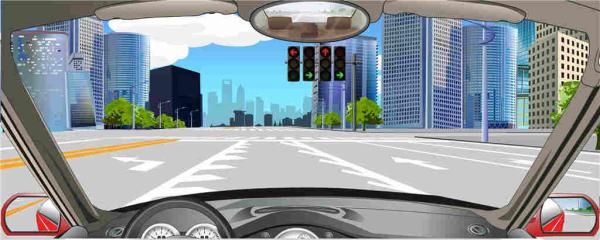
4. The guide line of a changeable lane indicates that drivers can choose their direction at will.
A. Right
B. Wrong
Answer: B
5. It is an illegal act for the driver to make calls while driving.
A. Right
B. Wrong
Answer: A
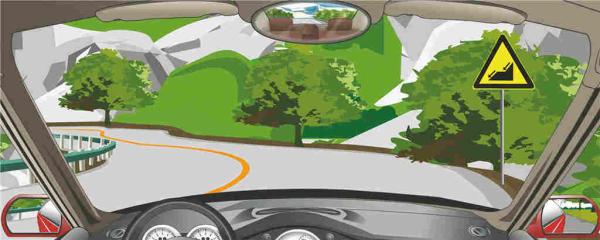
6. When encountering a road like this, motor vehicle drivers may make good use of neutral gear to coast.
A. Right
B. Wrong
Answer: B
7. When following other vehicles on the uphill section of a mountain road, what should the driver do if the vehicle in front stops?
A. Overtake from either side of the front vehicle
B. Stop close to the vehicle in front
C. Stop with a larger space from the vehicle in front
D. Sound the horn continuously to warn the other driver
Answer: C
8. The sign above the tunnel indicates a height limit of 3.5 meters on the road ahead.
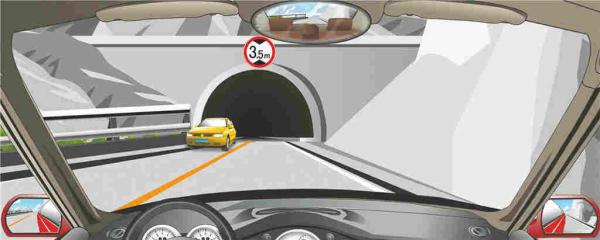
A. Right
B. Wrong
Answer: A
9. When the tire pressure is too low, what will happen if the tire changes its shape in waves and increases in temperature due to fast movement?
A. Unstable tire pressure
B. Even lower tire pressure
C. Driving resistance increases
D. Tire burst
Answer: D
10. On which of the following roads may the wheels be most easily locked when braking?
A. Concrete road
B. Dirt road
C. Road covered by ice and snow
D. Sand road
Answer: C
11. The sign in front indicates an open-air parking lot with rest area is 200 meters ahead.
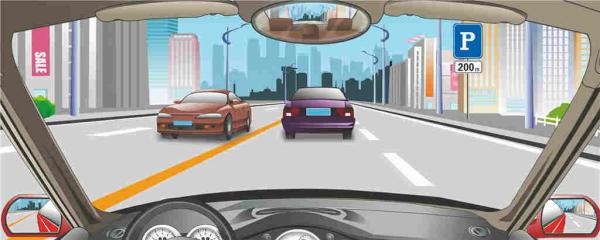
A. Right
B. Wrong
Answer: A
12. The sign on the right warns of an abrupt slope section ahead.
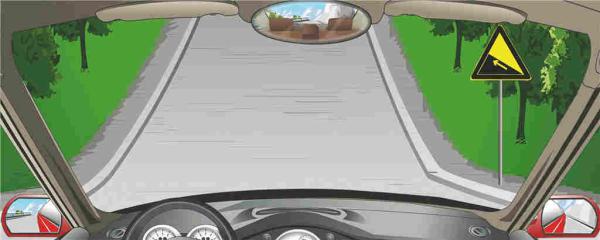
A. Right
B. Wrong
Answer: A
13. How should the driver use vehicle lights when the motor vehicle enters this intersection?
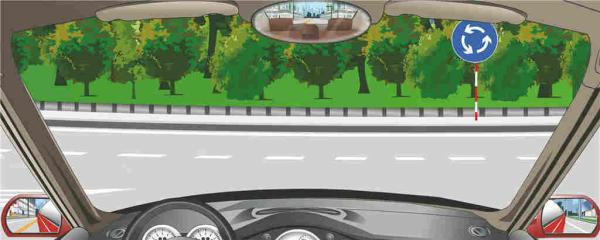
A. Turn on the right-turn indicator
B. Turn on the hazard lamps
C. No need to turn on any indicators
D. Turn on the left indicator
Answer: C
14. What should be done when drivers evade an emergency on the highway?
A. Take braking measures to reduce speed
B. Yield by turning to the left side
C. Evade by swiftly turning the steering wheel
D. Yield by turning to the right side
Answer: A
15. The sign on the right warns of three or more winding roads ahead.
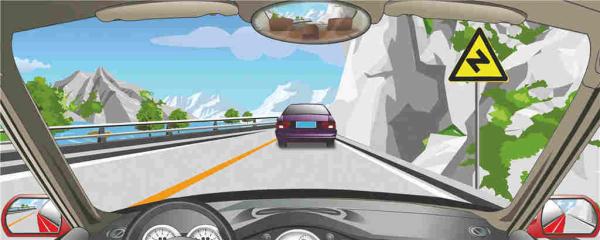
A. Right
B. Wrong
Answer: B
16. Which of the following materials should not be used to stop bleeding?
A. Bandage
B. Sling
C. Tourniquet
D. Hemp rope
Answer: D
17. The sign in front indicates the distance to highway destination.
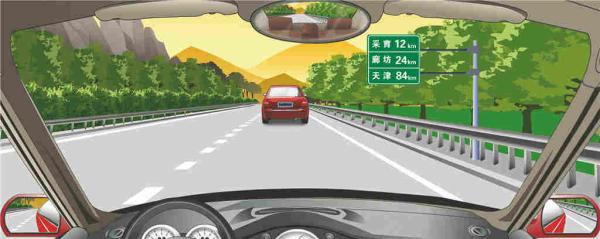
A. Right
B. Wrong
Answer: B
18. When encountering a school bus which stops at the right roadside and students are embarking or disembarking, what should motor vehicle drivers do?
A. If there is only one motor vehicle lane in each direction, motor vehicle drivers behind the bus should stop and wait.
B. If there are two motor vehicle lanes in each direction, motor vehicle drivers in the left lane behind the bus may overtake the bus at a lower speed
C. If there are three motor vehicle lanes in each direction, motor vehicle drivers in the middle lane behind the bus should stop and wait
D. If there are three motor vehicle lanes in each direction, motor vehicle drivers in the left lane behind the bus may pass at a lower speed
Answer: ACD
19. Under such circumstances, motor vehicle drivers may sound the horn at the proper time and speed up to pass through.
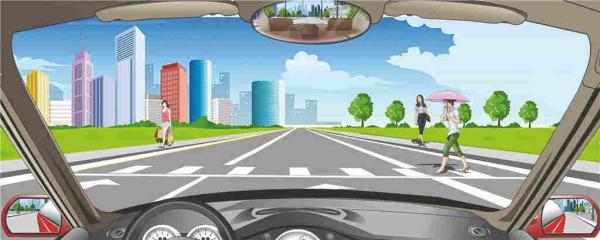
A. Right
B. Wrong
Answer: B
20. What is the intersection ahead indicated by the right sign?
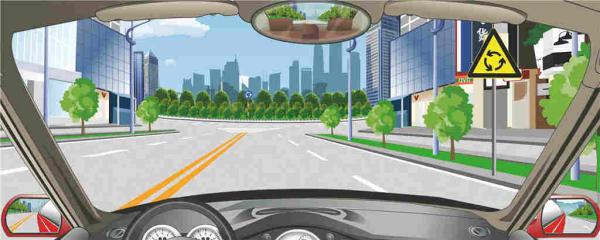
A. T-shaped intersection
B. Y-shaped intersection
C. Cross-shaped intersection
D. Roundabout
Answer: D